
In the not too distant future, provided the manufacturers can cross the certification finish line, we may see eVTOL flying around our cities and towns. To ensure the safety of 3rd parties is protected, the certification of these VTOL will need to consider what happens if something fails on the aircraft. Helicopter certification considers the failure of a critical engine and the flight profiles necessary to manage these failures on take off and landing. What can VTOL learn from helicopters in the certification of profiles to deal with failures?
Contents
- Background
- Evolution of Helicopter Category A Profiles
- Conclusions
Background
This requirement to consider failures is an embedded part of the certification process for helicopters and is captured in the Certification Specifications (CS – CS-27 for <3175 kg or CS-29 > 3175 kg). Currently for helicopters, the main focus for ensuring safety of the aircraft has been the loss of a critical power unit – a single engine failure. This is a hangover from a fixed wing view of what is a critical failure and this needs a rethink for many-engined VTOL.
VTOL Certification
For VTOL the CS do not exist yet, so EASA has published a set of Special Conditions (SC – SC-VTOL) which are progressively being updated as knowledge of VTOL grows. VTOL typically have a distributed propulsion system and SC-VTOL requires that other critical failures need to be considered as well as a power unit failure. This might include loss of a propeller or rotor but tolerance of a birdstrike is now also a baseline requirement. We will pass over the probabilities involved in failure design for the sake of brevity. But how is certification of critical emergency’s going to change?
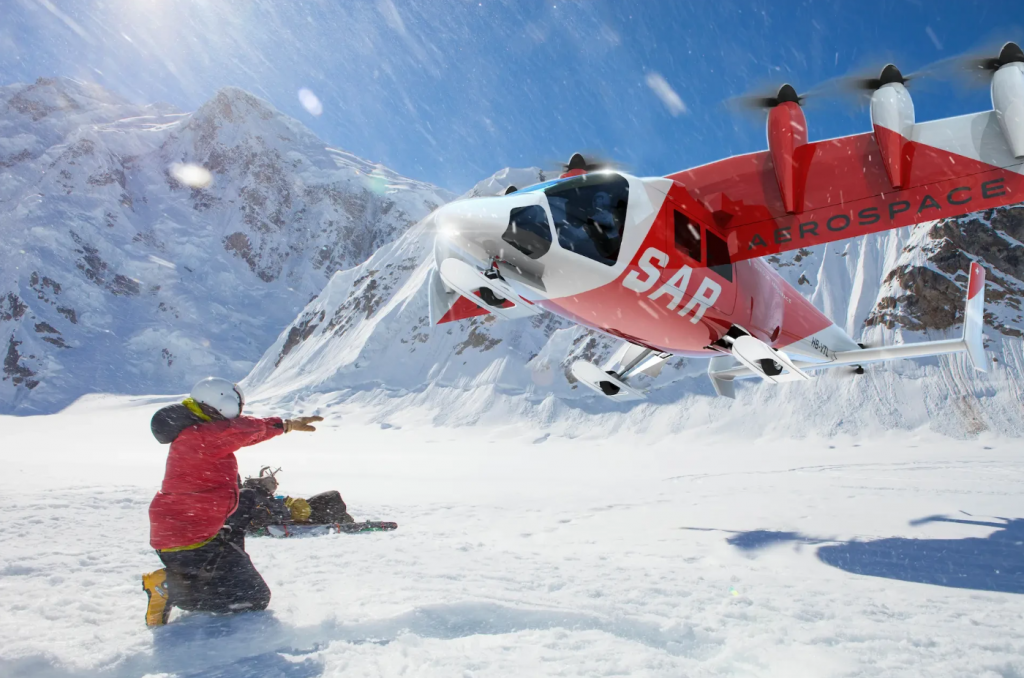
As there are so many power units, the reliability target of each individual power unit can be targeted at a lower level. An aircraft with 30 engines can shrug off one unit dropping offline (“Oh no, the dreaded 29 engine approach!”) so why bother making the power units super reliable? In this case, the failure case the designer actually might have to consider is multiple failures of less reliable engines (for example 3 of 30). But we are not re-inventing the wheel here. We need to determine what is critical to us before we can design some profiles to cope with it.
Category Enhanced
To demonstrate tolerance of a critical engine failure during certification, helicopters can be certified as Category A. This includes design features and performance information to assure adequate designated surface area and adequate performance for continued safe flight or safe rejected take-off/landing in the event of engine failure. In simple terms, anything else is Category B but there are still a lot of requirements for the design of such a helicopter.
For SC-VTOL, it is Category Enhanced for an aircraft that can continue flight or complete a safe landing following a critical failure. It is then Category Basic for a VTOL that is not certified to Category Enhanced but again there are still a lot of design requirements at this level.
As part of Category A and Category Enhanced there need to be appropriate profiles for the pilot to fly during the take off and landing phase so that the pilot can guide the aircraft to safe continued flight or to a safe landing in the event of a critical failure. Typically for a Category A helicopter there will be a clear area profile and a helipad profile as a minimum, with other profiles added to enhance the capability of the aircraft. For example, the AW109 and EC135 have short field profiles to operate to short prepared strips. Many helicopters also have deck approach profiles for offshore work and confined area profiles for operating into sites surrounded by obstacles.
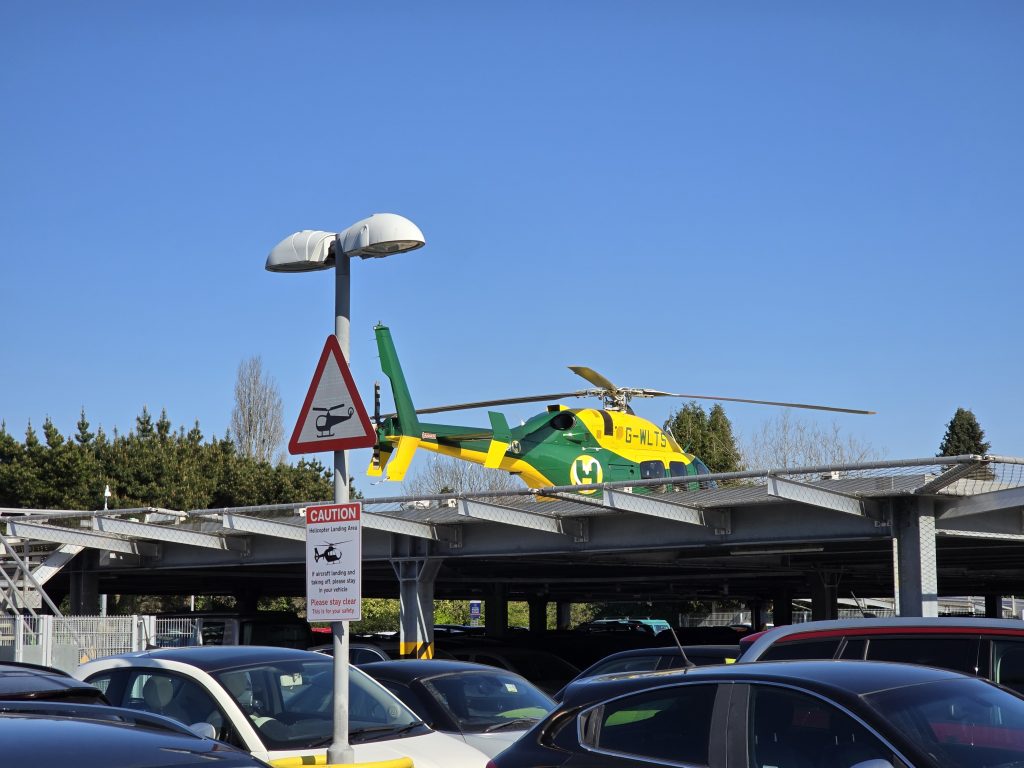
As it stands, there is minimal guidance in SC-VTOL with regards to the appropriate profiles and as such a clean slate exists for VTOL designers. Helicopter Category A profiles have evolved over time, building on lessons learned and improvements in technology. What lessons should VTOL take from this long evolutionary process for application to profiles for Category Enhanced? We are going to focus on drawing lessons from light twin turbine helicopters here because they are closest to the current crop of eVTOL in terms of weight class. Let’s look back in the evolution of how we operate helicopters today.
Evolution of Helicopter Category A Profiles
The first practical light twin turbine helicopter was the Bo 105 certified by LBA in 1970. It was closely followed by other aircraft like the A109 and S76. In developing early procedures to deal with single engine failures, there was a natural tendency to follow fixed wing best practice without really exploiting what a helicopter could do. First some core foundations of the topic.
Basic Category A Principles
Energy
The core requirement for Category A profiles revolves around providing appropriate, safe options in the event the loss of the critical power unit. The aircraft needs to have sufficient energy at all times to either land safety or carry out a missed approach. The two major ways of maintaining that energy are height (potential energy) or speed (kinetic energy). With insufficient amounts of these combined, the aircraft could crash during the go around or hit the ground hard during a reject. Therefore our Category A profile needs to provide a path that maintains the energy level of the aircraft at an adequate throughout.
Vision
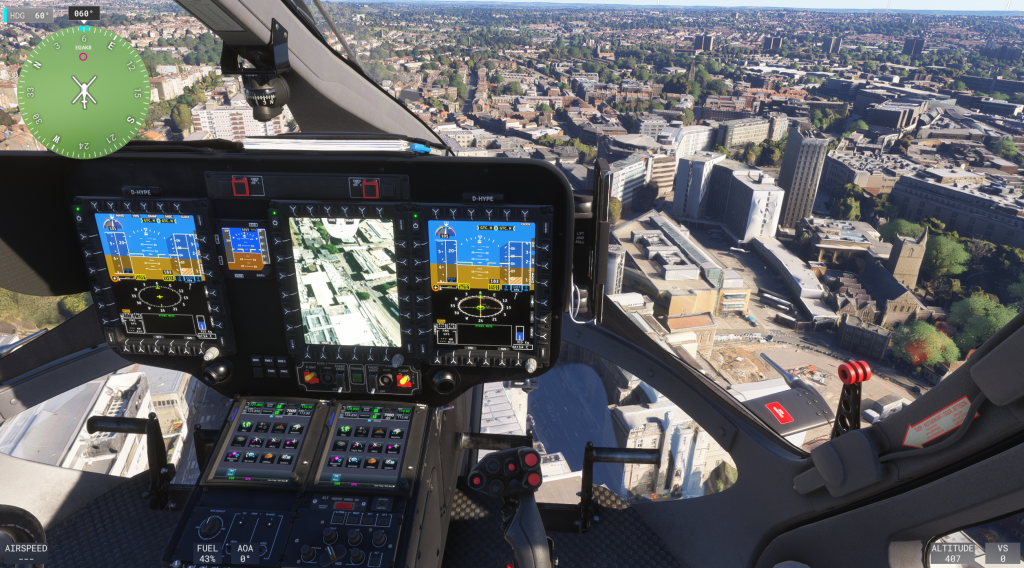
Another important requirement is that the pilot can actually see what they are trying to land on. Thus visual conditions need to exist and the take off or landing profile usually needs to keep the landing point in the natural field of view of the pilot. A true vertical landing or take off profile is now seemingly impossible as the pilot’s view would be blocked by the fuselage (hold that thought – we will come back to this later).
Mediocrity
We cannot design our helicopter or procedures just for exceptionally good pilots. Most of us need to be average for the exceptional to exist! The capability of an average pilot to consistently pilot the helicopter through any Category A profile needs to be assured. Making our take-off or approach profile too difficult to follow would lead to excessive variation in achieved performance.
Let’s look a bit closer at how energy, vision and mediocrity gave us our profiles.
Early Category A Profiles
Clear Area/Runway
The starting point for Category A profiles is the fixed wing world and how they manage performance to and from a runway. In a controlled airfield environment helicopters can afford to conform with fixed wing norms, so the landing profile can be an extremely simple straight-in approach with a “gate” at a set height and speed. The height and speed are determined to leave the committal point (Landing Decision Point – LDP) to the last possible moment where a safe go-around can be completed by Captain Average. The landing point is kept in sight throughout above the instrument console.
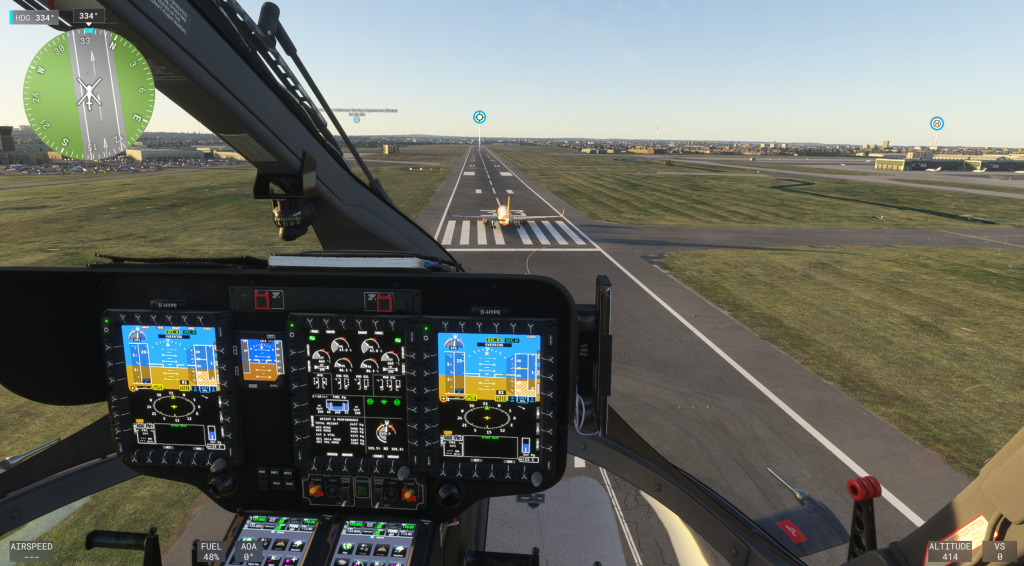
For take off, a normal helicopter forward transition can be used, targeting another “gate”. Where manufacturers looked to make the required runway as short as possible, the manoeuvre could get a little “sporty”. The AW109 normal clear area category A take off is a great example of this. From the hover, pull a lot of power and push the cyclic to fill the windscreen with a plan view of the surface. A 25 degrees nose down attitude change at 3 ft above ground is exciting! Not great for the passenger’s Gin and Tonic though and hence a “soft” version was created with a longer runway requirement.
In any case, VTOL will probably need something similar but there is not a lot of scope to innovate; the profiles used on helicopters for a clear area have barely evolved since the 1970s.
With the helipad approach and departure there is a lot more scope for creativity.
Helipad
The simplest way to create a profile for achieving a safe landing on a helipad is to mirror the clear area profile we have already looked at. The profile keeps the landing point above the instrument console but it is therefore shallow. Despite actually coming into service in 1990s, the MD902 serves as an example of this simplistic approach profile. The RFM specifies an LDP of 100 ft with the picture from the cockpit for a “…6 degree sight picture…” This gives a distance from the landing point of around 290 m for a 10.5% slope. Just to clarify that’s a gradient in percent not an approach angle in degrees.
It’s easy to fly and we can keep the speed up at 35 kt at LDP so what’s the problem? The main issue is the huge area of real estate that needs to be clear of obstacles under the approach path as the approach is so flat. Unhelpfully the MD902 Flight Manual also provides no data about what obstacles are permitted.
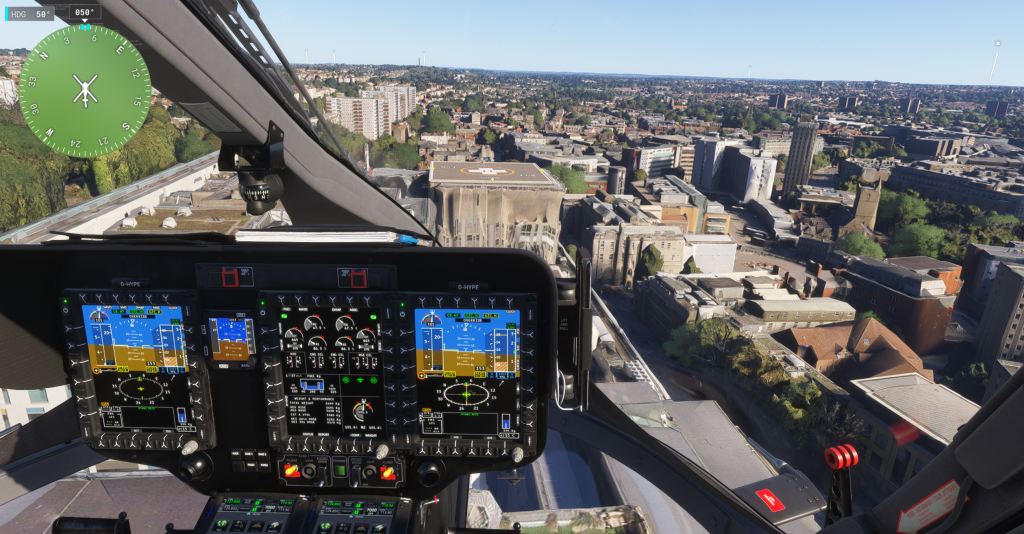
In urban environments, the only methods to achieve this clear space would be an elevated pad above the rest of the obstacles or putting the landing site away from buildings. This constrains the operation of the helicopter, making it far less useful.
The Bell 212 certified back in 1972 was actually had better numbers in this respect with a 200 ft LDP at 275 m out from the helipad for a 22% slope. Still a huge relatively obstacle free area needed under the approach for this shallow approach.
We need to get smarter with our profiles if this is going to be useful for a VTOL.
Category A evolves – getting steeper
If we want to get our helicopter in down amongst the obstacles with a progressively smaller obstacle-controlled area, we have to get our approach and take off steeper. As we have already mentioned a pure vertical profile blocks our view so we need to think laterally – literally. A feature of many helicopter instrument consoles is that they dip down round the edges and/or there is a gap between the console and the side of the cockpit. We can achieve a shallower gradient while still keeping the landing site in view by shifting the visual picture to put the landing site to the side of the instrument console.
This approach was used on early BK117 and EC135. The right “sight picture” put the landing point somewhere off to the side of the instrument panel. For an EC135 this achieves an LDP of 120 ft at 80 m back from the pad for a 45.7% gradient. Now we are getting somewhere. We can tolerate some obstacles around our landing site. However, our missed approach path still takes us straight towards our landing point, necessitating a path clear of obstacles on the other side of the pad too. Our view of the landing sites is starting to get obscured by aircraft structure if we make even small errors.
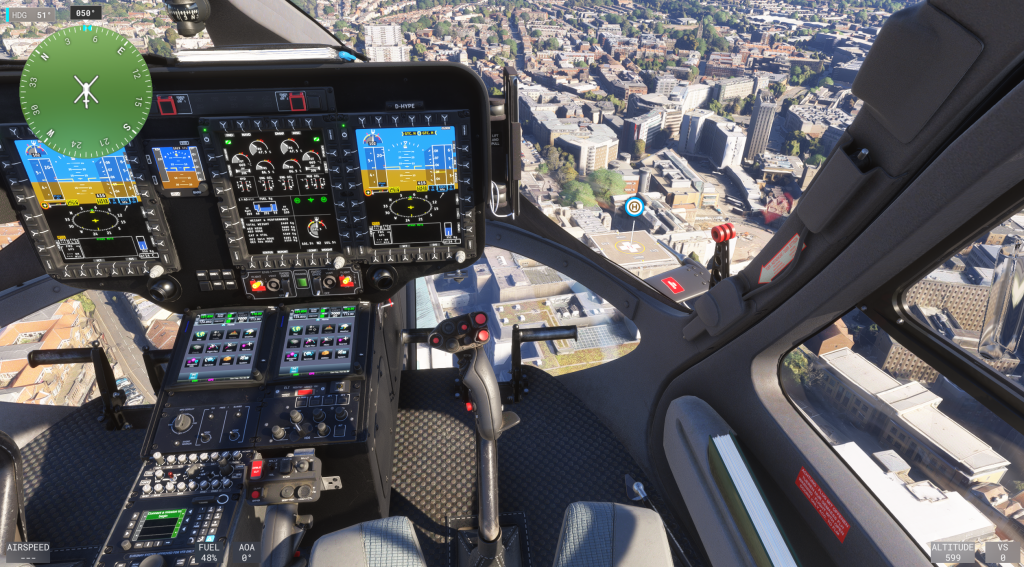
Due to the flexibility of a helicopter there are methods to improve the view. On the BK117 B2, the numbers are pretty similar with 140 ft LDP at 80 m back from the pad. However, the poor view of the landing site due to the instrument console was improved by yawing the aircraft 15-20 degrees to the left to keep the site in view. However, it was still a mediocre view at best!
Our gradient is getting steeper so we can tolerate higher obstacles closer around the site. But is there a way we can we go even steeper?
Even steeper – using the chin window
Our obstacle environment is still quite constrained. Where else can we keep the landing site in view from the pilot’s seat? The chin window!
On the EC135T3 and AW169, the Category A helipad profile puts the landing site view between the pilot’s ankles. This gives a 61% gradient for the EC135T3 and a 99% gradient for the AW169. However, we are now compromising the simplicity of the procedure. At night to a poorly lit site, these approaches and take offs can be quite challenging. A little yaw or an error in descent gradient can put the lights of the landing area out of view.
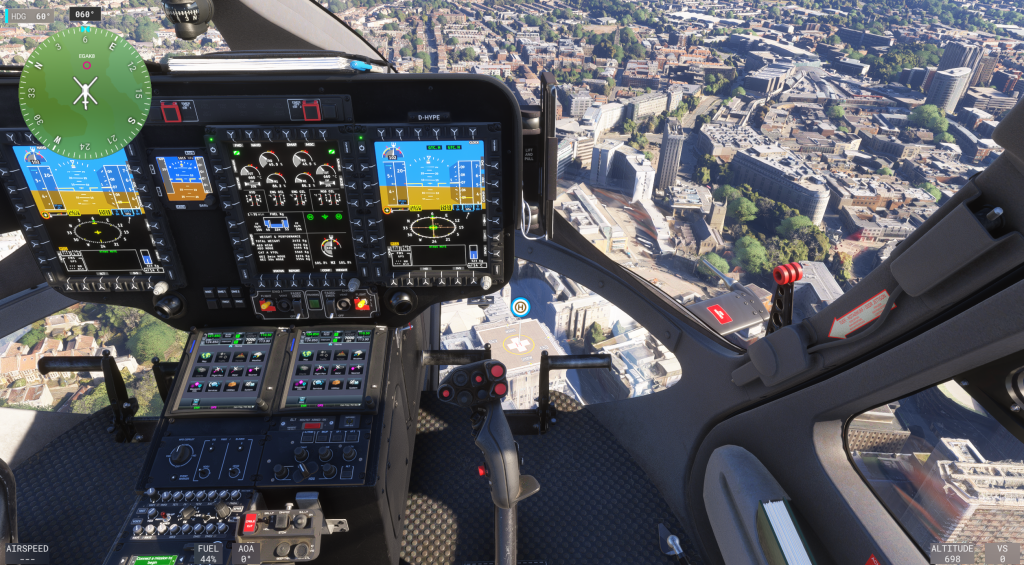
Unless we put a window in the floor, this is about as steep as we can go with a straight in approach. The controlled obstacle area close to the landing site has been reduced in size, making urban landings more practical.
But have we really explored all the options? Could there be something in that yaw the BK117 B2 used to keep the site in view?
The side window – a diagonal approach
In many helicopters, the view to the side of the helicopter is better than straight ahead due to the absence of the instrument console and the deep side windows. Why don’t we put the landing site in this sector of the pilot’s view to allow an even steeper approach?
This is exactly the strategy adopted by Bell on the Bell 429. The landing site is placed just above the lower handle on the door to the pilot’s side. The aircraft can either be yawed 45 degrees to achieve a straight in approach or the aircraft can be flown offset from the direct line to the pad and a diagonal transition onto the pad can be used from LDP.
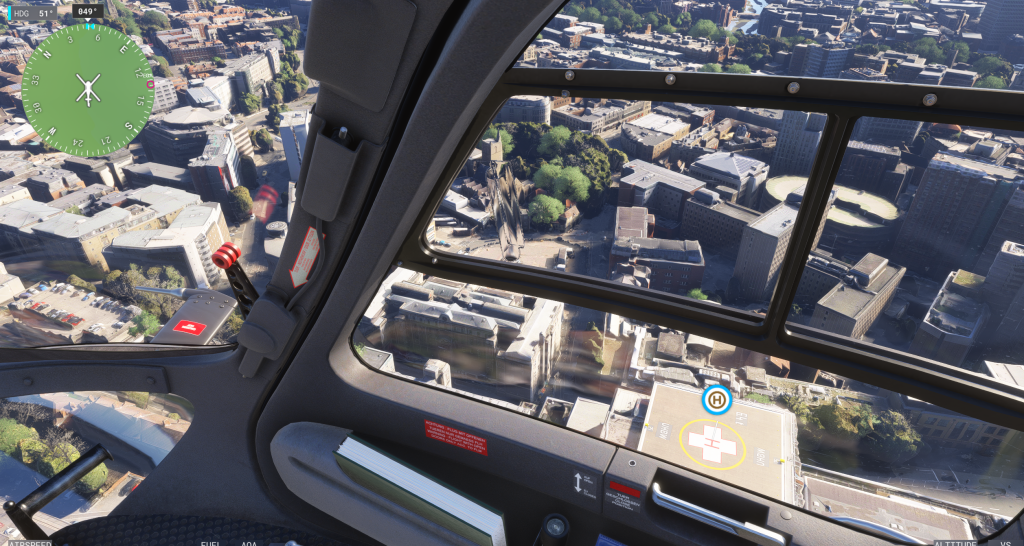
From a practical perspective, this should increase the steepness over the AW169 we saw earlier. We are now looking right down the side of the helicopter from the pilot’s seat and it feels quite vertical. However, if you look at the published numbers in the RFM, it’s only a 89% gradient. By observation from outside its probably more like 150%!
Can we go even steeper?
We now have a very steep approach profile which minimises the area around the landing site where we need to keep the obstacles low. We can offset the approach path to the side and diagonally approach the landing site once alongside. This is actually the basis for some rig offshore approaches such as the VTOL 4 on H135.
Can we take this offset style of approach to another level by making it a true sideways approach?
Thinking laterally – going sideways
The flexibility of the helicopter allows for a sideways approach. This concept is captured in a future update to ICAO Doc 9261 – Heliport Manual and has been applied to some constrained landing sites along rivers.
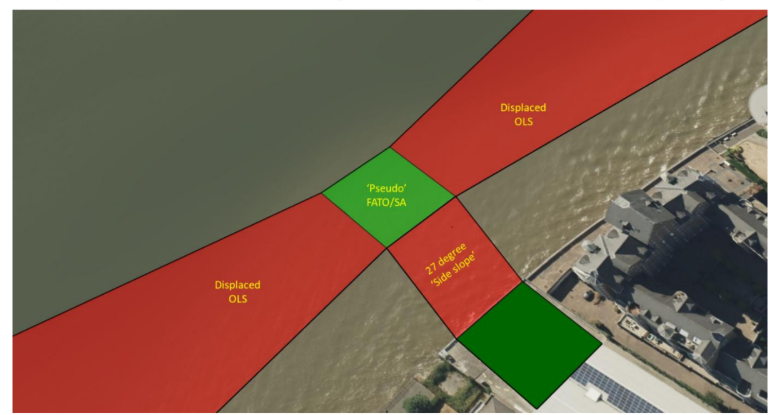
An approach is made offset from the landing site to an area relatively free of obstacles (such as river). The approach is made to a pseudo FATO where the aircraft has sufficient energy/height for a go around. However, once committed, the aircraft slides sideways onto the helipad, possibly using the yawing motion we already mentioned to improve the view of the landing site. This profile is particularly useful for sites on riverbanks or coastlines where a direct approach is too difficult. It does rely on an adjacent clear path so it may not be useful in some circumstances.
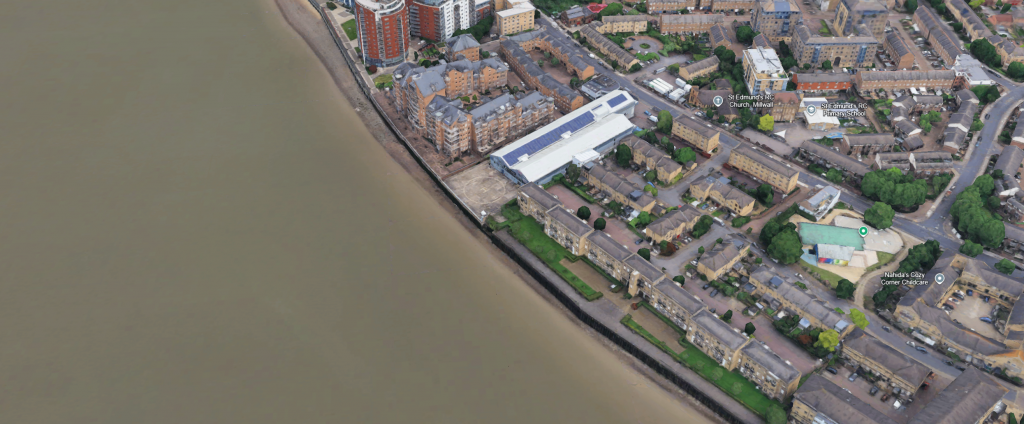
We now reached a zenith of steep approaches using the humble eyeball. Could technology go the next step?
Video cameras for the vertical
A pure vertical departure is relatively simple to achieve with a modern Automatic Flight Control System (AFCS). Get airborne over your helipad, engage hover mode on the AFCS and climb slowly with collective. In the event of an engine failure, control rate of descent with collective, leaving the hover hold engaged to ensure the aircraft does not drift.
But landing is a different ball game. How is the aircraft safely established directly above the helipad in a free air hover when you cannot look straight down? And even if you could look straight down, this would be an uncomfortable seating position (ask any long-liner pilot).
The solution is to use 100 year old technology – a trusty video camera. Mount a carefully angled video camera under the tail and you can see exactly what is underneath the aircraft. Add some modern computer wizardry to project an aiming reticule onto the exact point which is directly below the aircraft and we have a safe means of reaching the correct free air hover point over our helipad. From there, we just need to engage our hover mode again and control rate of descent with collective.
We have now achieved the absolute smallest possible obstacle constrained area for our helipad. A landing site can now be surrounded by obstacles on all sides. Provided the obstacles can tolerate the downwash and the aircraft has sufficient performance we can operate to almost any clear space that is large enough. Newer aircraft have protections and warnings regarding the vortex ring condition so descending vertical flight can be achieved safely. Have we reached the pinnacle of Category A profile design and an exemplar for Category Enhanced to follow?
Well, nearly.
More resilience needed
Remember the tolerance of failure principles for category enhanced? Should the camera fail, the lens become contaminated or the hover AFCS mode fail we would be unable to make the true vertical approach. GNSS jamming might also cause issues depending on the functionality of the hover mode. We might even have to abandon our approach for a minor issue like a bug strike to the camera.
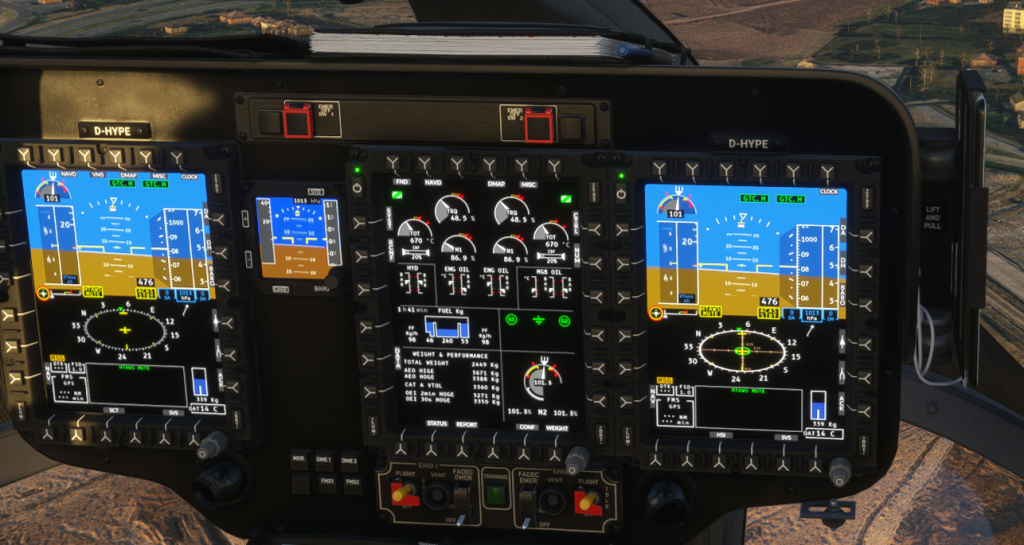
This is a possibility covered in the vertical approach profiles which already exist, for example on Airbus Helicopters H145 D3. The crew are reminded that the profile is unavailable should the hover mode or camera be unserviceable. The crew needs a backup plan. This will likely require a steep, visually judged approach. Such a reversionary procedure must be part of any VTOL design strategy and operational plan.
Conclusions
The increased trend for helicopters towards true vertical arrivals and departures for confined heliports is definitely something VTOL designs should bake in from the start. Modern helicopters will have the capability natively going forward if they are going to compete with existing designs. But having a steep, visually judged Category Enhanced profile is going to be a necessity to ensure continued operation in the face of inevitable system mishaps. It will be interesting to see where the manufacturers go and whether powered lift or vectored thrust take us somewhere completely new in this field.
Why not take a look at some of our previous articles.
- Lessons in how to manage a helicopter engine malfunction
- Light twin helicopter AFCS – Have Airbus won the race?
- Maintenance by pilots – can the training be improved by sharing?
- Flight simulation revolution – A new method for matching training need to simulator capability
- Helicopter Single Engine IFR – New horizons
- Making the grade – understanding climb gradients in the go around
- Unfair Skies: Restrictive helicopter instructor rules and how to fix them
- How to create an instrument rating instructor (IRI) – A helicopter anomaly
- The evolution of Category A Helipad procedures – A strong foundation for VTOL to learn from?
- Strips vs dials – Which is better?
- Under the weather – are UK HEMS weather rules broken?
- Mastery of the GTN 750 – Ten things you should know
- Checking anomalies – The weird requirements of helicopter proficiency checks
- It’s all about the switch – How helicopter designers need to think about the human in the cockpit
- Engine Failure Training Mode – A safety tool that will punish the unwary
Leave a Reply