
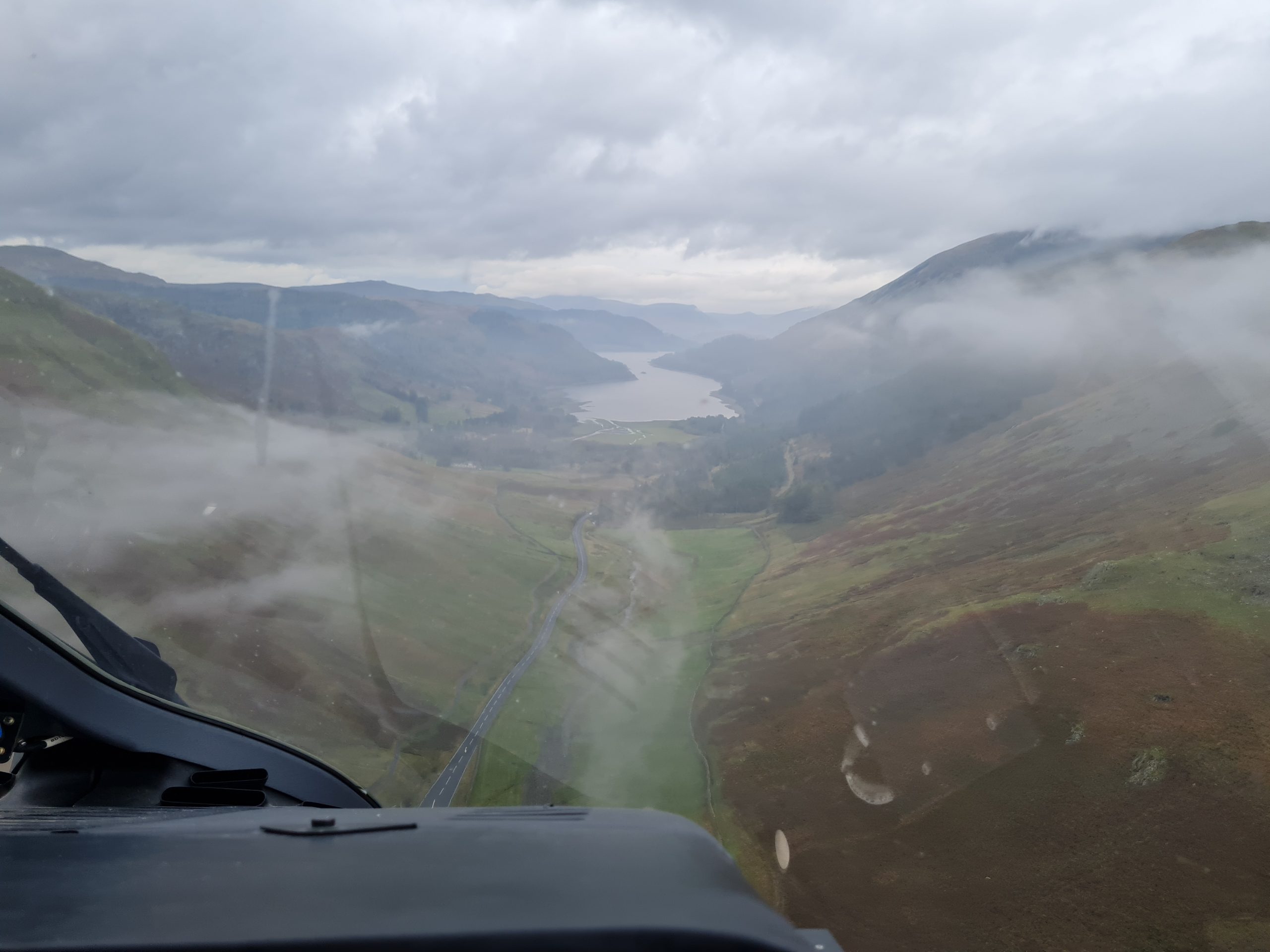
Aviation is a complicated business, requiring complicated rules. In the field of Helicopter Emergency Medical Services (HEMS) the rules for weather limits are complex but have they become too confusing, leading to mis-understanding and a normalisation of deviance?
In this article we look at the current state of play for UK weather operating limits for helicopters, with a particular focus on UK HEMS. We lay out the multitude of reference regulations which need to be studied to understand the topic and the numerous inconsistencies and oddities that make it harder for operators and pilots to safely operate inside the rules.
We then look at how EASA has moved forward to eliminate some of the issues and how the UK could improve still further on rules to be world-leading in safely improving the capability of HEMS operations.
Let’s dive in.
Contents
Regulations, regulations and more regulations
Weather is a threat to aviation in general and to mitigate this threat there are rules. These rules cover what conditions are acceptable for aircraft to fly in, both for visual and instrument flight. For this discussion, we are focussed on visual flight conditions.
Pilot tales
Often when a UK HEMS pilot is at an incident site, they fall into their secondary role of engaging with the public. A question that often comes up is what sort of weather stops the helicopter from operating. In an attempt to simplify the situation, pilots boil it down to 3 things: cloud, visibility and darkness. These 3 variables are also the core of how the weather limits are defined for UK HEMS.
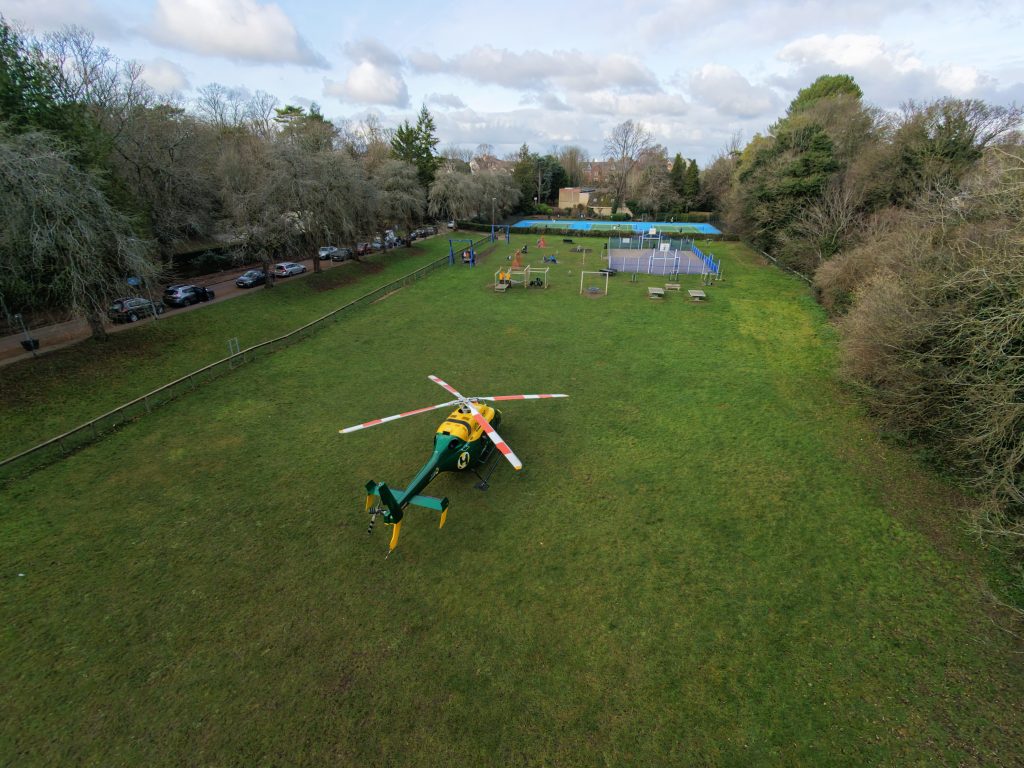
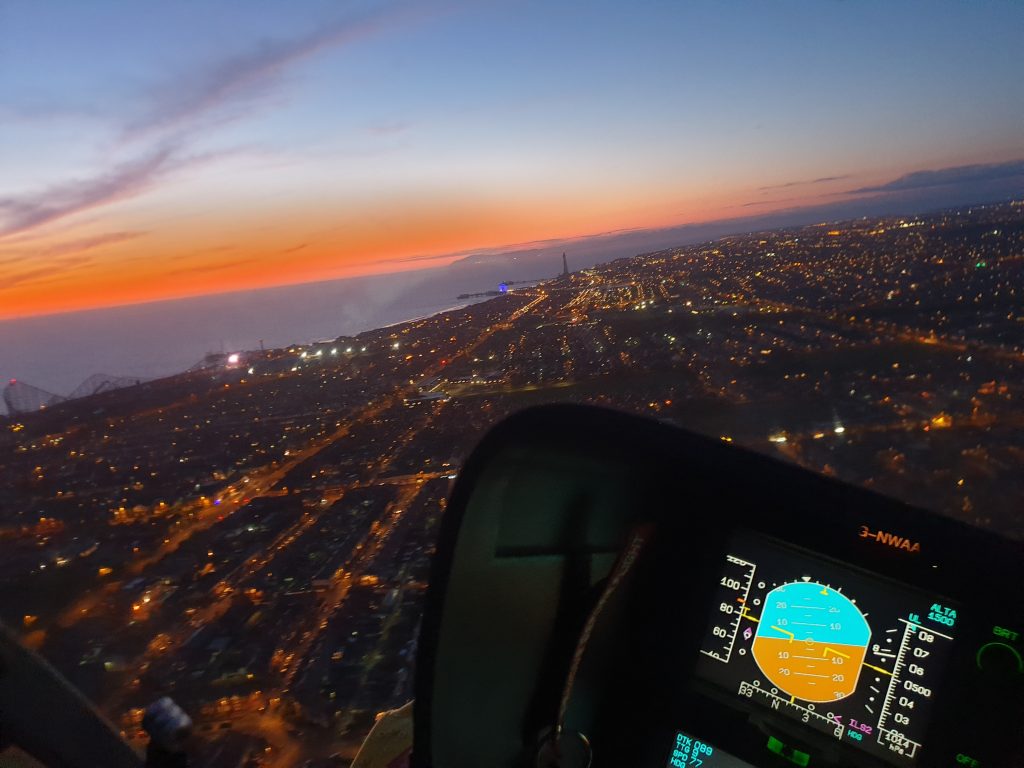
If the cloud is too low to the ground, we cannot fly. If the visibility is too poor, we cannot fly. If it gets too dark we cannot fly to patients unless we have some help from Night Vision Goggles or community volunteers. Let’s look at how these variables are captured in the rules.
Where are those rules?
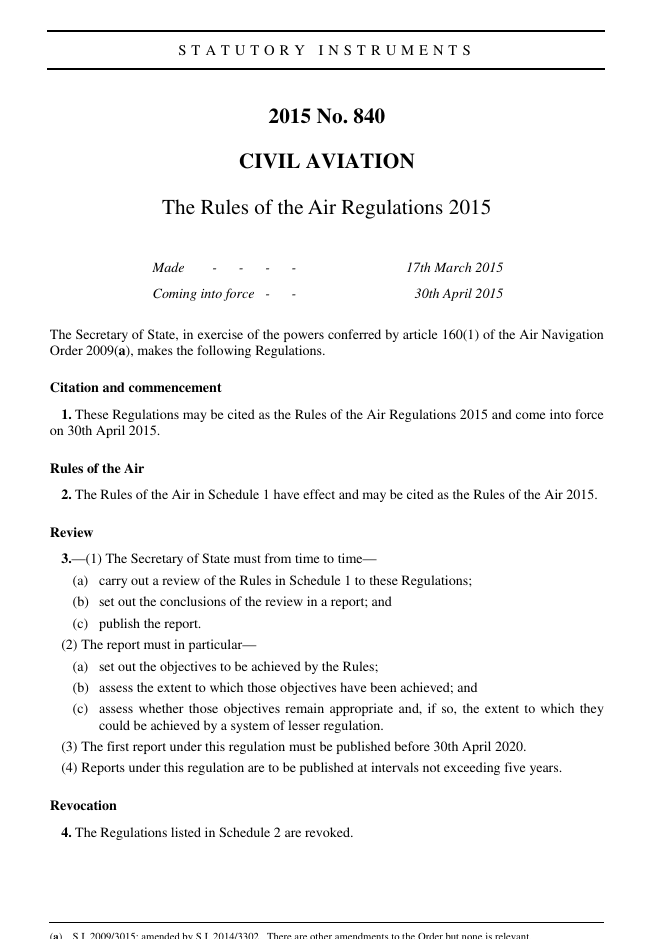
Where to start when looking for rules? Let’s start from the Air Navigation Order, which gives the Secretary of State for Transport the mechanism to make operating limits rules through the Rules of the Air. Ah, that would be the Rules of Air Regulation 2015 (ROA 2015) then?
Well not quite. Ever since the UK joined EASA (and then left) we have had a set of rules called the Standardised European Rules of the Air (SERA) (Actually now called the UK Standardised Rules of the Air Regulation – but we kept the acronym!). The UK Rules of the Air Regulation (ROA 2015) are designed to “…supplement Annex 1 (“SERA”) of the SERA Regulation” and “…should be read in conjunction with SERA”.
So far that’s three separate regulations which give us our rules. Not much in the ANO, then we look in SERA, with a UK supplement in the ANO 2015. So that’s it. Three rules books to check through it not too bad.
Ha! Not even close! But let’s look at SERA first. Just remember we started at 3 documents.
SERA
For our dive into SERA we are focussed here we are only looking at what the weather limits are from our big 3: cloud, visibility and darkness. These are the critical parameters and these rules apply to any operation from a humble PPL student up to a steely-eyed veteran aviator flying under VFR. We will cover HEMS later. Just to clarify if you cannot meet the VFR minima you must operate under IFR rules.
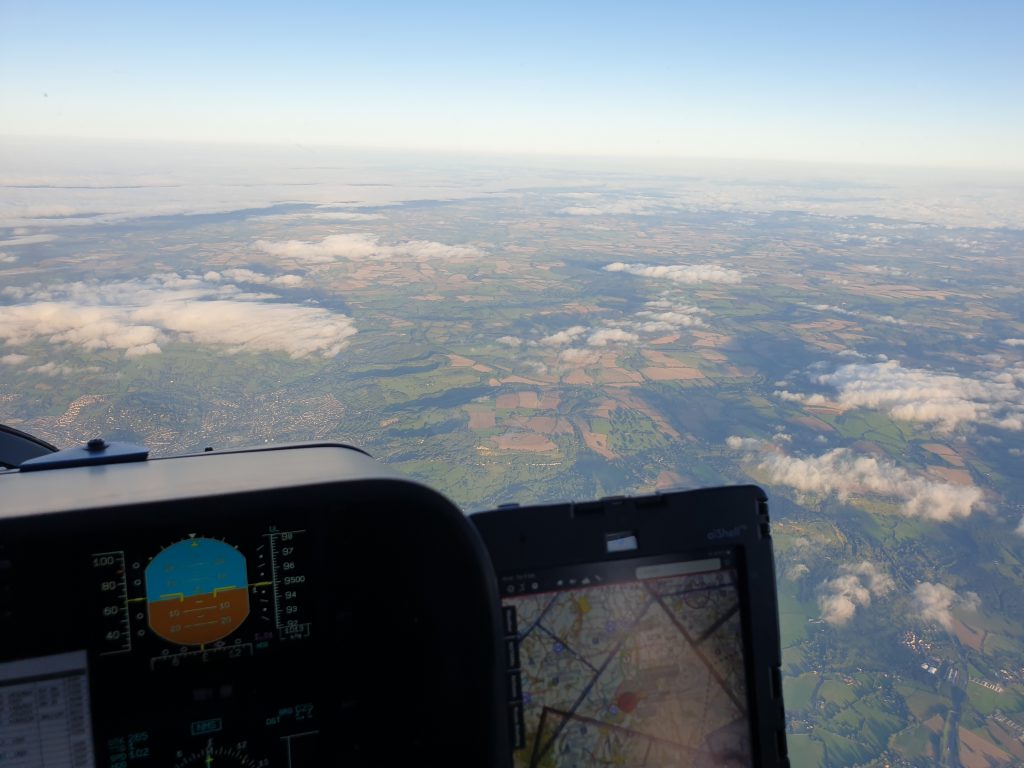
Our starting point is SERA.5001 – Visual Meteorological Conditions (VMC) and distance from cloud minima. This lays out different limits for different classes of airspace. For helicopters, there are really only 2 classes of relevance in the UK for VFR: Class D and Class G airspace.
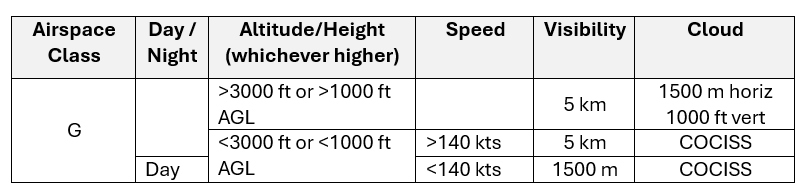
Class G – Day
The first question is how high are you. Above 3000 ft AMSL or 1000 ft above ground level, whichever is higher, the limits are:
Class G above 3000 ft AMSL or above 1000 ft above ground level (AGL)
5 km visibility
1500 m horizontally, 1000 ft vertically from cloud
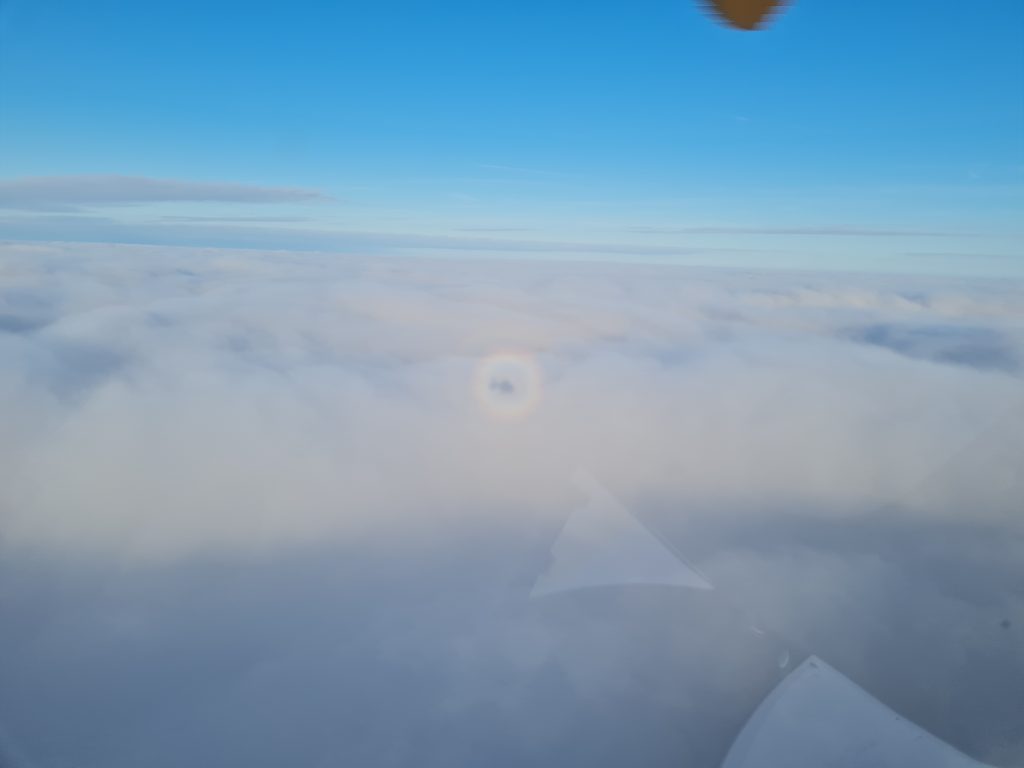
OK. Got that. Straight forward. What about below those heights?
Class G below 3000 ft AMSL or 1000 ft AGL
5 km visibility
Clear of cloud, in sight of the surface (COCISS)
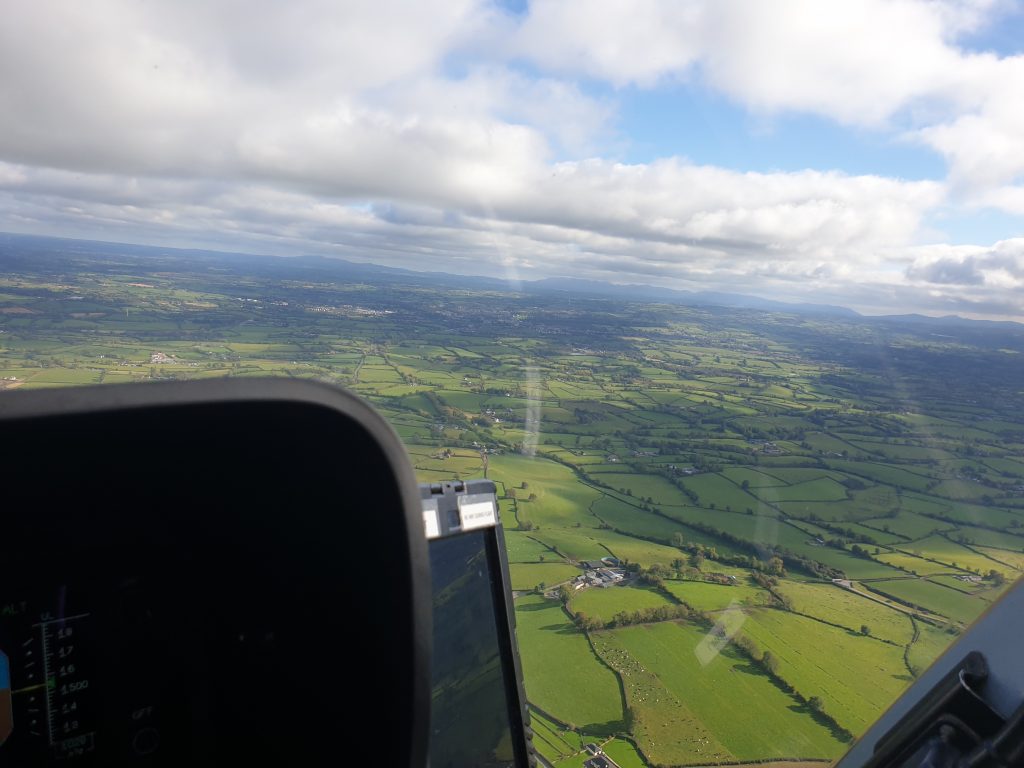
OK, that’s relatively straight forward. Bit restrictive on the visibility though! I am in a helicopter; surely, I can get airborne on a slightly misty day!? OK then, as long as you slow down.
Class G below 3000 ft AMSL or 1000 ft AGL
AND
Day time, 140 kts or less appropriate to conditions
1500 m visiblity
COCISS
Ah, ok. Bit more practical. I can remember that but perhaps a table might help.
Now on to the Night VFR rules.
Class G – Night
So from the above, we can see we have a restriction now; we can only have the reduced visibility for day operations. So let’s modify our table and we are done!
Wait for it! You have jumped the gun!
Looking at SERA.5005 – Visual Flight Rules it says “…When so prescribed by the competent authority, VFR flights at night may be permitted under the following conditions:”
This is clearly a holdover from EASA where there were many different authorities instead of just the UK CAA as now. However, this clumsy regulation pointing to “an authority” persists. Let’s go looking to see if night is actually permitted before we add it to the table.
CAA Permissions
When the UK needs to promulgate such permissions across the whole community, it uses a series of documents called the Official Record Series (ORS). For our discussion it is ORS 4 – Miscellaneous. The one we need is called ORS4 1477 at the moment (they are periodically re-issued). It says:
Night VFR
a) The Civil Aviation Authority prescribes and permits, under SERA.5005(c) (Visual Flight Rules), flight in accordance with the Visual Flight Rules at night in the United Kingdom.
b) The VMC visibility and distance from cloud minima for night VFR flight shall be in accordance with SERA.5005(c)(3).
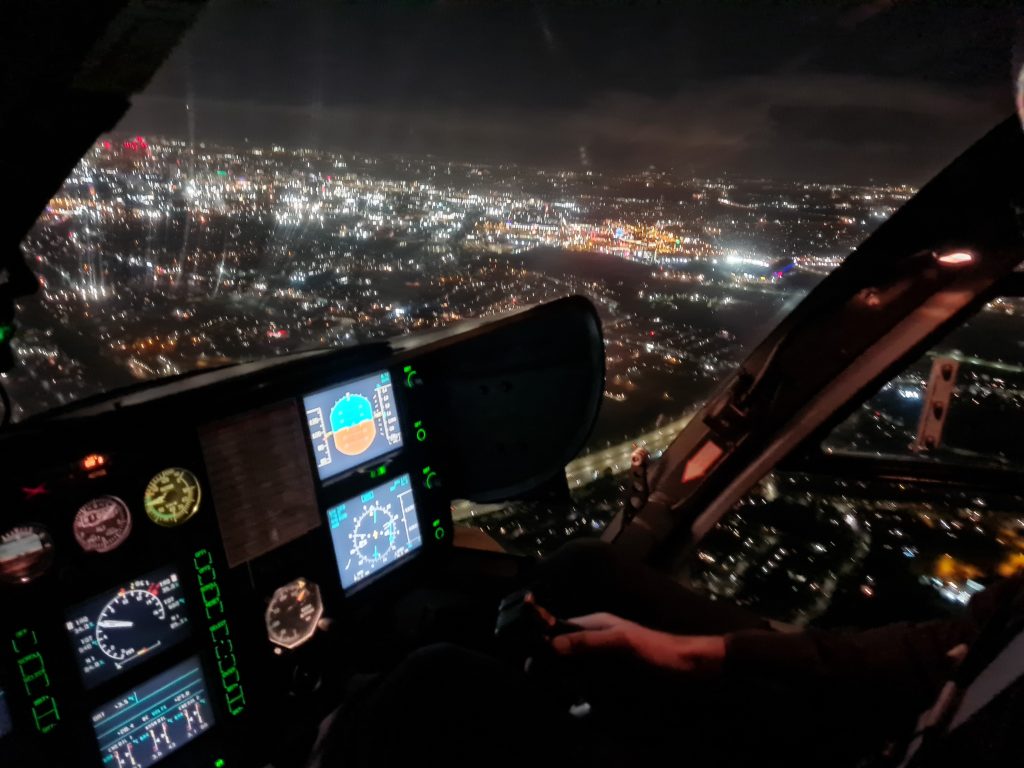
OK, so we can do VFR at night. Let’s have a look at SERA.5005(c)(3).
ADDING Night VFR weather minima
SERA.5005(c)(3) allows us to expand our table a bit. It takes a lot to interpret SERA.5005(c)(3) as it contains several incorrect references to paragraphs in SERA.5001 which are referred to as sub-paragraphs (a) and (b) when in fact they are now Notes 3 and 4. Unhelpful! In any case, here’s the updated table with a summary for helicopters:
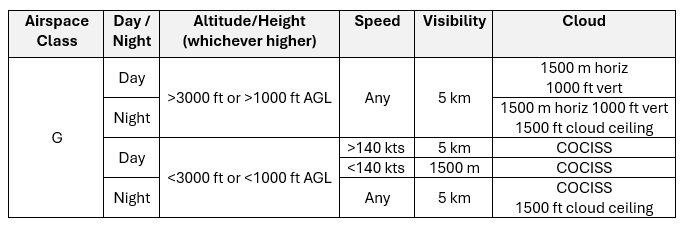
Hang on, what’s that new term? What is cloud ceiling? We need to differentiate from a cloud base. Let’s define them:
Cloud Base vs Cloud Ceiling
Cloud base – The lowest bottom of any cloud in the defined airpsace (eg up to 5 nm either side of track)
Cloud ceiling – The lowest bottom of cloud with covers more than half the sky (which is Broken or Overcast).
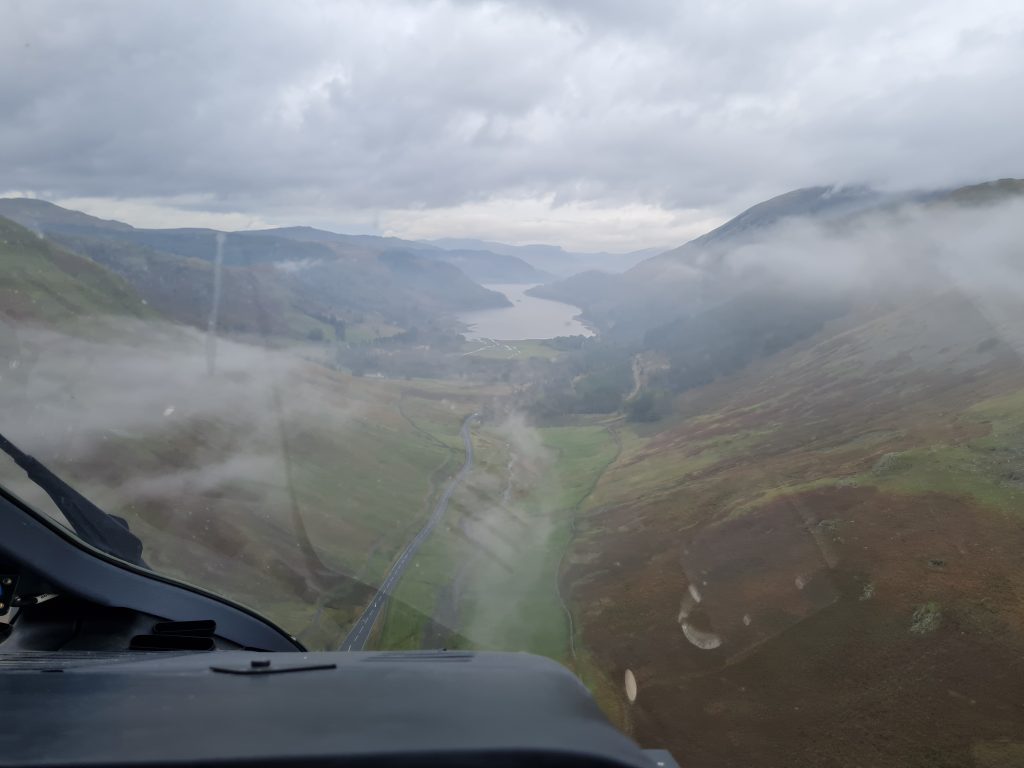
For night flying, it’s cloud ceiling.
Just a quick summary so far. That’s 5 variations in weather, generated from 4 documents; a pilot needs to memorise these for normal operations. It is clearly not complex enough, so let’s add Class D airspace!
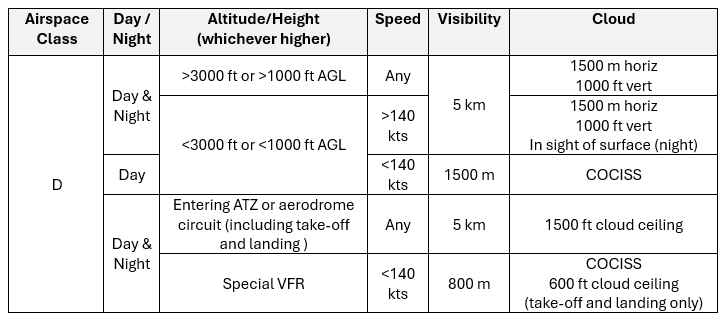
Class D – Day
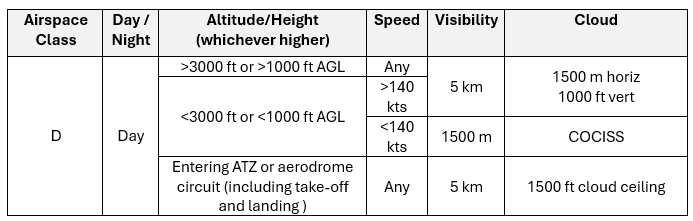
Looking back at SERA.5001, it’s actually relatively (!) simple for day time to add some lines for Class D airspace.

Within a control zone, there are some extra rules as they are controlled environments. The extra rules apply when entering the ATZ, entering the traffic circuit or taking-off or landing (SERA.5005(b)). Let’s add that in:
Something Special
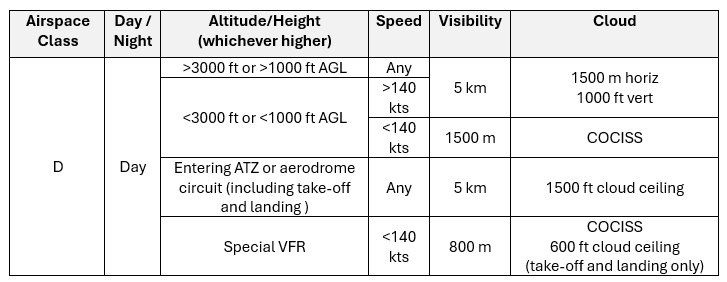
But is it that simple? By now you know of course it isn’t! There is the option for the pilot to request permission to operate in conditions below normal VFR limits inside a control zone in Class D airspace – this is “Special VFR”. This is captured in SERA.5010. ATC can give permission to operate under Special VFR for helicopters down to the following minima, which we can add as an extra line (note Special VFR is in place of all the other rules above it):
Class D – Night
Let’s add night in. Again the authority needs to allow night operations. This is again done through ORS4 1477. As for night VFR in Class G, the allowance for reduced VFR minima when we slow down is not allowed at night.
Strangely though, in SERA.5010 – Special VFR, the 800m minimum visibility requirement is not increased by ORS4 1477 for night flight. This is an absurdly low minimum visibility for VFR flight at night! These points give us an update for the table.
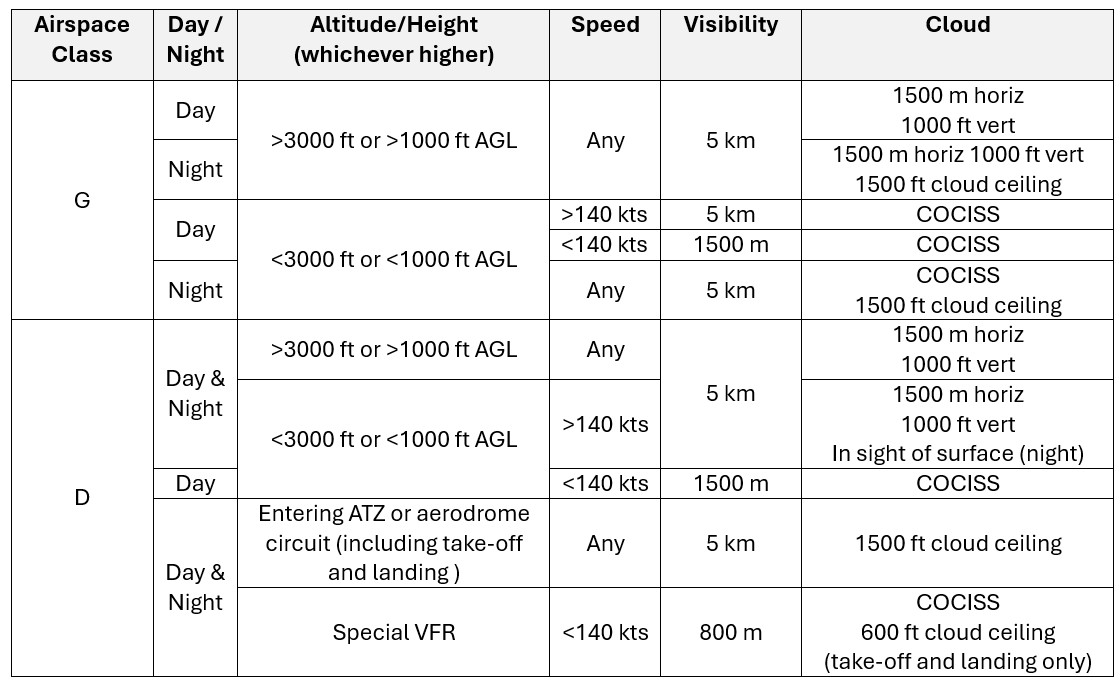
VFR Summary
After this journey through SERA and the ORS4, we can now provide a complete table for the VFR pilot in the UK. Remember this applies to any helicopter pilot and we have not even touched HEMS yet.
HEMS
After building up our VFR table for helicopter pilots, we are going to expand into HEMS operations. Sadly this does not mean a HEMS pilot can discard the previous table. The HEMS VFR weather limits we are going to outline now, only apply when the pilot has a suitably trained person in the left hand seat – this can either be a Technical Crewmember (TCM) or a second pilot (for multi-pilot operations). When the HEMS pilot is alone, the rules above apply.
Another regulation?
In the UK, the rules applicable to HEMS VFR weather minima are found in Part SPA, Subpart J (HEMS) inside the Air Operations Regulation (965/2012). For our purpose we will call these regulations SPA.HEMS.
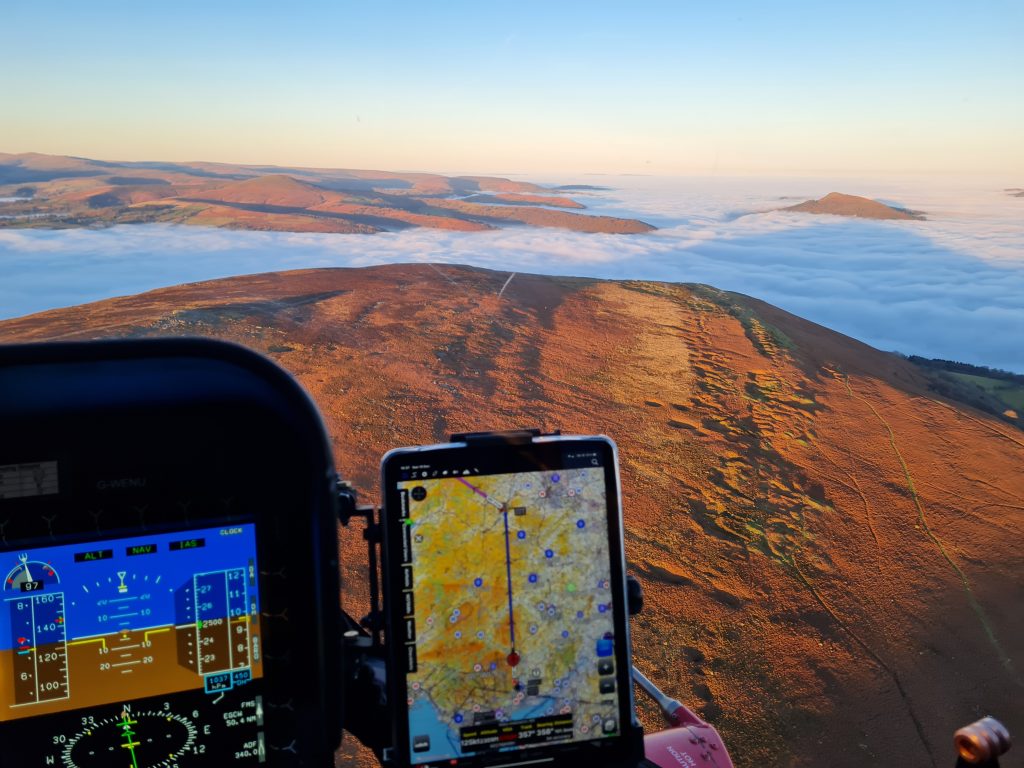
In SPA.HEMS, the rule relevant to VFR limits is SPA.HEMS.120 – HEMS Operating Minima. This is a deceptively short rule, with a handy table. Do not be fooled! There are some hidden complexities here.
More considerations
The rule has 2 new considerations:
- The Performance Class (PC1, PC2 or PC3)
- The number of pilots in the operating crew (single- or multi-pilot operation).
The latter is a weird distinction to make. Remember this is single pilot operation with a TCM. So in both cases we are multi-crew; why have different limits for each? Funnily enough, EASA realised this and changed this rule completely. More on that later.
HEMS VFR limits
With those new considerations in mind, we can build a table. Let’s start with PC1 and PC2 as this covers all HEMS operations in the UK. Note the night minima do not differentiate between using NVIS or not (again EASA realised this was a little odd – see later).
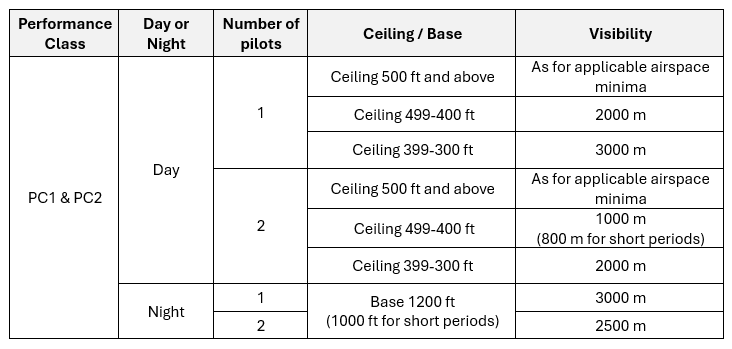
The Night Anomaly
Remember earlier, the normal night VFR cloud levels were expressed as ceiling? So FEW or SCT cloud did not count. Now for HEMS it is cloud base. So FEW and SCT now do count. So should a few wispy clouds be at 1200 ft, you would not be able to dispatch for HEMS but you could for normal commercial operations. That is absurd. In addition, no account is taken of the ability of an NVIS equipped crew to see cloud. Funnily enough this is fixed in EASA – see later.
The PC3 Anomaly
We have skipped PC3. This is because PC3 would typically be single-engine HEMS, which does not happen in the UK, or operations at very high altitude, which again does not happen in the UK. You cannot do PC3 over congested areas under many conditions. But perhaps we should include it for completeness.
Here is the table with PC3 added in.
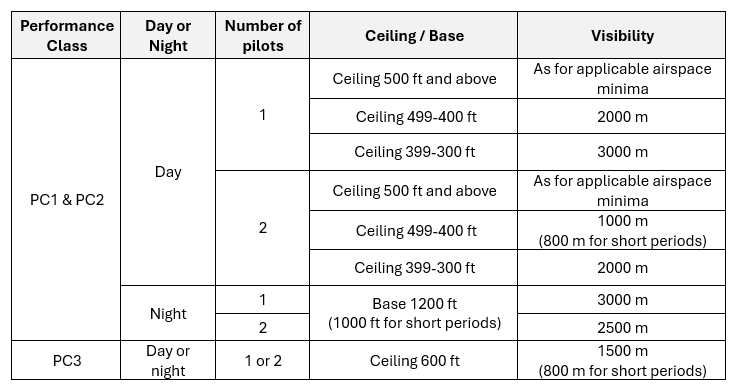
Hang on! Under PC3, no matter what airspace I am in, no matter how many pilots I have, I can operate down to 800 m visibility for short periods. That more permissive than PC1 and PC2. That’s crazy! Again, EASA realised this. See more later!
Expanding Applicable Minima
For now, “As for applicable airspace minima” is not very readable for our HEMS pilot, let’s expand on that. We need to add back in our speed, altitude band and the airspace classification to work out the “applicable airspace” bit.
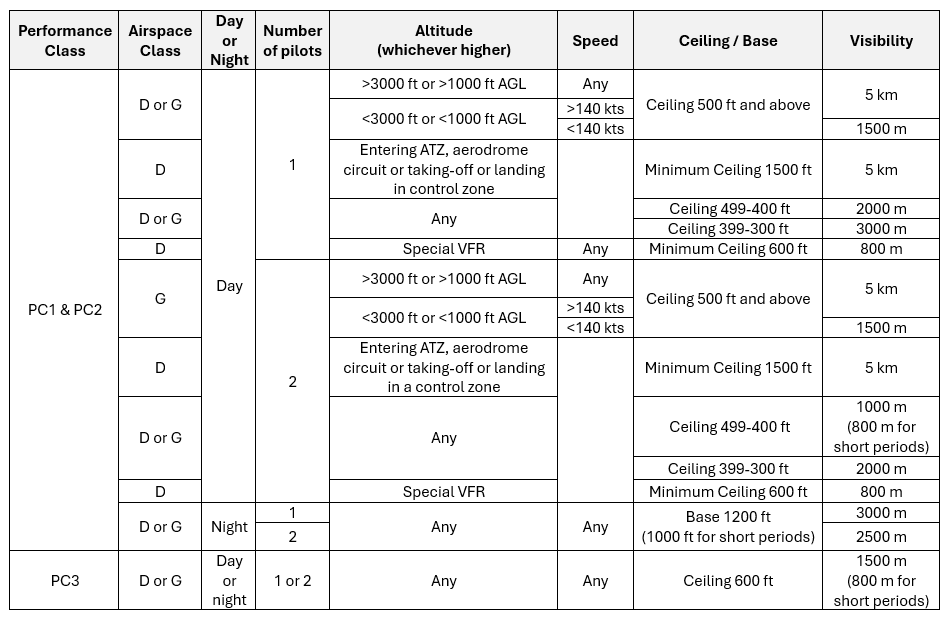
Woah! That got really complicated all of a sudden. You can see why they summarised it at “Applicable Minima”.
More regulations!
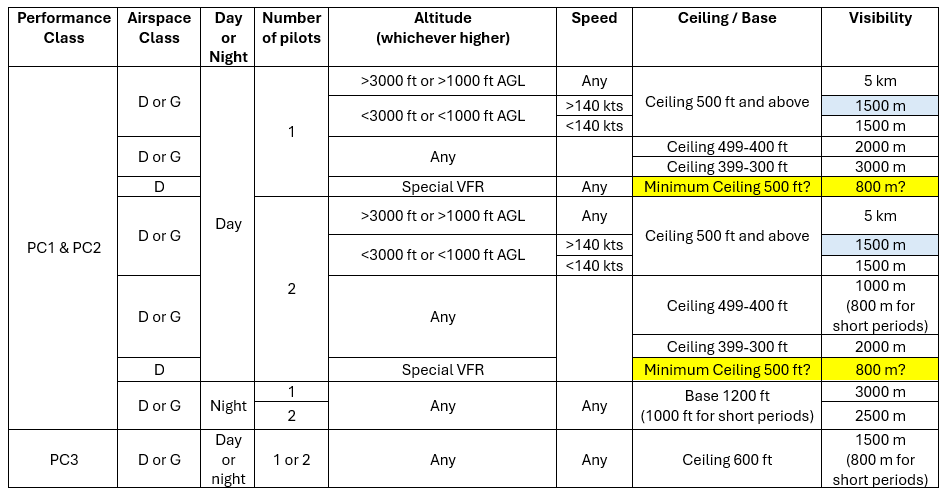
However, it gets more complex but at the same time simpler. There are some specific alleviations that are applicable to HEMS in the UK by exempting HEMS from restrictions entering an ATZ, aerodrome circuit or taking-off or landing and for Special VFR. These are again an ORS4; this time it is ORS4 1603. This changes a few lines in the table to make things more permissive and simpler for HEMS.
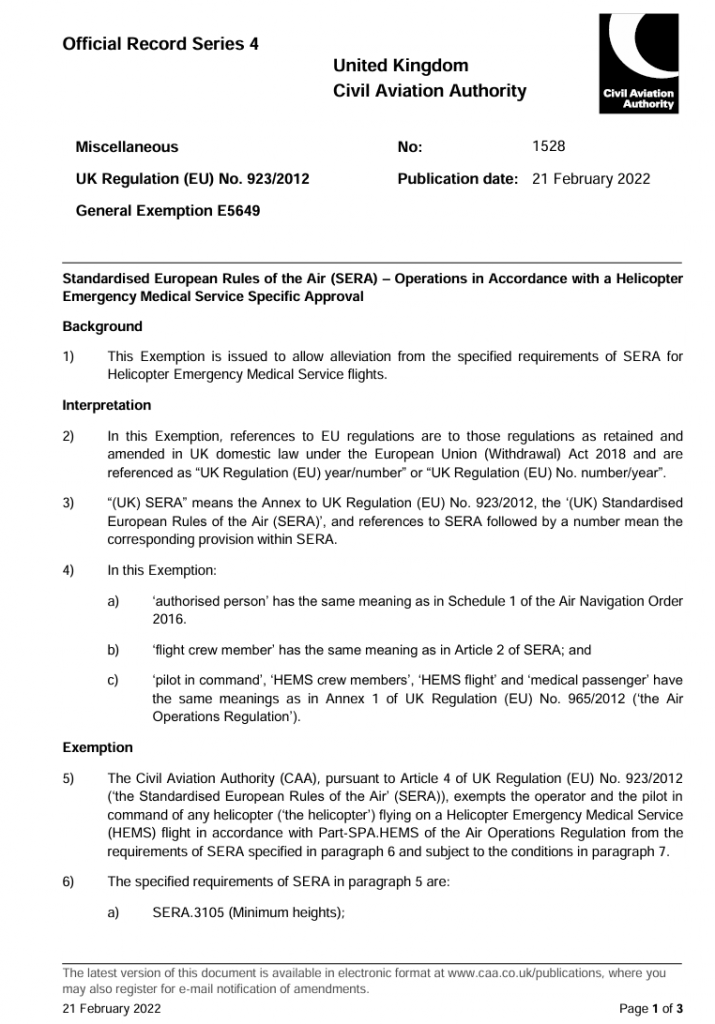
ORS4 1528 is also relevant here as it alleviates some of the VFR minima – in particular it allows 1500 m minimum visibility below 3000 ft AMSL (see ORS4 1528.6.b). This is highlighted in blue.
The minimum visibility in both cases is open to question due to the wording of ORS4 1603, SERA.5005(b) and SERA.5010(c), where in each case the absolute minima is not stated explicitly. Note Special VFR is not actually now permitted at night for HEMS as the night minima are absolute from the HEMS table in SPA.HEMS.120. Not sure if they meant that! Changes highlighted in yellow – note some rows are deleted entirely.
Applicable Minima Anomalies
So why is this section called the “Applicable Minima Anomalies”? Look closely. There’s some absurdities in there.
- Scenario 1 – Our multi-pilot HEMS crew is operating with a cloud ceiling of 600 ft. They are passing through Class G airspace away from an airfield. If you follow the table, their minimum visibility is 1500 m (from the expanded “applicable minima”). Now the weather deteriorates to a cloud ceiling of 450 ft. What is the visibility minima now? 1000 m with brief periods of 800 m? Eh? The cloud base gets lower and the visibility is also allowed to be lower? That is ridiculous.
- Scenario 2 – Our multi-pilot HEMS crew is operating in the cruise at 3500 ft altitude towards a mountain range at 130 kts, just under the cloud layer. The minimum visibility is 5 km. As they approach the mountain range, away from any people or man-made infrastructure, they get closer to the terrain (still at 3500 ft altitude). As they close within 1000 ft AGL, the visibility minima drops to 1500m. As they get even closer to the terrain, the cloud ceiling at that point is less than 500 ft AGL meaning the visibility minima is now 1000 m, occasionally dropping to 800 m. The worse the cloud ceiling gets, the worse visibility they are allowed. That is doubly ridiculous.
The totality of the VFR rules for a HEMS pilot
So, after no less than 7 separate documents consulted, we have a few variations. A UK HEMS pilot might need to remember the complete contents of the following tables if they operate in both single and multi pilot roles. That is no less than TWENTY FIVE different variations.
A quick reminder of the anomalies:
- Night anomaly – due to use of cloud base vs ceiling, HEMS more restricted than non-HEMS aviation. In addition NVIS capability not recognised.
- PC3 anomaly – Aircraft operating under PC3 have less restrictive limits than aircraft operating under PC1 and PC2.
- Applicable minima anomaly – in some cases for multi-pilot operations, worse visibility can be accepted with lower cloud bases
- Special VFR anomaly – Special VFR at night is inadvertently not allowed for HEMS
The current solution
This complex situation is not practicable for the line pilot to understand. In some operations both multi-pilot and single pilot operations are conducted so pilots have to learn both. The typical Operations Manual for a HEMS operation is trying to provide capability to the customer, balanced this against safety and so will generally include a simplified version of the table above. However, this could lead to some nuances being lost and crews getting into very challenging flight conditions or capability getting eroded with over-simplification within the operator.
The current regulatory basis clearly needs some revision. First let’s look to our EASA colleagues for their view.
The EASA improvements
EASA has made some mis-steps in regulatory changes since the UK left (see “NVIS under IFR in SPA.HEMS” or the helicopter section of Appendix 8 to Part FCL). However, with respect to HEMS VFR limits it is leading the way.

Looking in EASA SPA.HEMS, the main change is that the HEMS weather limits have moved into the AMC. This lets operators suggest Alternative Means of Compliance (AltMOC) if they see an alternative way of achieving the regulation safely. Secondly they have addressed the following anomalies:
- Night anomaly – they allow use of cloud ceiling instead of cloud base with certain caveats and distinguish between NVIS and non-NVIS.
- PC3 anomaly – reference to Performance Classes has been removed
- Applicable minima anomaly – the rules have been simplified including removal of the distinction between single pilot operations with a TCM and multi-pilot operations.
EASA HEMS VFR limits
The new EASA HEMS VFR limits are in AMC1 SPA.HEMS.120(a). They are much simpler to comprehend and we can incorporate into a new table. Note this is actually slightly more conservative for non NVIS night flying (it’s 1200 ft / 3km).
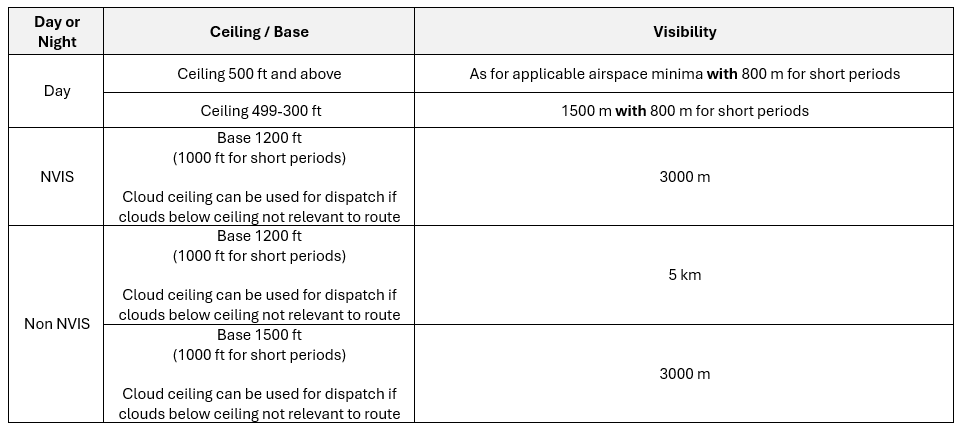

Again, we can expand the “applicable airspace minima” term but we can also assume similar ORS4 would be published to modify these minima. However, EASA has also modified SERA.5001 which changes the rules for operations at lower speeds (<140 kts). This now only applies to Class G airspace but allows helicopters to operate down to 800m visibility. Combined with the new HEMS VFR rules. This gives the following table:
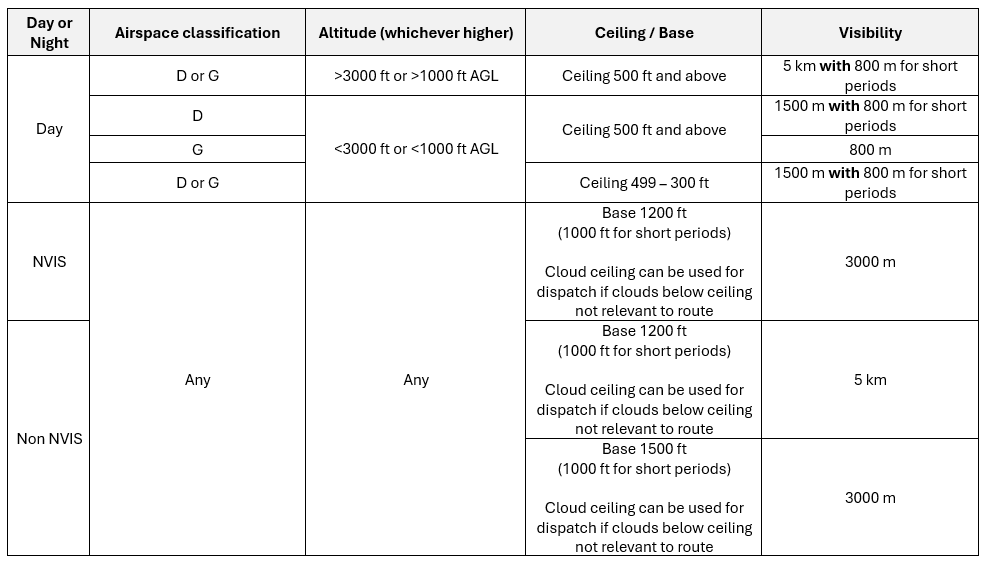
Now that is more like it; this is simpler. However, the regular VFR table is still complex with the recent EASA VFR updates. Here’s is the updated table:
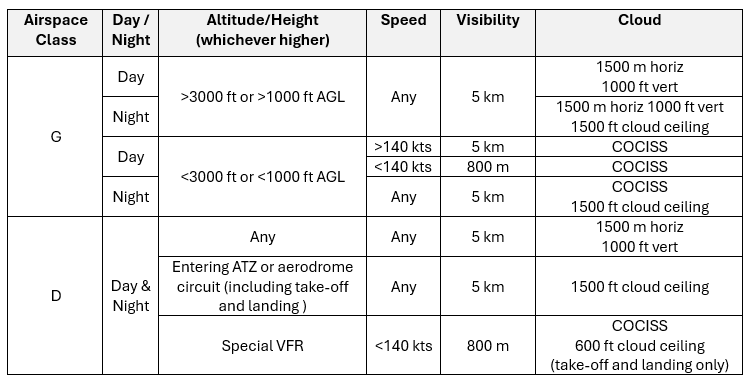
Future UK VFR limits for helicopters
So the rules in EASA are arguably simpler but there is still a dose of unnecessary complexity which does not seem to address a safety hazard. There are several things the UK CAA could do to improve on the EASA model.
Remove “Applicable minima”
The major issue driving unnecessary complexity for HEMS is the “applicable minima” phrase.
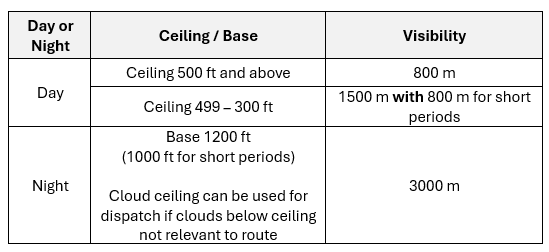
The UK could make a bold step and just specify a number in the HEMS minima, rather than forcing operators to trawl SERA, ORS4 and ROA 2015 for further detail. We think it is reasonable, given EASA has already done so, to allow a blanket approval for 800m with the exception of very low cloud bases.
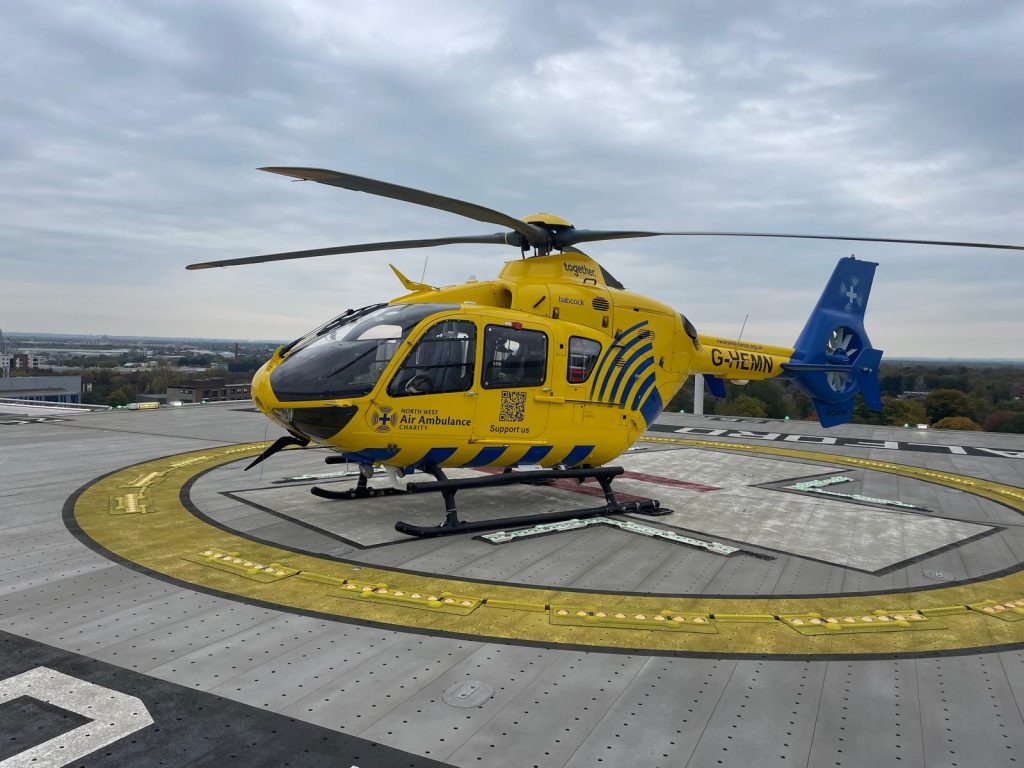
Then for night, whilst we acknowledge NVIS brings a lot to the mission, there does not seem to be an overriding need to differentiate the actual night minima. Therefore the following VFR HEMS limits are proposed (the current guidance material which provides guidance on appropriate speeds in reduced visibility should remain):
Simpler rules for VFR
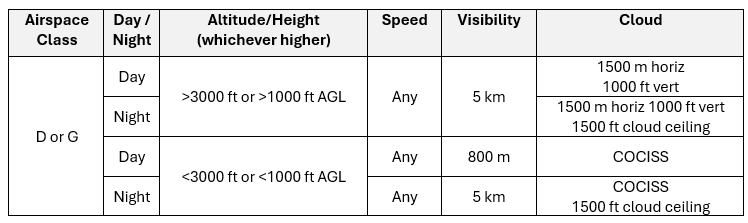
The current VFR rules could be hugely simplified for the airspace helicopters operate in. Given the developments in Europe, the following table could be used for helicopters. As highlighted above, the 800m visibility minima would be speed dependent.
Summary
The current VFR minima in the UK are overly complex for normal operations and further complicated by HEMS. Taking the best of EASA’s changes and simplifying further a set of clear, concise limits for helicopters can be produced with suitable guidance material suggesting appropriate speeds in reduced visibility conditions. There is always a balance between simplicity and capability in aviation, but right now, the UK has not got that right.
Needless to say, all these new rules should be in just two documents – one for normal operations and one for HEMS.
Why not take a look at our other articles.
- Preparing for complete loss of engine power in helicopters
- Lessons in how to manage a helicopter engine malfunction
- Light twin helicopter AFCS – Have Airbus won the race?
- Maintenance by pilots – can the training be improved by sharing?
- Flight simulation revolution – A new method for matching training need to simulator capability
- Helicopter Single Engine IFR – New horizons

- Making the grade – understanding climb gradients in the go around
- Unfair Skies: Restrictive helicopter instructor rules and how to fix them
- How to create an instrument rating instructor (IRI) – A helicopter anomaly
- The evolution of Category A Helipad procedures – A strong foundation for VTOL to learn from?
- Strips vs dials – Which is better?
- Under the weather – are UK HEMS weather rules broken?
- Mastery of the GTN 750 – Ten things you should know
- Checking anomalies – The weird requirements of helicopter proficiency checks
- It’s all about the switch – How helicopter designers need to think about the human in the cockpit
Leave a Reply