
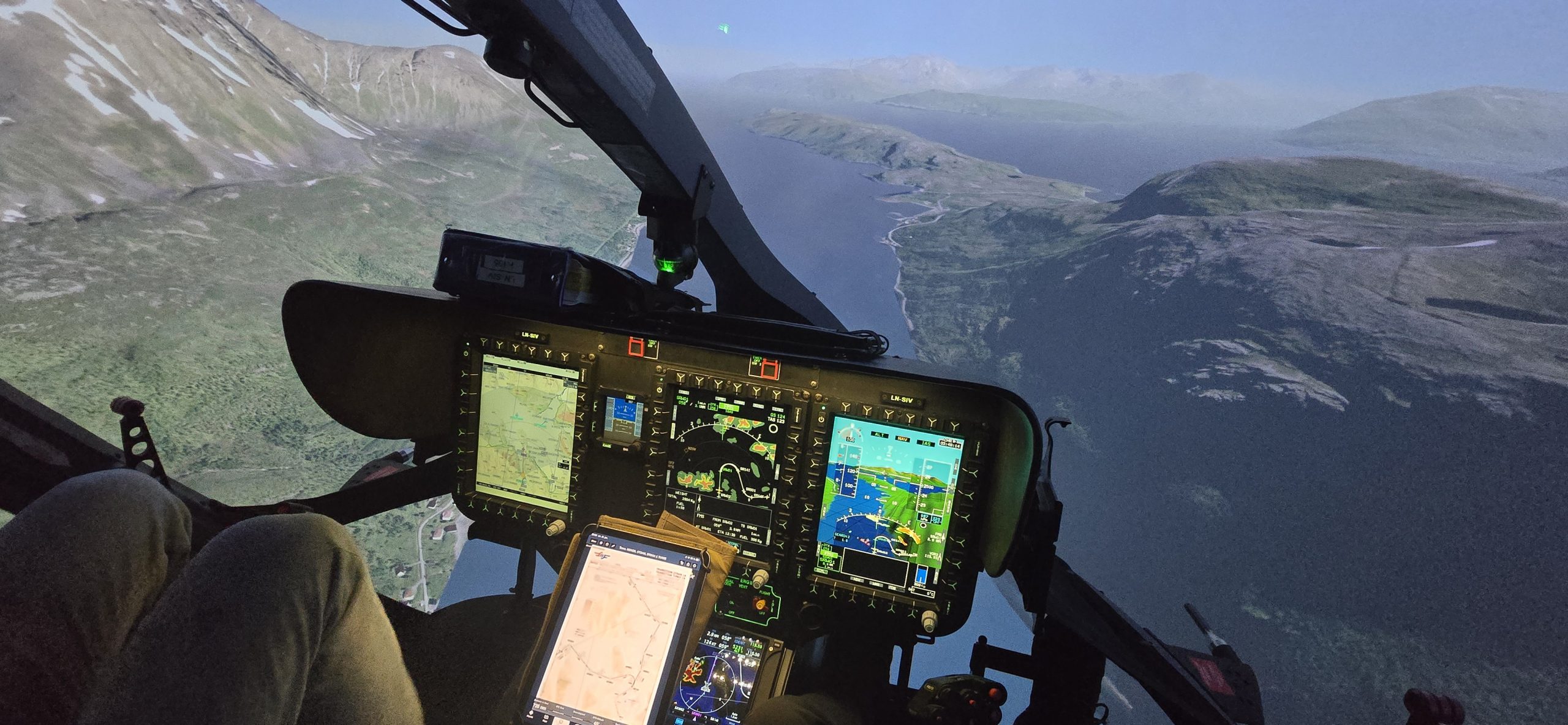
EASA has recently published a new Certification Specification for Flight Simulation Training Devices (CS-FSTD). This completely changes how FSTDs will be certified and, along with new aircrew and operations rules, will influence how training organisations and operators choose the right FSTD for their training needs.
In this article we take a look at the new CS-FSTD and the new Aircrew and Air Operations regulations to see how this is going to affect training and checking in EASA and how this might influence future UK CAA or international rule making. The new EASA rules are derived from ICAO Doc 9625.
Of note, the new publication is not effective until 30 April 2028 giving the regulated community some time to implement the changes. We look at the timelines in detail. Also of note, some minor tweaks to Part FCL that have been sneaked in have an earlier implementation date but are unrelated to the new CS-FSTD.
Contents
- Current FSTD certification methods
- Task to tool
- FSTD Capability Signature – FCS
- Simulation Features
- Engineering and simulator qualification
- Back to the FCS
- Creating an FCS based on training need
- What about operational training?
- When?
- Conclusion
Current FSTD certification methods
Before diving into the new, we need to look at the present methodology for certifying FSTD. It is quite important to understand the challenges and limitations the current system contains to understand why it has changed.
Narrow categories
Under the current system, aeroplanes and helicopters have separate certification specifications (CS) – CS-FSTD(A) and CS-FSTD(H). In each document, several standard types of FSTD are defined. For example for helicopters the levels are:
- Full flight simulator (FFS) – Split into sub-levels A-D with D being the highest fidelity possible
- Flight training device (FTD) – Split into sub-levels 1-3 with 3 being the highest fidelity possible
- Flight navigation procedures trainer (FNPT) – Split into sub-levels I-III with III being the highest fidelity possible
There are also Other Training Devices (OTD) for simulation devices that did not reach the standards for at least FNPT (eg desktop trainer).
FSTD level for task
Training organisations using the requirements of Operational Suitability Data – Flight Crew (OSD-FC) and Part FCL to work out what FSTD could be used for what task. Typically an FFS D could be used for everything but an FNPT was usually not suitable for type rating training but could be used for instrument training. A proficiency check under IFR could be done in a FTD but not a VFR proficiency check. This does not recognise that an FTD is probably ideal for some of the emergency simulations but perhaps not other sections (eg sloping landings)
As another sign of a need for change, there are some exceptions to even use of FFS D. For example in the OSD-FC for EC135 it states the following for autorotation training:
Autorotations
To be trained on helicopter only since the predominantly used simulator technology for helicopters offers a significant risk of negative training
So in spite of having the best possible simulator certification available (FFS D) we still need to use an aircraft for autorotation. Due to the limitations of the predominant technology used in FSTD, all FSTD cannot be used for this training task. The FSTD levels are simplify too coarse a designation to adequate cover all the training tasks. Something needed to change.
Task to tool
The first step on the path to a new methodology was establishing that we need to analyse the training and checking we want to achieve (the task) and then working out what the best place to complete that training (the tool). This has been a core part of modern training methods for some time. As an example, the Training Needs Analysis (TNA) of the Defence Systems Approach to Training (DSAT) aims to get to the core of what we are trying to achieve and then sets out what we need to achieve it in the Design phase.
Once we have created a map of our training needs (more on this later) we have to have sufficient granular detail about our FSTD to see if we can achieve the training on the device. The new structure determining the capability of FSTD is the FSTD Capability Signature (FCS). These are outlined in detail in the new combined aeroplane and helicopter CS-FSTD.
FSTD Capability Signature – FCS
The FCS is 2-way method for mapping training needs against FSTD capability. A particular training requirement will have an FCS that lays out what is needed from an FSTD. This is then lined up against an FSTD’s FCS to see if it meets the requirements. Should there be any mismatches, the training need will need to be done in a different FSTD or perhaps the aircraft (eg the autorotations in EC135 we saw earlier).
The FCS is broken down into 14 FSTD simulation features in 3 groups. We list them first and then break them down (all links below are to uploaded versions of the relevant documents on this website):
- Aircraft simulation
- Cueing simulation
- Environment simulation
The level of fidelity for each feature is assigned a level:
- Specific (S) – The highest level of fidelity. (eg type and variant)
- Representative (R) – Intermediate level of fidelity (eg type)
- Generic (G) – Lowest level of fidelity (eg class of aircraft)
- None (N) – Not installed/functional or installed but not required
Let’s break that down a little.
Simulation Features
Aircraft simulation
Flight deck layout and structure (FDK)
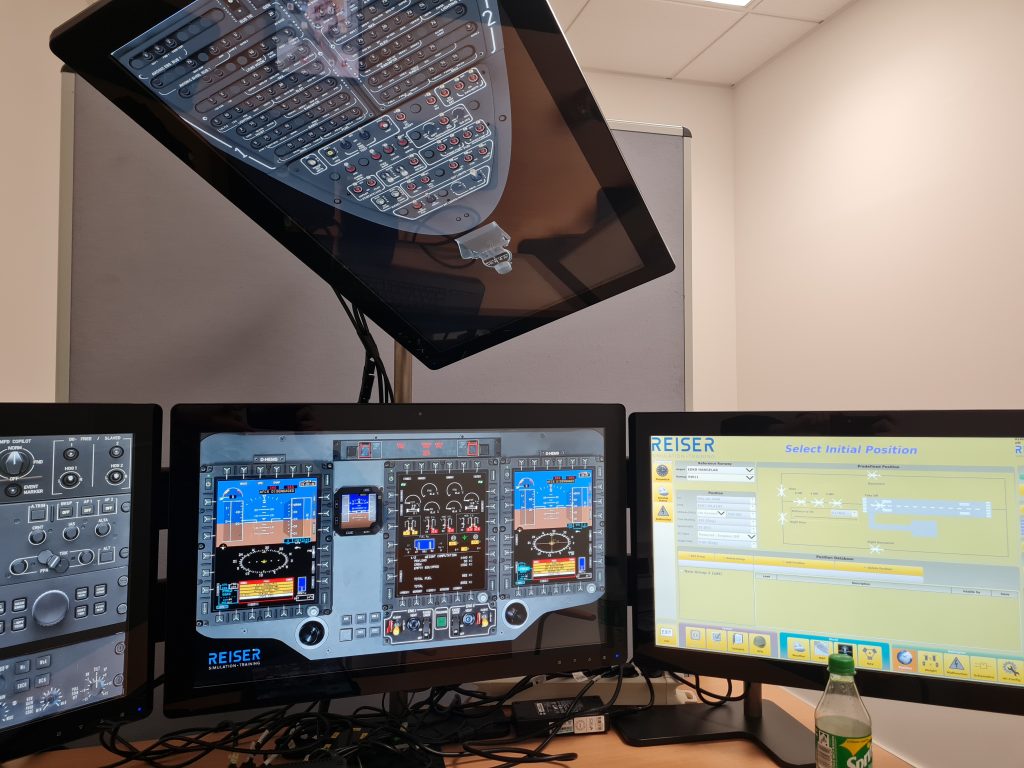
This defines how the enclosure for cockpit is implemented and how the spatial representation and layout of the cockpit is designed. This includes the flight crew seating but not flight controls and the operation of systems which are covered elsewhere.
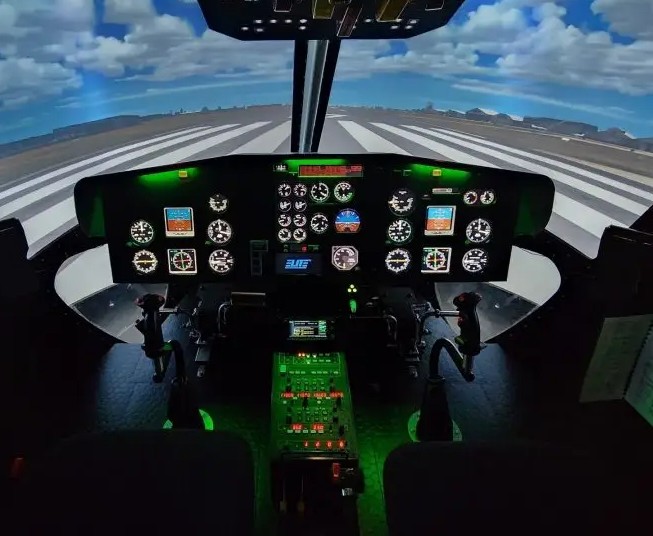
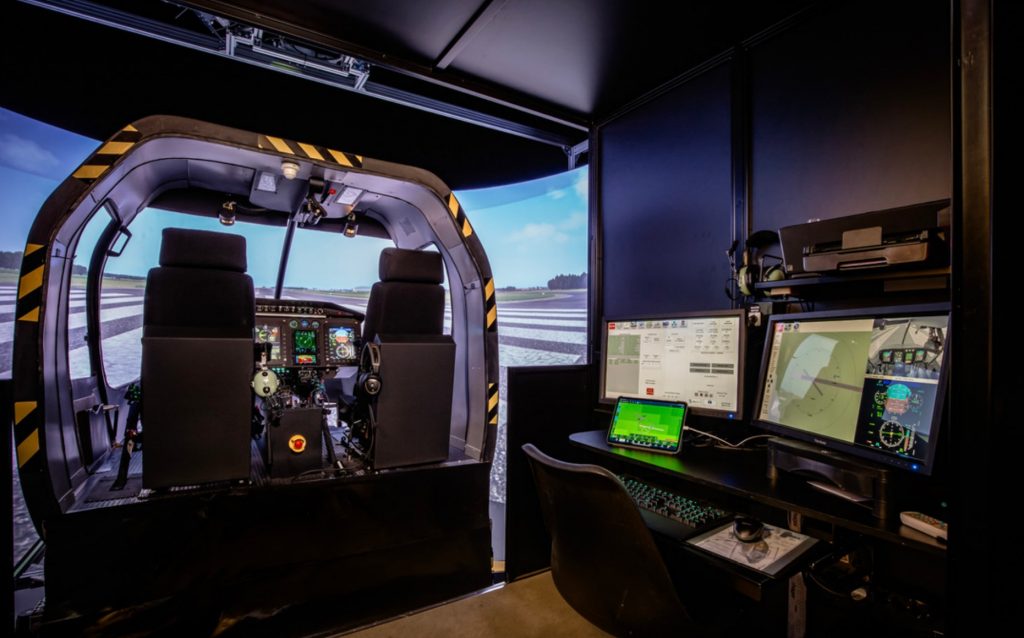
At the highest level of fidelity, this might mean the cockpit looks and feels real and has the correct dimensions for the type and variant. This would include ensuring any cockpit glazing which causes reflections of displays in normal conditions is in the FSTD. As an example, in the FFS D at NCCH the reflections can be seen in the cockpit windscreens on the left and the pitot tube can be seen outside the cockpit.
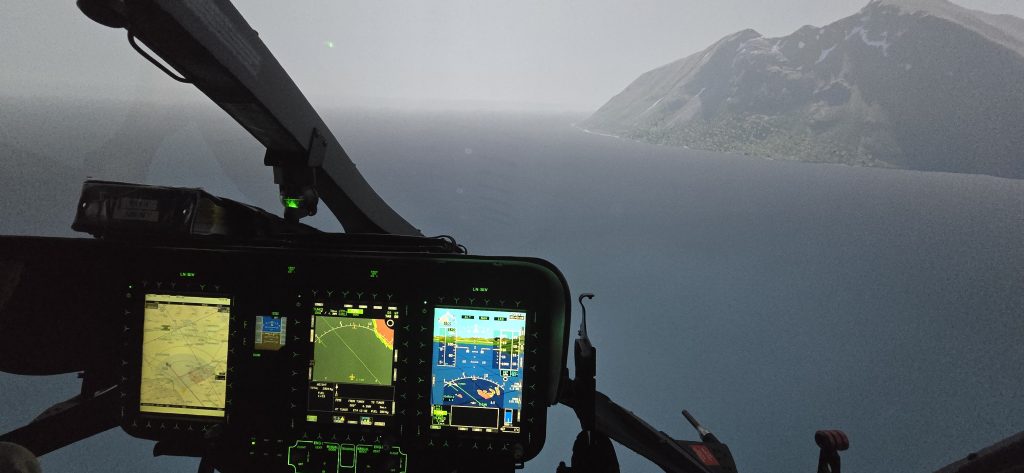
Lower fidelity simulators might have elements from other aircraft in the same class of aircraft (eg the switches might be visually a different type).
Flight control forces and hardware (CLH)
Defines the physical appearance, travel, tactile feel and force feedback of the flights controls and systems affecting aircraft configuration. For the high fidelity level S, this means the primary flight controls should replicate the appearance and tactile feel of the type and variant.
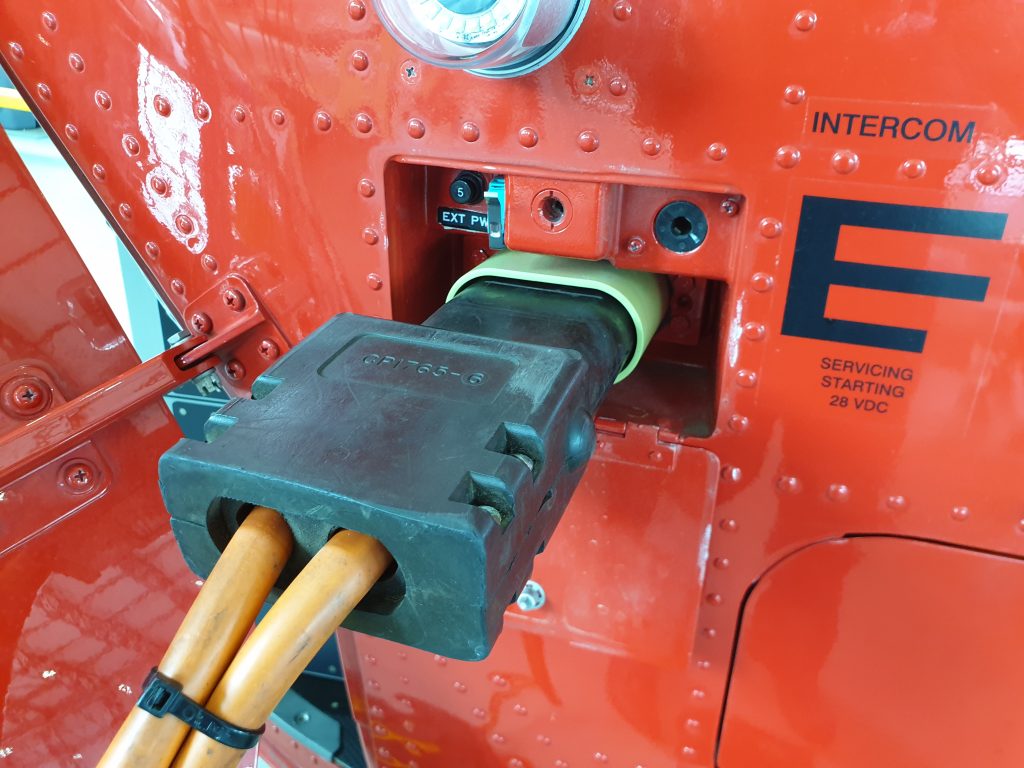
For example, comparing the throttles between a Bell 429 FNPT II and the rear aircraft, the texture on the throttles is provided by metal in the FNPT II and a cork layer on the real aircraft. Along with the shape of the head the fidelity assigned for CLH might be R for the FNPT II.
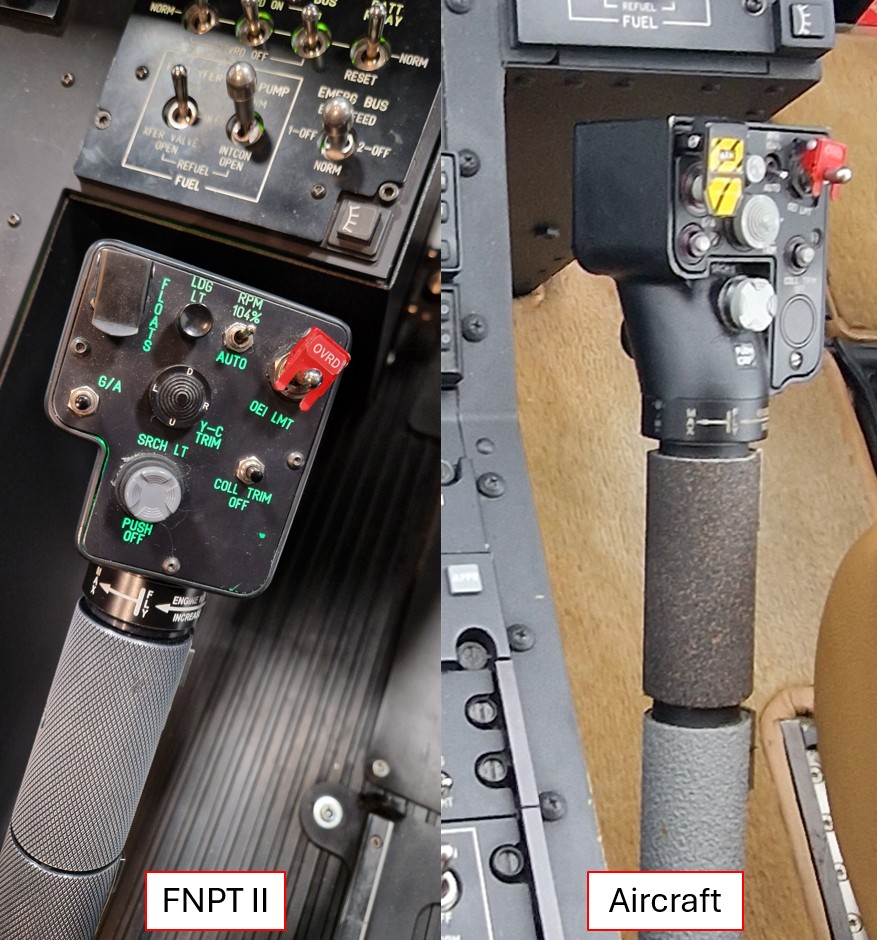
The simulation of the force feedback is likely the most important factor in creating a high level of fidelity for the crew. It is also likely to be the most difficult to get quite right. Anecdotally, many pilots report that certain FSTD are “too sensitive in pitch”.
Flight control systems operation (CLO)
The CLO simulation feature is related to how the flight control functions relate to their outputs. For example the movement of a control surface on an aeroplane or the movement of the blade on a helicopter. It also relates to flight envelope protection functions, trimming and indications.
As for other features, the levels of fidelity broadly relate to how specific the elements are with S being related to a model and variant, whilst G is related to the class or group of simulated aircraft.
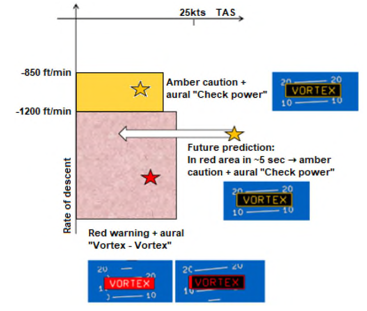
This particular feature highlights that there are a lot of interdependencies between the features. For example, a vortex ring or stall protection system which is part of CLO heavily depends on the actual effect being included at a high enough fidelity in the OGE feature.
Aircraft systems (SYS)
The SYS feature relates to any aircraft system required to be modelled in the FSTD. It covers the operation, functions and indications of the system and their interdependencies. Examples of relevant systems include instruments, communications, air conditioning, autopilot, ice and rain protection, TCAS, HTAWS and weather radars. Specific emphasis (and extra rules) apply for HUD, EFVS and NVIS.
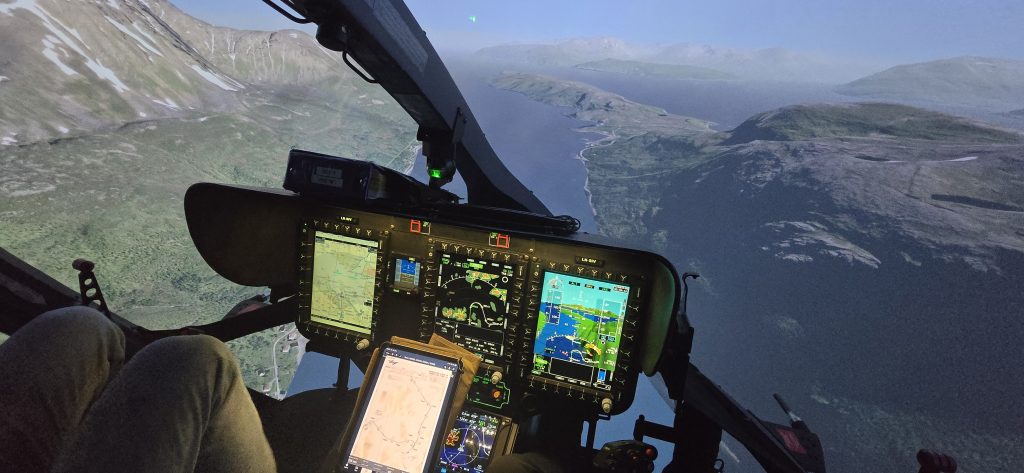
Importantly individual systems can be at different fidelities (although this should be an exception not the rule). Certain systems must be simulated in any FSTD:
- Basic flight instruments
- Caution and warning systems
- Power plant systems
CS-FSTD also highlights that databases on systems should have an appropriate level of fidelity and area of coverage associated with the intended use of the FSTD.
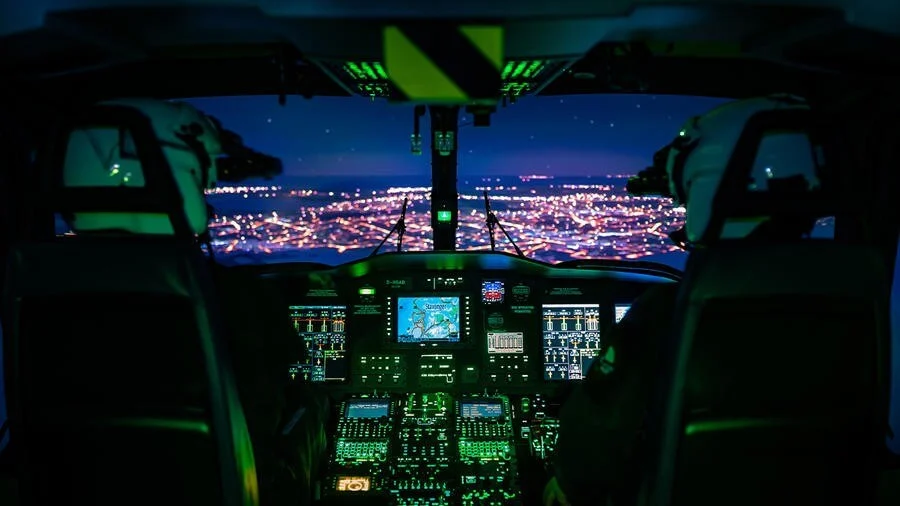
NVIS
There are a couple of interesting aspects to the NVIS section of CS-FSTD. Certain elements of the FSTD must be at a certain fidelity to be considered at all for NVIS training. These include the presence of windshield panes due to the reflections that will be present and that wires, poles and obstructions must be realistically shown up by steerable landing lights. Both of these aspects might be a challenge for some legacy FSTD used for NVIS training.
Performance and handling on ground (GND)
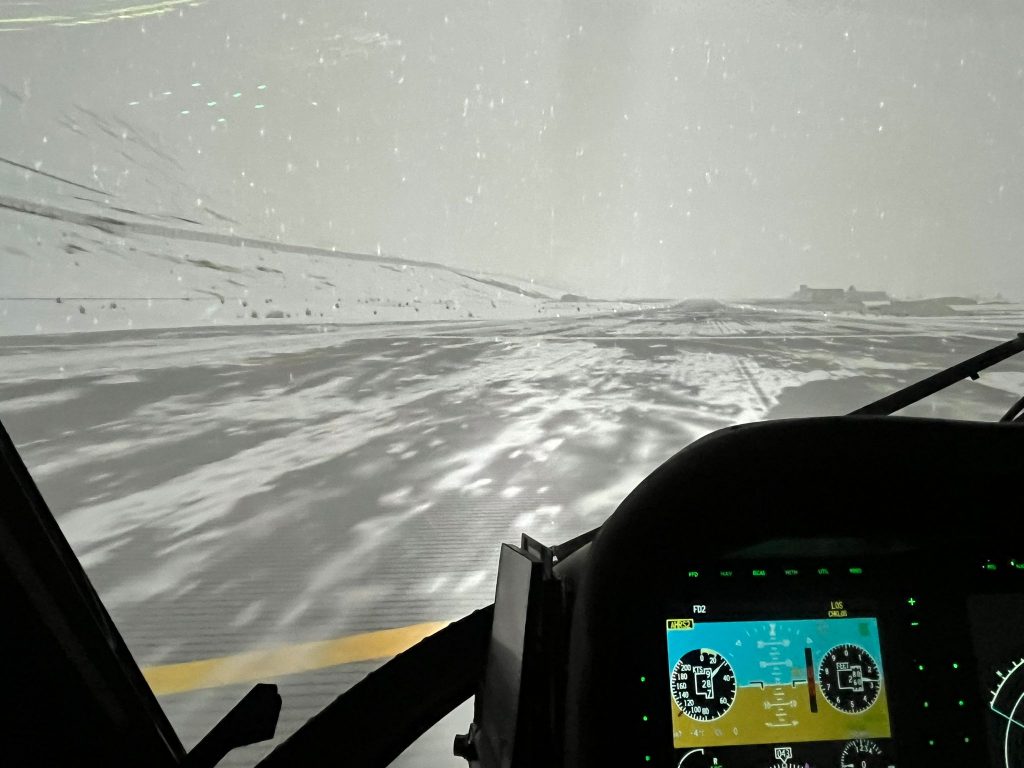
The GND feature defines the mathematical models and associated data to be used to describe ground-handling characteristics and aerodynamics, ground reaction and surface conditions to be modelled in the FSTD when the aircraft is in ground contact. This includes friction, effects of weight on landing gear, turn radii and effects of for example wet, soft, icy and sloping ground.
Performance and handling in ground effect (IGE)
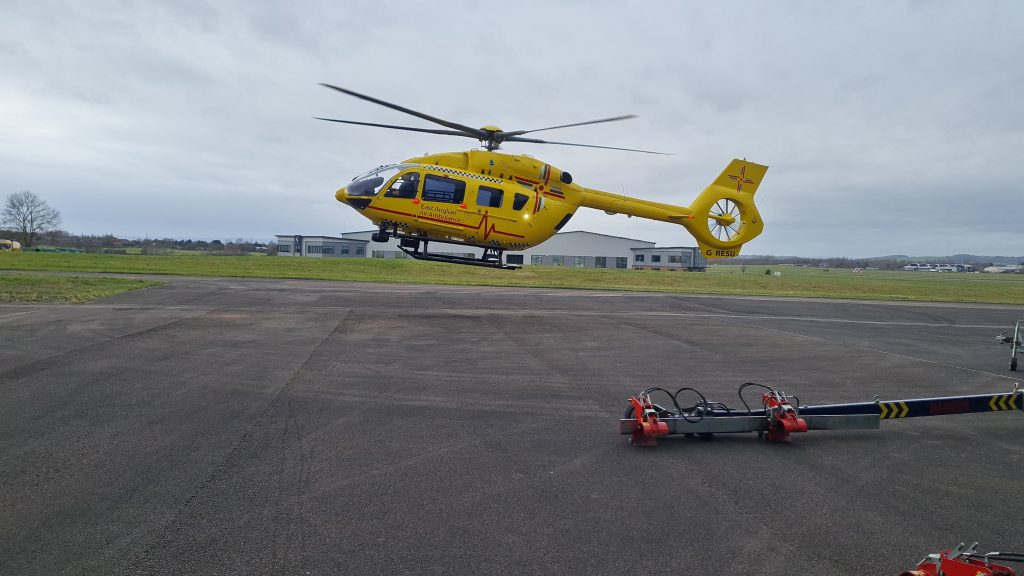
The mathematical model and associated data for flight from the surface to approximately the wingspan or rotorspan above the ground. So for an aeroplane does the ground effect cause a suitable amount of float during the landing phase. For a helicopter hovering, are the power requirements slightly less than being out of ground effect?
Performance and handling out of ground effect (OGE)
The mathematical model and associated data for flight away from the ground out of ground effect. This covers the full flight envelope of the aircraft including balance and weight. It might be acceptable to have good fidelity in this environment whilst not doing such a great job for the GND feature if the focus is on the in-flight training task (eg IFR training).
One particular aspect that have various defined levels of fidelity are the abnormal conditions that FSTD are well suited to training for in a safe environment. For example sideslip, mach rotor tip effects, stalling, vortex ring and retreating blade stall.
There are specific extra rules for icing and stalling simulations (although strangely not vortex ring!). There is also specific mention made of UPRT training for aeroplanes.
Cueing simulation
Sound cueing (SND)
Defines the sounds to be modelled both externally and internally to the cockpit (but excluding alerting sounds like low height warnings which are are part of SYS). This includes wind flow noise, rotor noise, engine noise, fans, airflow and wipers.
The feature also includes the sounds that are generated by crashes and strikes. This might include the scrape of skids as the pilot does not quite nail a true vertical landing.
The volume and directionality of sounds are also important. An engine suffering compressor stall should sound like it is coming from the correct side of the cockpit!
Vibration cueing (VIB)
The VIB feature includes the vibrations and buffets that might be felt by a pilot in flight such as those generated by engines, propellers or transmissions. In addition the vibrations generated by system operation or the weather. In helicopters for example, the vibrations will depend on the flight phase including hovering, transitions and autorotations. This feature does include motion such as touchdown cues from landing gear.
The vibrations might be generated through the floor, seats or controls. The scope of the vibrations to be simulated can be extensive to achieve the highest level of fidelity (S). For example, on helicopters the following effects would need to included: blade tracking, translational lift, relative wind changes, icing and failure of damping systems.
Motion cueing (MTN)
Feature includes the motion cues generated by aircraft accelerations (due to forces of flight and ground operations). This excludes the vibration cues in VIB.
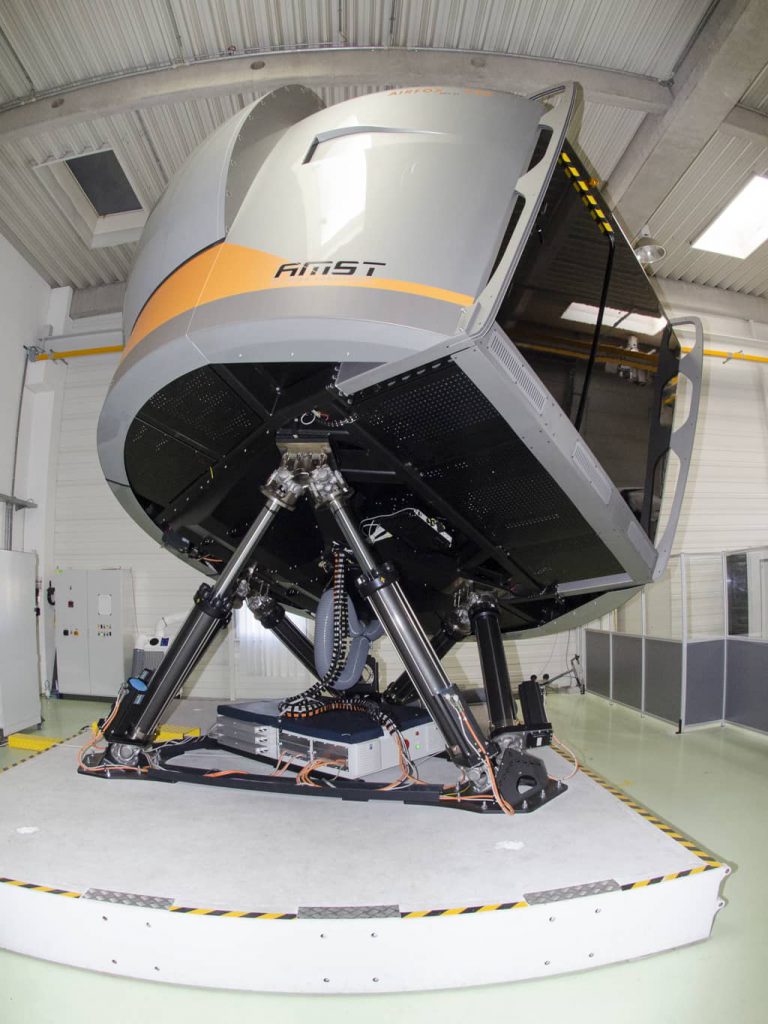
Motion cues may not be necessary for some training and poorly implemented motion cues that do not match up with visual environment can be very discombobulating for the pilots.
In all cases, the motion system needs an appropriate method of stopping the system in the event of a malfunction.
Visual cueing (VIS)
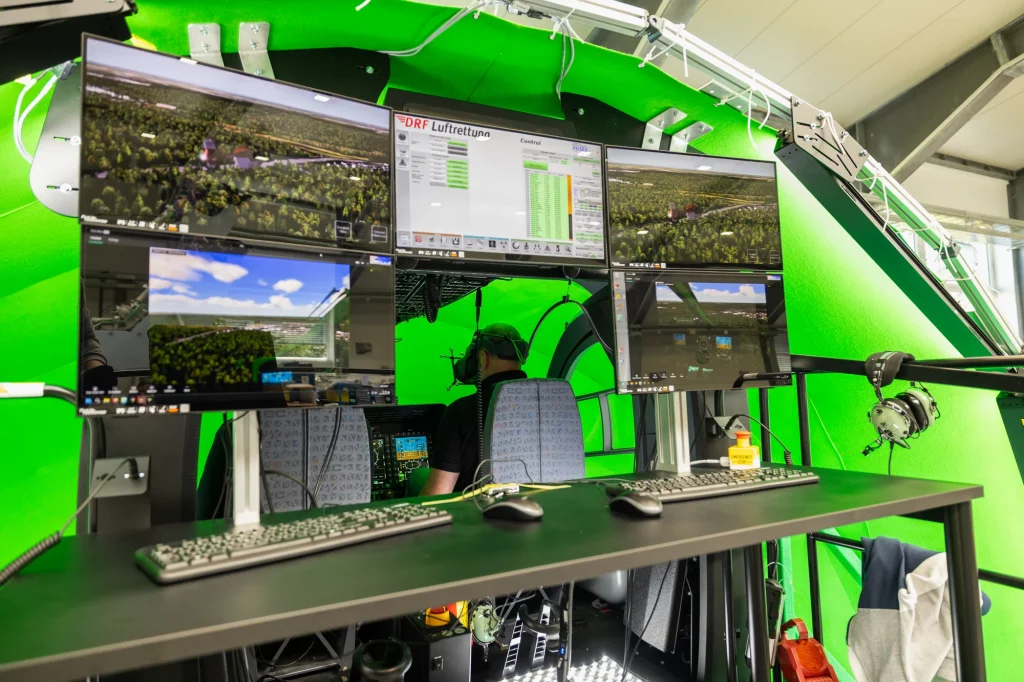
Defines the out of the flight deck window optical display and visual field of view. It specifies what visual issues should not be present such as discontinuities or edge-blending issues. It also highlights that the processing power should be sufficient to keep up with the needs of generating the display!
The field of view available is directly linked to the level of fidelity the FSTD has. For example, S means a field of view of 200 degrees horizontally and 60 degrees vertically on a helicopter. Any parallax should be minimized.
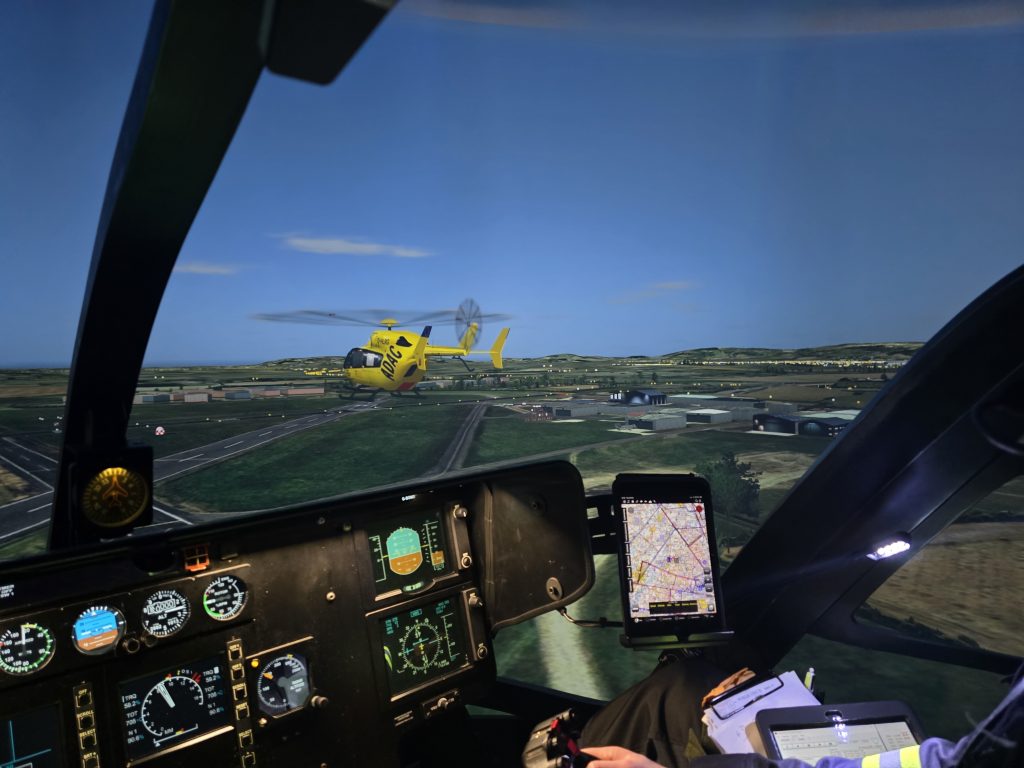
Various visual details also have specified levels of fidelity. For example:
- The minimum size of light points
- Motion blurring
- Crash effects
- Other traffic
- Other scenario content (buildings, trees, surface texture, shadows)
Again there are requirements for NVIS in terms of the brightness, colour tints and resolution. The moon position needs to have a suitable effect.
The VIS feature also includes details about how virtual reliaty (VR) and Extended reality (XR) visual systems can be used to achieve various levels of fidelity.
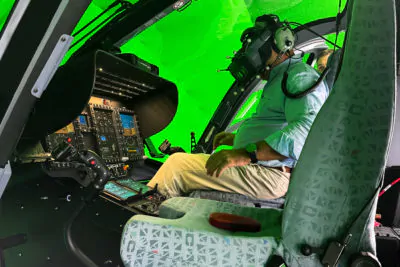
Environment simulation
Navigation (NAV)
Defines the level of simulation for the exchange of navigation, communication and surveillance data and interaction with air traffic services (including instructor controls). Some elements such as navigation receivers and GNSS units have aspects in FDK and SYS.
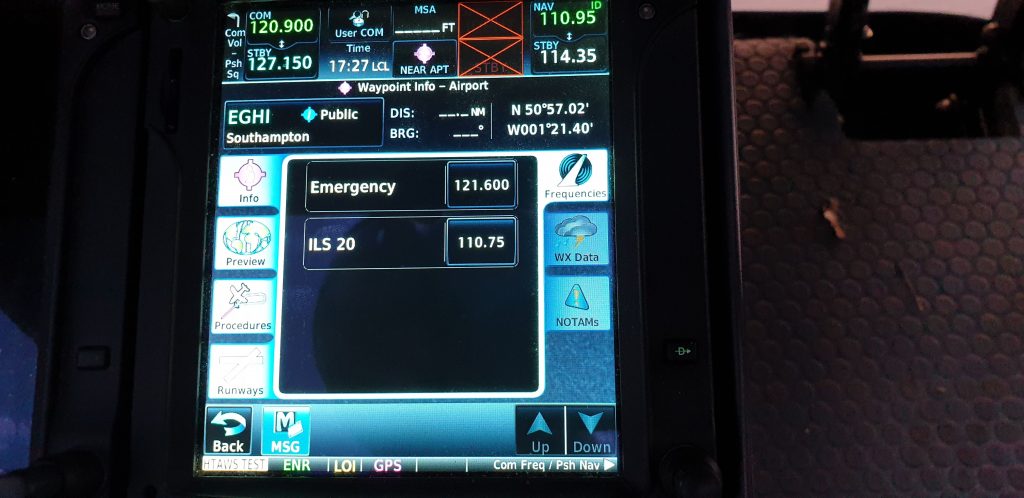
The navigation data detail should correspond to a desired level of fidelity and needs to include a minimum numbers of locations to achieve an S, R or G fidelity. Actually keeping the data up to date should be possible although this actually being done is only needed for level S!
Although many of the features so far have been focussed on the pilot’s stations, there are many aspects in the NAV feature that are focussed on the instructor operating station (IOS). For example the instructor needs to be able to control the serviceability of radio navigation ground aids. GNSS jamming is also a necessity for an FSTD.
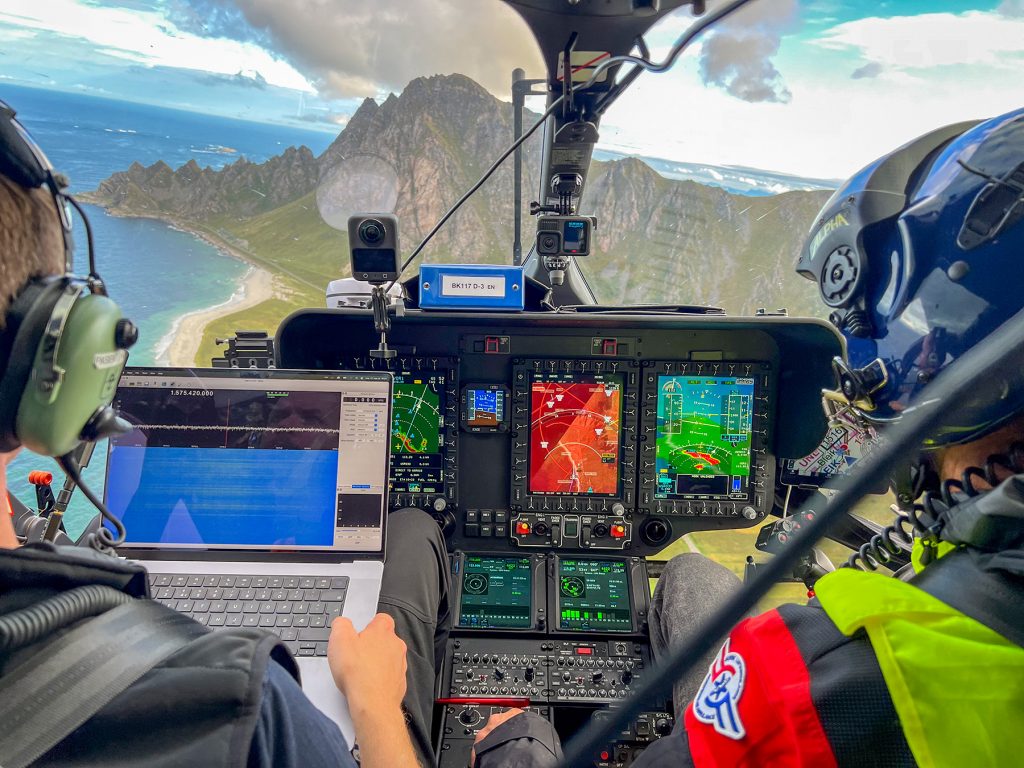
With respect to communications various minimum points of fidelity are needed such as availability of ATIS broadcasts and their content. They actually need to correspond to the actual conditions!
Atmosphere and weather (ATM)
This feature defines the level of complexity of the simulated weather conditions including ambient temperature and pressure all the way up to thunderstorms. The effects of weather need to fully integrated into the rest of the simulation to achieve the higher fidelities (eg lighting effects on avionics).
Certain aspects are needed for all of the fidelities for G, R and S.
- Standard atmosphere with instructor control of key parameters
- Wind speed, direction and gusts
- Air temperature with a lapse rate
- Air pressure
- Turbulence
- Degradation of visibility due to cloud/fog
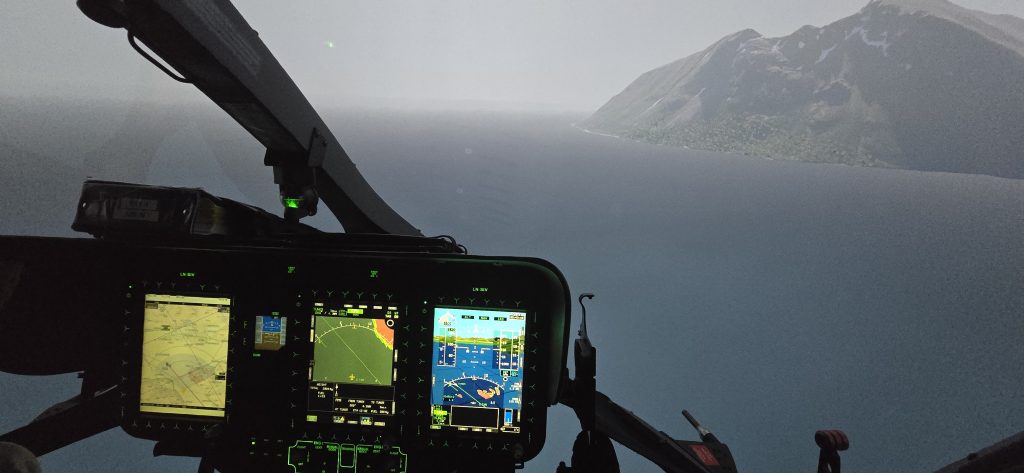
More complex weather is defined by fidelity levels. Instructor control needs to be appropriate to the conditions generated.
Operating sites and terrain (OST)
The final feature concerns the complexity and level of detail of the operating sites and terrain modelling to be simulated. This is appropriate to the type of air vehicle simulated. For example a helicopter needs off airfield landing sites which would not be necessary for a transport category aeroplane simulator. But conversely water landing areas would definitely be needed for an amphibious aeroplane.
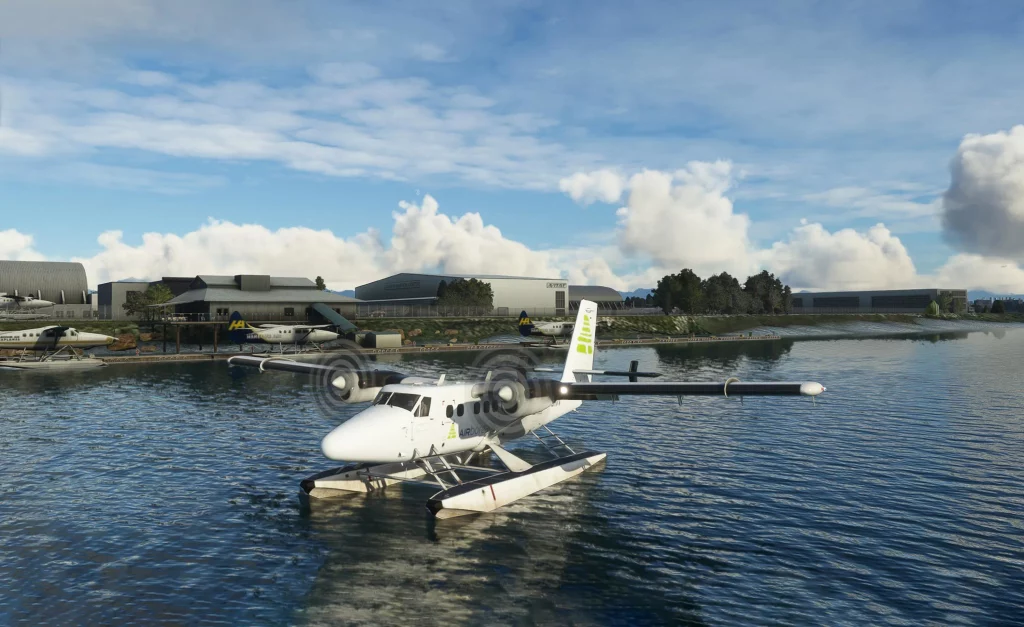
The CS-FSTD defines what needs to be in a scene at the various levels of fidelity including ground markings on the runways and surface conditions (grass/tarmac). It also specifies how far around a high fidelity location that the terrain also needs to have appropriate fidelity.
Miscellaneous extras
Of course, there are aspects of FSTD that do not neatly fit into one of the 14 features. These are covered in the miscellaneous section. This includes:
- IOS design (including a seat for instructor – nice!)
- Control of simulator malfunctions
- Diagnostics
- Room climate (particularly for XR systems which can induce nausea)
There is also a specific list of equipment that must be present for use in Multi-Crew Cooperation (MCC) and Upset Prevention and Recovery Training (UPRT).
The simulated air traffic control environment (SATCE) also gets its own section covering items like the ATIS and other traffic in the air and on the ground. It also extends to covering the language used in transmission and how the voices used should sound!
Engineering and simulator qualification
As in present CS-FSTD’s, the new CS-FSTD document covers in detail the engineering validation and assurance of FSTD performance. This includes the Qualification Test Guide (QTG) and Function and Subjective Tests (FST). However, this article is focussed on the training and operational aspects. More information is available in the CS-FSTD and supporting documentation.
Back to the FCS
So now we can see the full scope of the new features and fidelity levels, lets look at how this will translate to the certification of the hardware. CS-FSTD specifies a minimum set of fidelity levels for an FSTD across the 14 features. This is an FCS.
Minimum FCS for an FSTD
| FSTD Feature | Fidelity |
|---|---|
| Flight deck layout and structure | G |
| Flight control forces and hardware | N |
| Flight controls systems operation | G |
| Aircraft systems | G |
| Performance and handling on ground | N |
| Performance and handling in-ground effect | N |
| Performance and handling out of ground effect | G |
| Sound cueing | N |
| Vibration cueing | N |
| Motion cueing | N |
| Visual cueing | N |
| Navigation | N |
| Atmosphere and weather | G |
| Operatings sites and terrain | N |
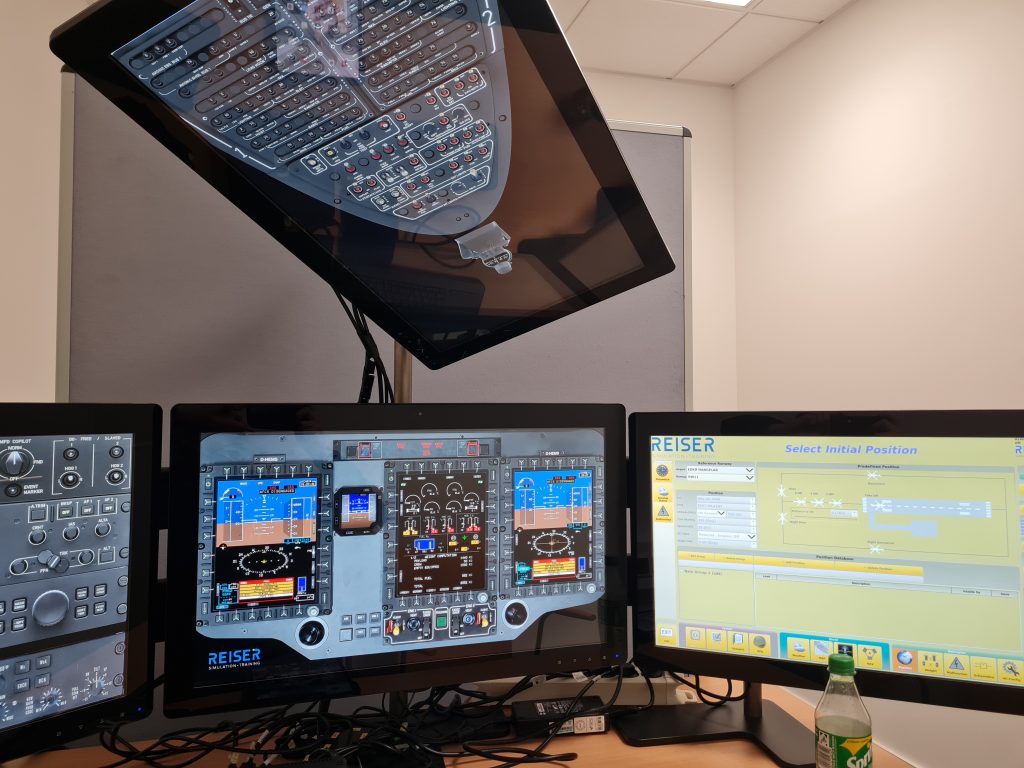
So we do need real controls, motion or a visual system but the basic aircraft systems, in roughly the right layout and upper air flight physics must be representative of helicopters (but not the specific one. So a desktop trainer would work!
Legacy FSTD
How is this going to affect FSTD certified to the current standards? Do they have to have an FCS too? The relevant new regulation is Regulation (EU) 2026/781 which adds text to Article 10b of Regulation (EU) 1178/2011 (The Aircrew Regulation).
There are 3 possible outcomes up to the implementation date of 30 April 2028:
- The FSTD remains on the old system.
- The FSTD goes through the full new process and assessment and receives a new accurate FCS
- The FSTD is given an “Assigned FCS” which is a generic FCS based purely on the certification level. This is covered in the new regulation.
Let’s have a look at an example of an Assigned FCS. Let’s use an FSTD which is currently an FTD 3:
Assigned FCS for an FTD 3
| FSTD Feature | Fidelity |
|---|---|
| Flight deck layout and structure | R |
| Flight control forces and hardware | R |
| Flight controls systems operation | R |
| Aircraft systems | S |
| Performance and handling on ground | G |
| Performance and handling in-ground effect | R |
| Performance and handling out of ground effect | R |
| Sound cueing | G |
| Vibration cueing | N |
| Motion cueing | N |
| Visual cueing | R |
| Navigation | S |
| Atmosphere and weather | R |
| Operatings sites and terrain | R |
Note this assumes the FTD 3 is a fixed base (no motion/no vibration). So an assigned FCS might not be in the best interests of an FTD 3 that does have motion.
Also of note is that an FFS D given an assigned FCS has the highest level (S) of fidelity assigned in each feature.
New certificates
The new qualification certificate will look something like this (note each feature also has a reference to what type, variant or class of aircraft it is trying to replicate):
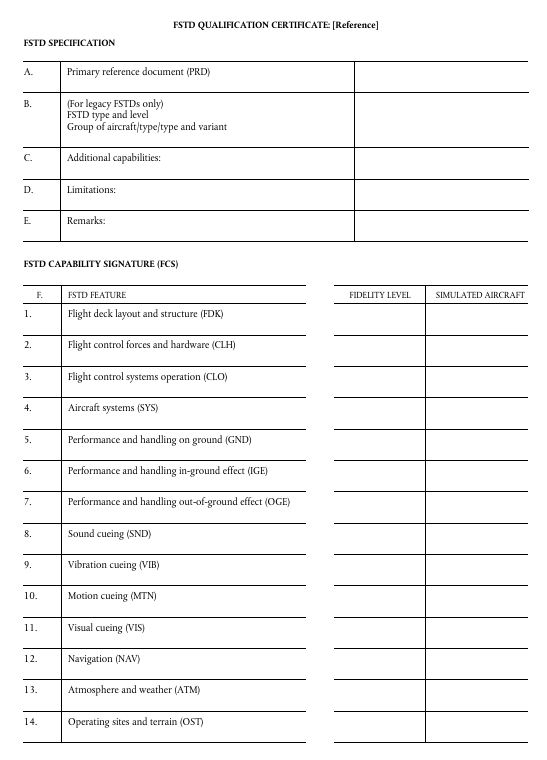
In addition to the FCS, each FSTD will also have an Equipment Specification List (ESL) which lists the installed equipment, capabilities and specifications. This will assist training organisations with selecting the most appropriate FSTD.
So now we now how a really good feel for the fidelity of our FSTD. But isn’t the whole point we evaluate our training needs first then look for the right training device. With that in mind we need to look at the changes to the Aircrew Regulation.
Creating an FCS based on training need
In the new regulation (EU Regulation 2026/781) and associated AMC and GM (the relevant links are here – AMC and GM to 1178/2011 and 965/2012) FCS are assigned to all the elements of training for type ratings. This follows the profile of the relevant test or check in Appendix 9 of Part FCL and are presented in the form of a matrix.
First though there are some new terms to understand. Each training task has 2 fidelities assigned. These are for:
- T (Training) – The minimum FCS an FSTD should have for the introduction of a training task but cannot be use to train to proficiency. Reading between the lines, you can train but you cannot check the task in that FSTD.
- TP (Training to Proficiency) – The minimum FCS an FSTD should have for the completion of a training task. Again, reading between the lines the fidelity is sufficient to check the task in that FSTD.
Creating a training FCS
Let’s look at a selection of tasks in the Instrument Flight Procedures (Section 5) of a helicopter proficiency check:
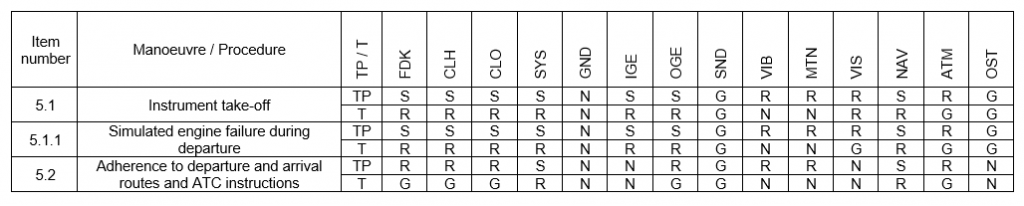
Note that TP needs a higher level of proficiency in each case. We can now analyse the table to look at the minimum FSTD to complete all of these items. To do so we take the highest fidelity in each column. Let’s say we want to training to proficiency in each of these tasks (TP).

We can then collapse our matrix to just show the minimum FCS needed to meet the requirement:

We then compare that FCS against the potential FCS available. Using the Assigned FCS list as a guide, it reveals the minimum equivalent FSTD is an FFS C.
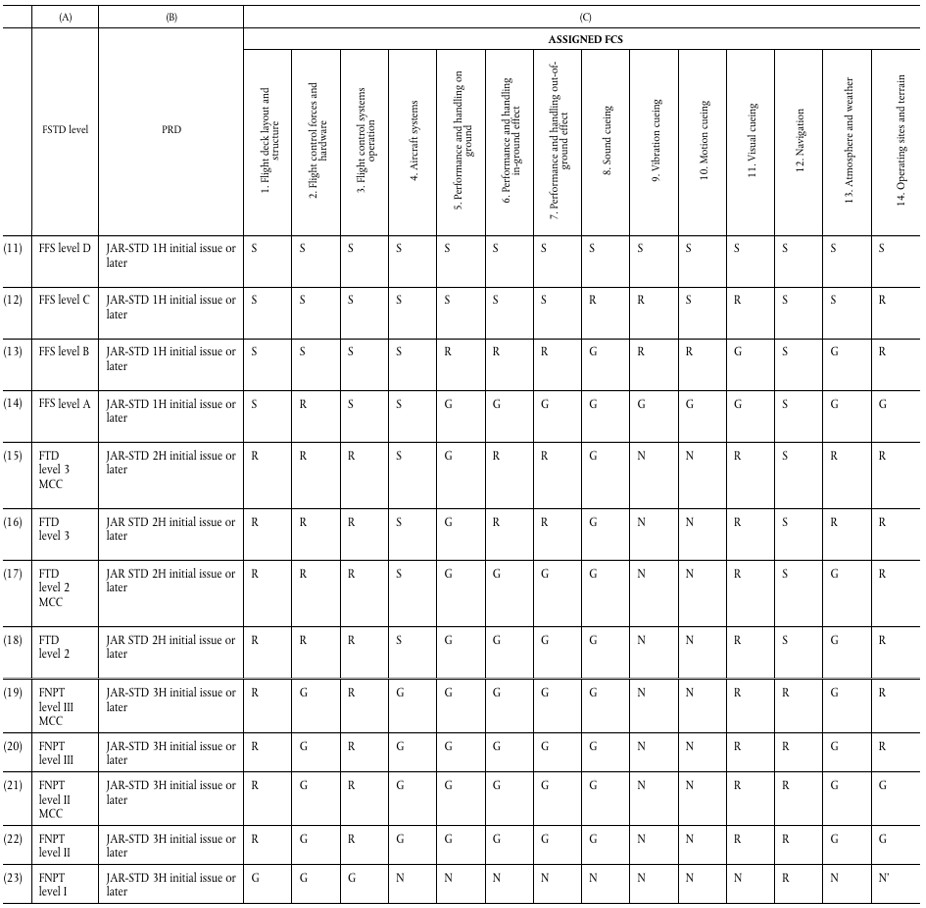
This might come as something of a blow to current users and operators of FTD 3 which currently can be used for training to proficiency on those tasks. Perhaps the FCS in Part FCL are not quite correct yet? In simple terms the key takeaways from a deeper analysis (see below) are for helicopters:
- An FTD3 with an assigned FCS will not be usable for LST or PC (VFR or IFR)
- Only an FFS D can be used for LST or PC
- An FTD3 with an assigned FCS cannot be used for most of the general handling items due to a lack of ground handling fidelity (GND) – this is ridiculous for skidded helicopters!
- Any FFS D operator will just want to go for an Assigned FCS as it gets an S for everything. They may get a shock the first time they do an FCS though!
- An FTD3 with motion and vibration (eg the Loft Dynamics VR simulators) will not want to go for an Assigned FCS as it will assume they are not fitted
- Operational training under Part ORO has the same issues (see below). OPC will not be possible in anything less than an FFS D equivalent.
The comparison process is tedious! Fortunately, a spreadsheet can be created to run the comparison automatically.
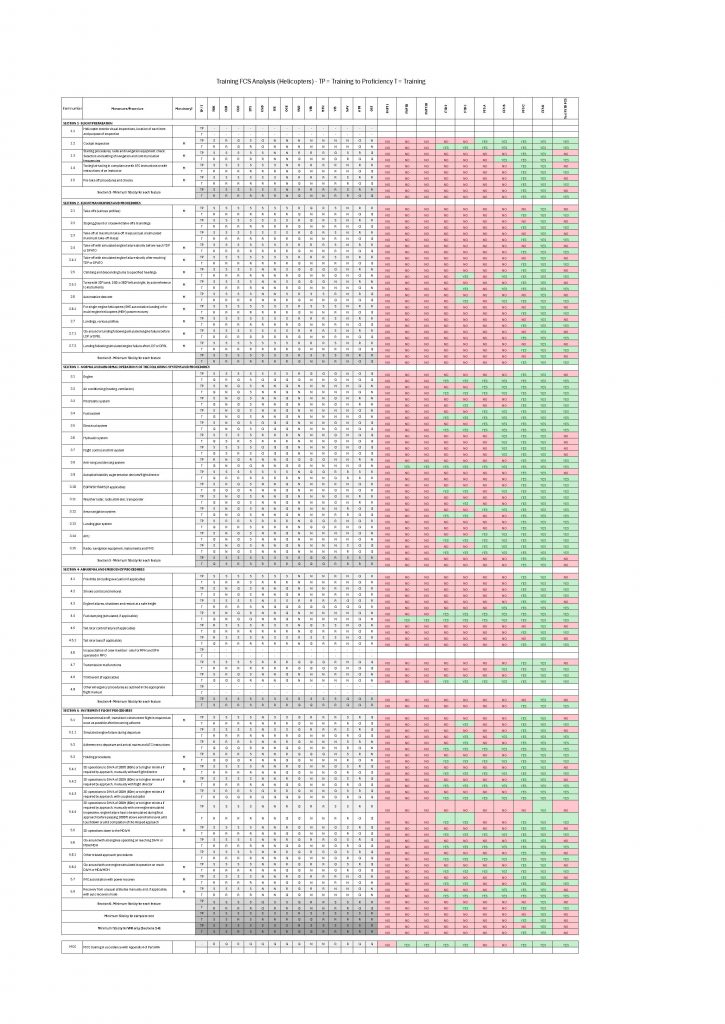
Wow, that got complicated fast! Get in touch if you would to take a look at the original Excel spreadsheet – it would be great to collaborate on something even better.
What about operational training?
The same process will need to done for operational training under Part ORO. In the revision regulation and AMC & GM, operators are required to look at FSTD in a similar way. In essence they will likely need to develop an FCS matrix for their own training needs.
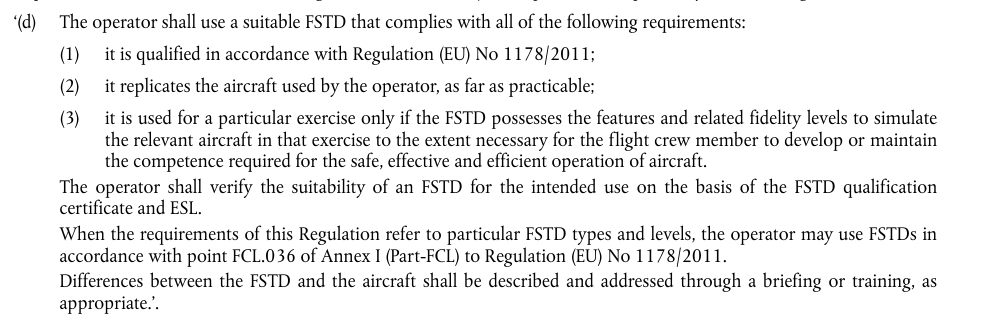
But wait. We need to dig deeper. In the AMC&GM to Part ORO it states:
FSTDs USED TO MEET THE REQUIREMENTS OF THIS REGULATION — HELICOPTERS
(b) When using an FSTD with an FCS or with assigned FCS for providing training on the basis of Appendix 9 to Annex I (Part-FCL) of Regulation (EU) No 1178/2011, the operator should ensure that this FSTD has an FCS or assigned FCS that is equal to or higher than the minimum FCS required for such item in the training matrix specified in point (a)(3)(ii) of AMC1 to Appendix 9 Section A point 1f to Annex I (Part-FCL) of Regulation (EU) No 1178/2011.
So if you are doing training or checking under Part ORO and the FSTD has an FCS, then the FSTD needs to have the appropriate FCS for each item tested. In very simple terms this means that OPC can only be done in an FFS D! There is something deeply worrying about this new regulation!
When?
Let’s summarise when this is happening:
- From 30 April 2028, any new or re-issued FSTD certificate must use one of the following options dependent on the current certification of the FSTD
- Retain the current FSTD approval – this is only possible for a small subset of FSTD that were not certified under JAR regulations or later (not even sure this will include many FSTD)
- Use the “Assigned FCS” from Part ARA (not a good idea for FTD with motion bases)
- Complete the entire FCS assessment and get an accurate FCS (this could result in an FCS which is lower than the Assigned FCS)
- From 31 October 2029 all FSTD must be on the new certificates
That is a lot of workload. But what about ATO? What if all their course manuals and OSD-FC says to use an FTD3 for a particular course and that FTD3 now has an FCS? Fortunately, the “Assigned FCS” can be reverse engineered to derive the equivalent FSTD qualification (the table is in FCL.036 and replicated below):
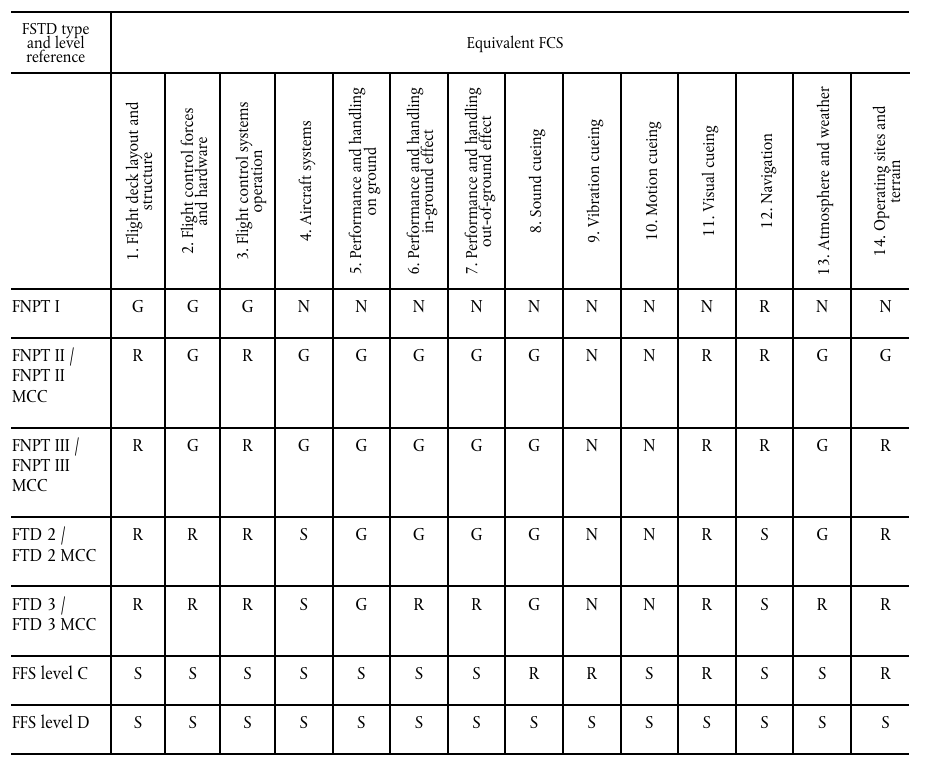
Basically use the table to see if your new FCS-certified FSTD meets or exceeds the necessary FSTD.
Chicken and the egg
The rabbit hole is way deeper though. As an option, ATO can start to use a system approach to training by using the Task to Tool methodology to design their courses. For detail see AMC5 ORA.ATO.105 which gives the option to design a course with this systems approach.
The systems approach is outlined (derived from ICAO Doc 9868 – behind a paywall!) and will be quite familiar to UK military trainers as it is essentially DSAT. The AMC suggests the Instructional Systems Design (ISD) approach using the ADDIE process:
- Analyse the training need
- Design the training course, training plan and assessment plan
- Develop the training material
- Implement the training course
- Evaluate the training course
This will be a lot of workload for ATO but importantly, once implemented, the ATO can only use FSTD with an FCS for the applicable course. This may be unpalatable for an ATO until all their associated FSTD have made the change.
Conclusion
FSTD certification in EASA is changing. EASA training organisations, operators, instructors and examiners are going to need to understand this new metric in fairly short order. There are going to be some teething troubles as we highlighted above where the training matrix, assigned FCS and the status quo do not quite line up. For example, whereas an FTD3 can currently be used for proficiency checks IFR and OPC VFR and IFR, without significant amendment to the regulation, this will not be possible under the new scheme!
EASA are the first authority to jump on the FCS FSTD bandwagon. Other authorities must pay close attention to learn how this works! They may have to watch the wagon crash.
Now enjoy some other articles
- Lessons in how to manage a helicopter engine malfunction
- Light twin helicopter AFCS – Have Airbus won the race?
- Maintenance by pilots – can the training be improved by sharing?

- Flight simulation revolution – A new method for matching training need to simulator capability
- Helicopter Single Engine IFR – New horizons
- Making the grade – understanding climb gradients in the go around
- Unfair Skies: Restrictive helicopter instructor rules and how to fix them
- How to create an instrument rating instructor (IRI) – A helicopter anomaly
- The evolution of Category A Helipad procedures – A strong foundation for VTOL to learn from?
- Strips vs dials – Which is better?
- Under the weather – are UK HEMS weather rules broken?
- Mastery of the GTN 750 – Ten things you should know
- Checking anomalies – The weird requirements of helicopter proficiency checks
- It’s all about the switch – How helicopter designers need to think about the human in the cockpit
- Engine Failure Training Mode – A safety tool that will punish the unwary
Leave a Reply