
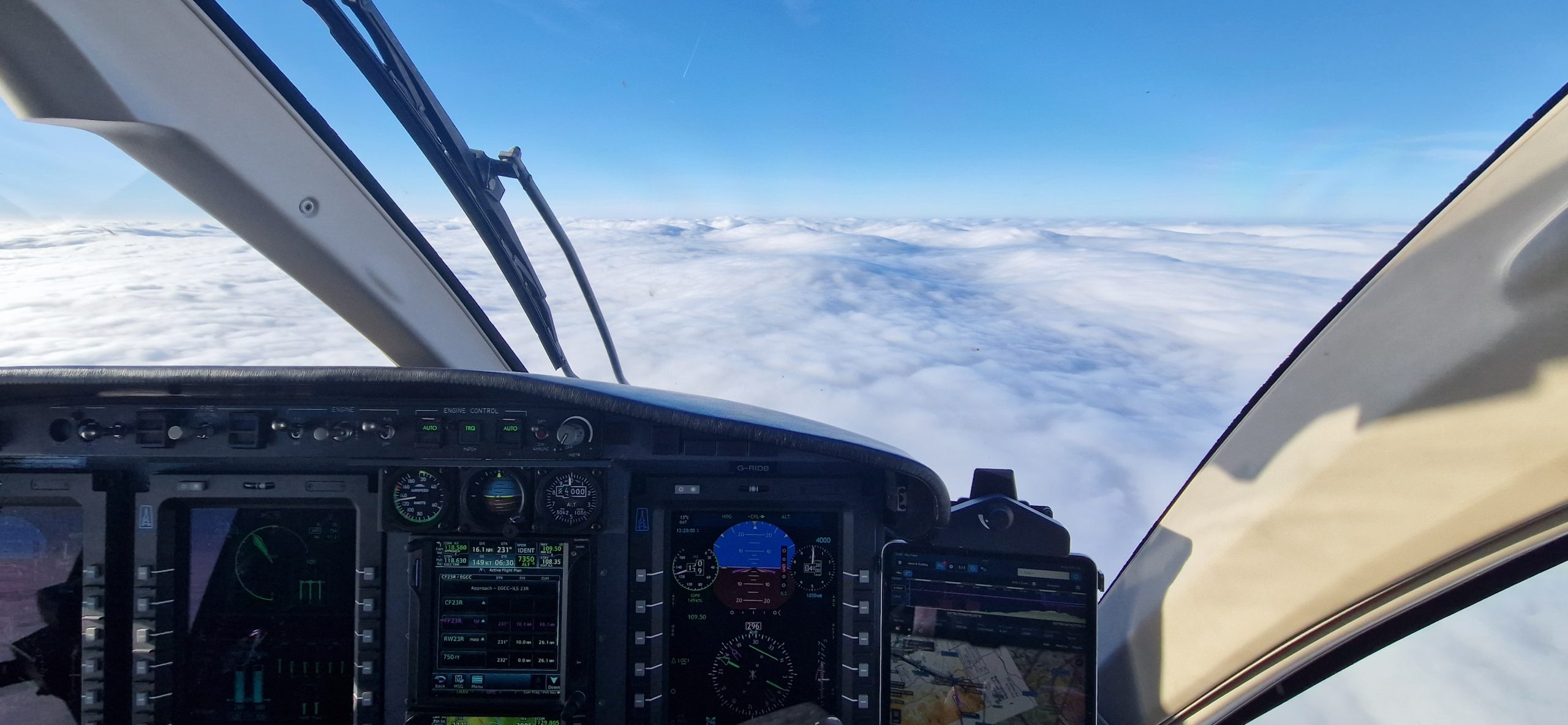
In both the fixed wing and rotary wing worlds, a particular qualification is required to deliver training towards issue of an initial Instrument Rating (IR) – The Instrument Rating Instructor (IRI). However, due to a quirk with the aircraft used in training for an instrument rating, creating and sustaining IRI is much more difficult in the helicopter community than it is in the fixed wing world. A change in the regulations is needed.
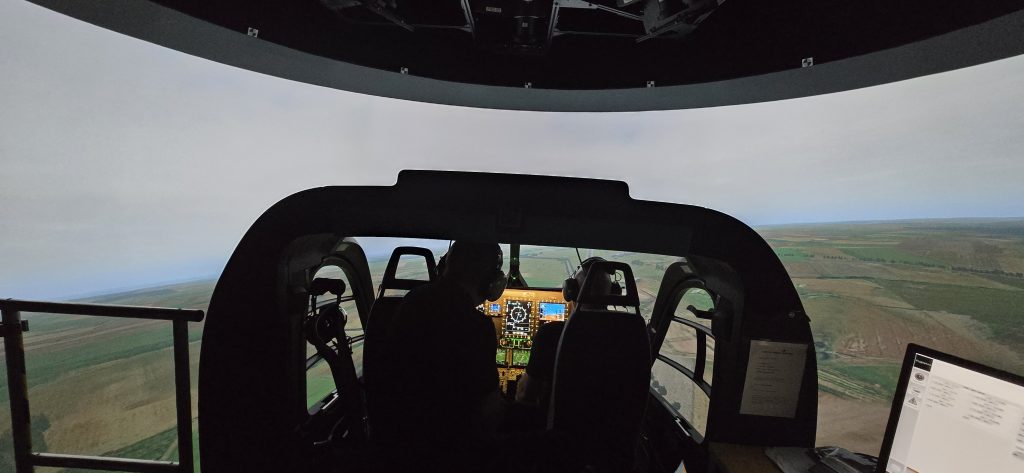
In this article, we cover how pilots train for the IR, who trains them and how trains the trainer. We then compare the fixed wing and rotary wing training paths and how the helicopter regulations need to change to get the right people training future generations of IR pilots and to allow more appropriate sustainment of those trainers going forward.
Let’s get stuck in!
Contents
How to get an IR
In order for a pilot to have the licence privilege to operate under IFR and therefore in cloud, they have to complete specialist training and obtain the appropriate rating. There are some medical and theoretical knowledge hoops to jump through but here we are going to focus on the flight training..
The gold standard is the Instrument Rating (IR) which is compliant with ICAO standards for licencing. This allows a pilot to fly under IFR (see FCL.600 IR). They are some other grades of rating allowing limited IFR flight (eg the EIR, the IMC Rating and BIR for example) but we will limit this discussion to the full IR as it is the only option for helicopter pilots. This gives us a good basis for comparison.
Common Path
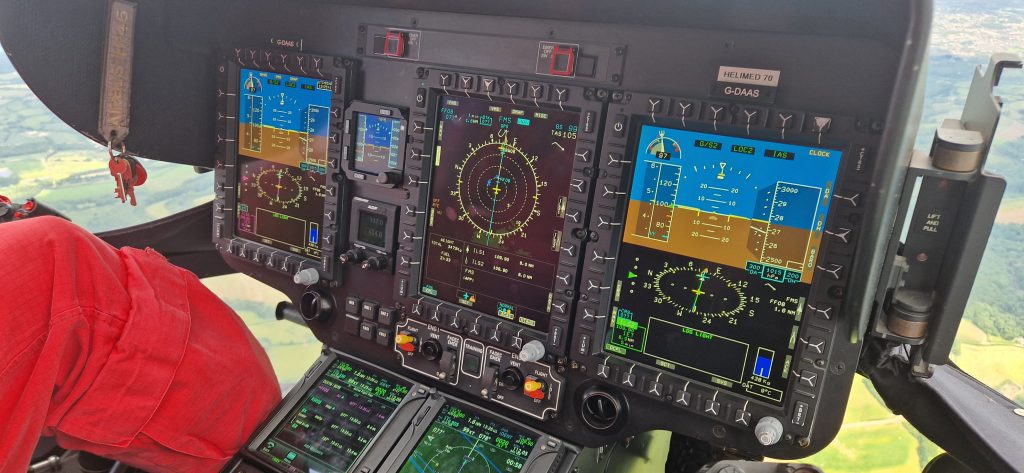
To obtain an IR, the route is pretty similar for both aeroplane pilots and helicopter pilots. After getting a licence, they need to complete additional training on instrument flying before taking a skills test with an examiner.
The course length in each case is 55 hrs of flight training when conducted on a multi-engine aircraft (a reduction to 50 hrs is possible on single engine aeroplane but no such reduction is available for single engine helicopters).
Significant simulator time
For both aeroplanes and helicopters, a substantial part of the course (up to 40 to 45 hrs) can be completed in a Flight Simulation Training Device (FSTD). This is great for training value, removes the need to book into busy IFR airports and, of course, makes the course cheaper.
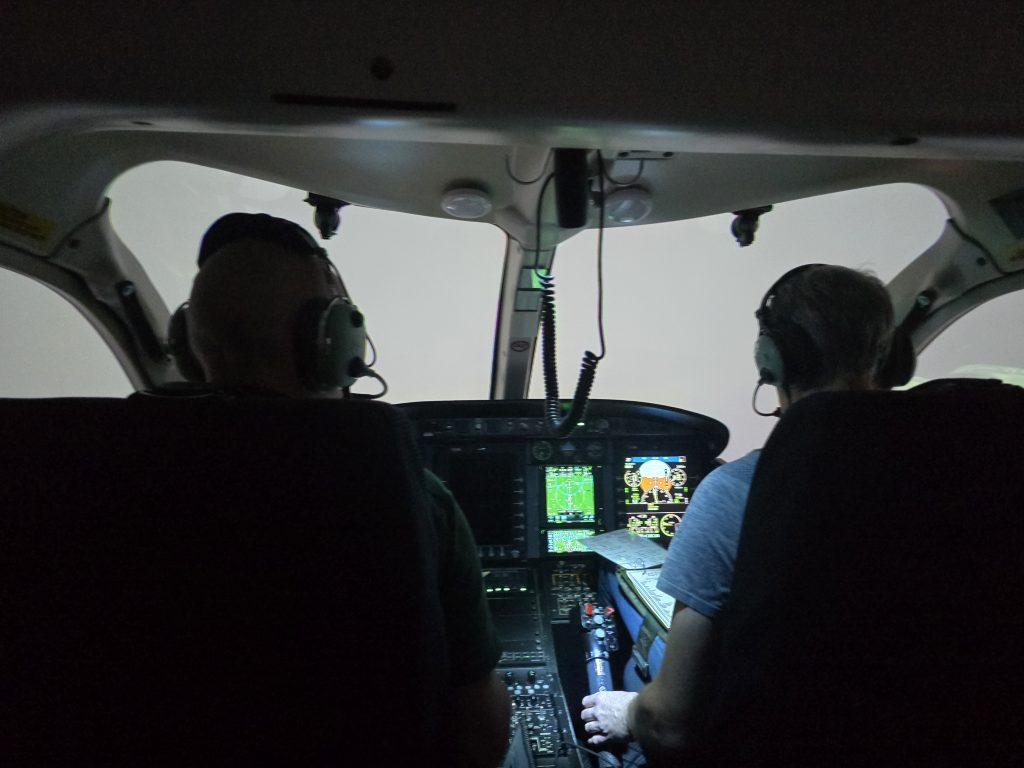
At the end of the course, the final flight exam, the Skills Test, is conducted by an Instrument Rating Examiner (IRE). Passing this check is a significant achievement and the pinnacle of a huge investment in time and resources (see Pilots Who Ask Why article on the costs)
But who trains the pilots to pass this check ride? Before we get to that, we need to understand the different types of instructor that exist in the UK/EASA regulatory system.
Instructors
In the UK CAA/EASA regulatory structure there are 9 types of instructor (see SUBPART J to Part FCL):
- Flight Instructor (FI)
- Type Rating Instructor (TRI)
- Class Rating Instructor (CRI)
- Instrument Rating Instructor (IRI)
- Synthetic Flight Instructor (SFI)
- Multi-crew Cooperation Instructor (MCCI)
- Synthetic Training Instructor (STI)
- Mountain Rating Instructor (MI)
- Flight Test Instructor (FTI)
What a barrage of acronyms! That’s quite a collection but we can bunch these together into 3 major groups to understand how they are used:
- Elementary flight training – Initial training into how to fly on the simplest aircraft (eg single engine piston). Taking the pilot from zero to qualified pilot or qualified instrument pilot:
- FI – Teach pilot for initial licence issue (but with scope to upgrade)
- IRI – Teach pilots how to fly IFR
- Advanced flight training – Post licence issue training towards new class or type ratings or privileges (eg single pilot to multi-pilot):
- CRI – Teach pilots to fly new classes of aeroplane
- TRI – Teach pilots to fly new types
- SFI – Teach pilots in FSTD to fly a new type
- STI – Teach pilots in basic flight simulators
- MCCI – Teach pilots to work in multi-pilot environment
- Specialist flight training – Specialist training in very specific skillsets
- MI – Teach pilots how to fly in mountainous areas
- FTI – Teach pilots how to do flight test
Now these neat categories are very much blurred when the FI is considered. There is a lot of scope to expand the basic FI to take on new privileges. For example an FI can have the privileges of an IRI, CRI or TRI included by doing extra training. We will come back to that later, but let’s dig into each of the major groups above to understand the route to achieving them.
It’s elementary!
So, imagine you are Joe Bloggs on the street and you want to learn to fly. You want a nice small, basic, relatively low cost machine to learn on. You want to learn the fundamentals without the complexity and cost of a modern commercial aircraft. Typically this leads to learning on a single engine piston aeroplane or helicopter. Examples might include a Piper PA28 or a Robinson R22.
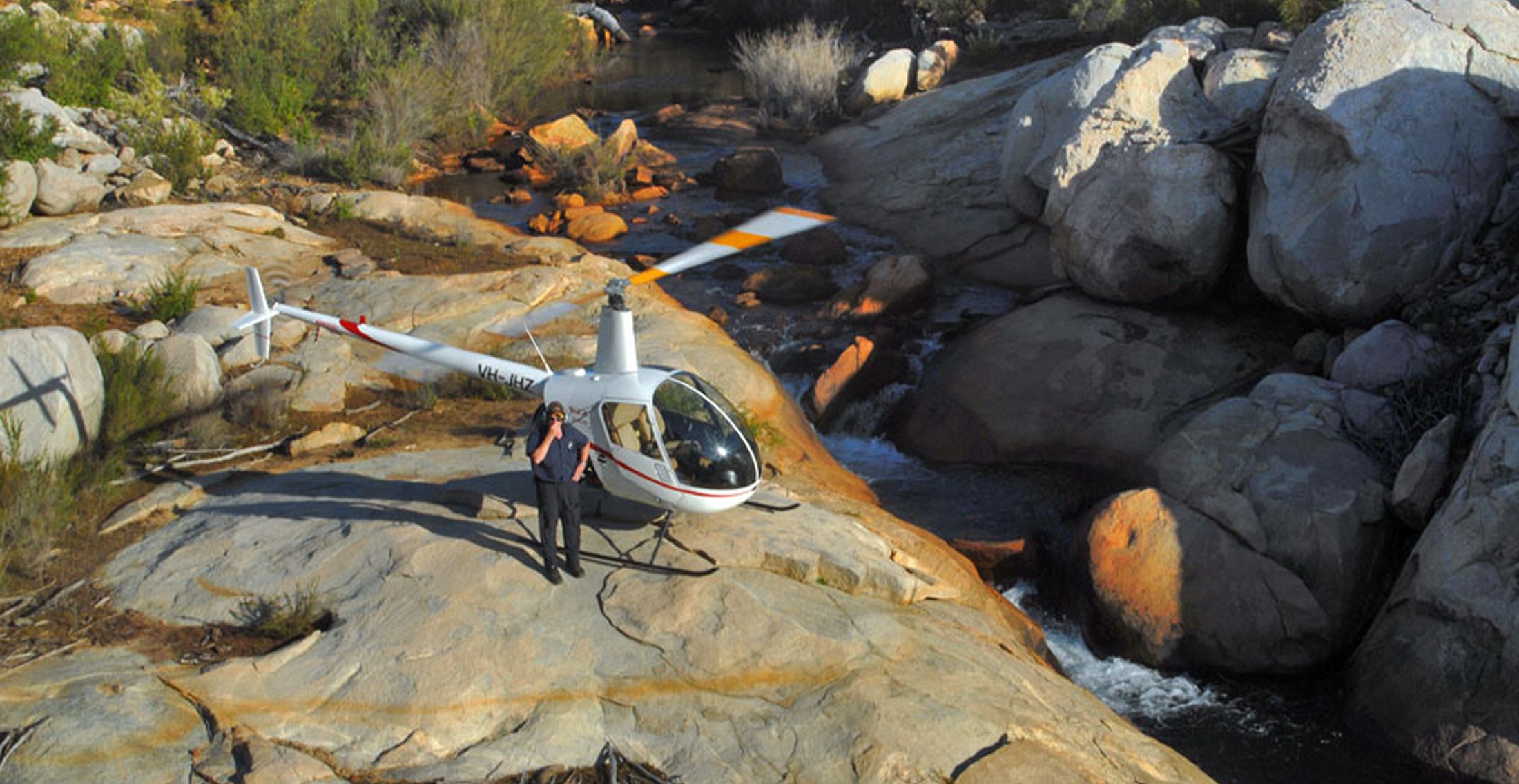
The person who is going to teach you is an FI. If they are a civilian pilot, they will typically have begun their own pilot training journey on a single engine piston aircraft, achieving a Commercial Pilots Licence (CPL) which allows them to earn money whilst flying (this is a little simplified but good enough for our purposes). But what is their experience like?
Who are they?
The FI’s backgrounds vary as much as aviation does. Some may have only done some commercial work on single engine piston aeroplanes or helicopters such as sightseeing or some utility flying. Others may be seasoned aviators or ex-military pilots who may left front line service and are now giving back to new pilots. Still more might be career instructors who have found their happy place in teaching and have been doing so for years. A final bunch may have just completed their CPL then immediately done their FI training. So, hugely varied.

However, in nearly all cases the FI will have completed their FI training on a single engine piston aircraft and will definitely have been taught by another FI who has done specialist training to add the privilege to teach new FIs. These “instructor instructors” will have at least 500 hours of instructional time in their logbooks (this is sometimes called the privilege to teach the FIC or Flight Instructor Course)
Checking the instructors
To test or check the skills of an FI, such as during the FI end of course test, a particular type of examiner is needed. This is the Flight Instructor Examiner (FIE). This person will hold an FI certificate with the privilege to instruct other instructor.
They will have 2000 hrs experience on helicopters and will have delivered 100 hrs of instruction for an instructor certificate; these are very experienced people. To get the necessary instructional experience, they have probably been instructing in the elementary stage for many years. This is something we will come back to.
Teaching flight under IFR
So that is an FI, but what about the IRI? This is the person that’s going to teach you to fly on instruments. They clearly need to be skilled in this themselves and this is where aeroplanes and helicopters make a huge difference.
On aeroplanes, flight under IFR can be conducted in a single- or multi-engine piston aircraft. These are relatively cheap (!) to operate and therefore relative to helicopters the cost of training instructors is relatively low. It is possible to add the privilege to teach IFR flying to the FI certificate so it would be fairly typical for a IFR instructor to be an FI with IRI privileges rather than having the separate rating. This training route (FI+IRI) also reduces the IFR experience prerequisites for the IRI training. A typical aircraft for the aeroplane IFR training is a multi-engine piston aircraft like the Diamond DA-42.
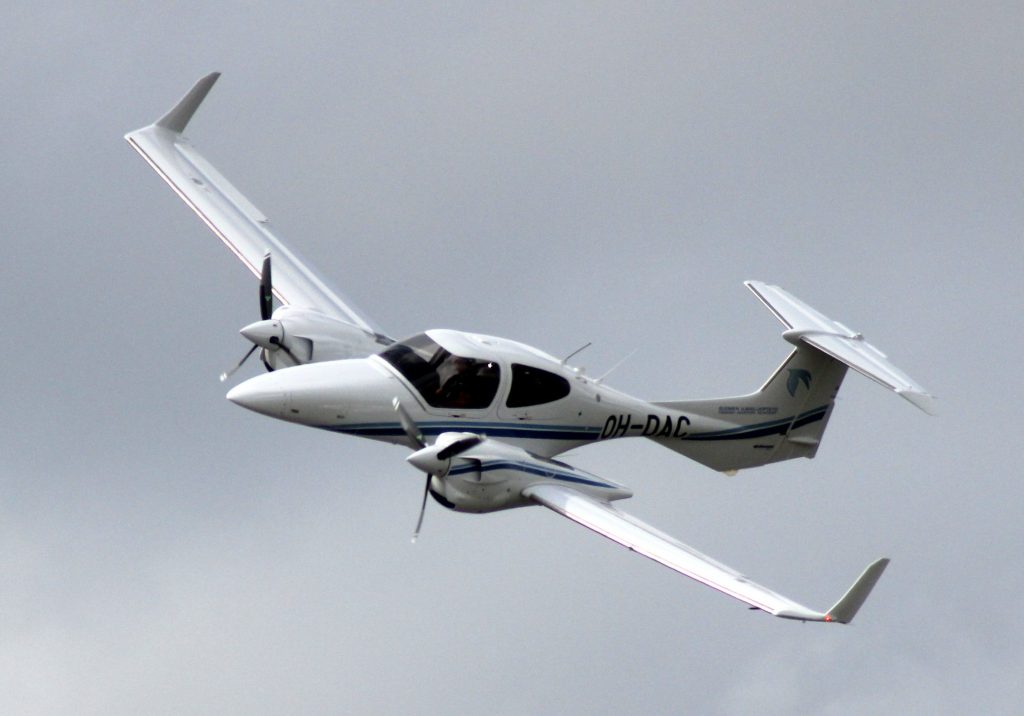
This training route means there is a relatively high number of FI who are delivering IFR training, which in turns means the FI who can teach the IRI course are also relatively plentiful. Finally, it means there are a relatively high number of FIE (52 in the UK) and they will probably be qualified on the classes and types of aircraft the FI are flying. A good, rounded system where there is a relatively straight forward means to create IRI.
Before we look at how the helicopter world differs for IRI, we first need to meet our advanced instructors.
Advance!
The advanced instructor qualifications group is the instructor qualifications that teach pilots how to fly more complex aircraft in more complex environments after initial licence issue. For example a CRI could qualify a pilot to fly a multi-engine aeroplane. A TRI could qualify a helicopter pilot to fly a new type.
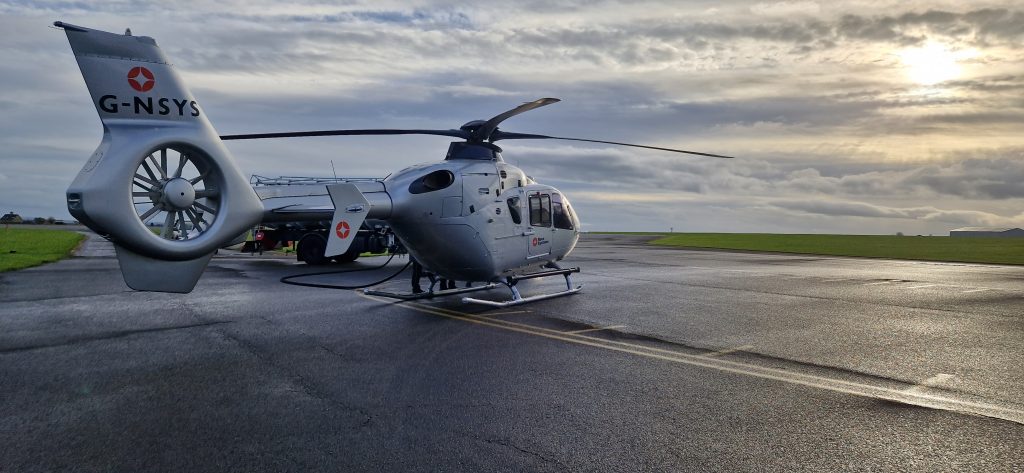
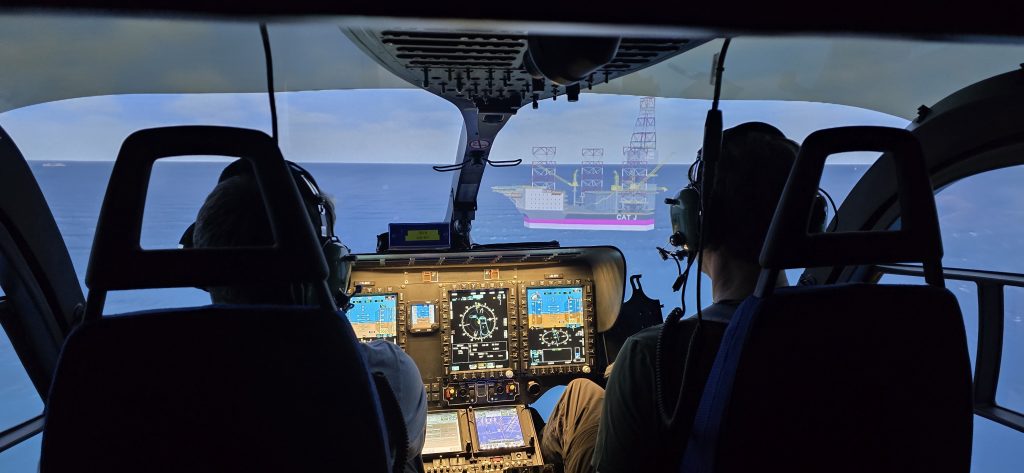
As aircraft get increasingly complex, the training programmes make more use of synthetic training devices and the SFI, STI and MCCI deliver large parts of training courses on FSTD.
OK, that all makes sense, but how does that relate to helicopters and IRIs?
Instrument Training on Helicopters
The major difference between IFR operations on aeroplanes vs helicopters, is the types that are capable of doing it. In the fixed wing world, a humble PA28 can be certified for IFR operations but more typically for commercial training it will be a multi-engine machine like the DA42.
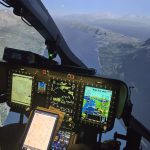
In the rotary wing world, the minimum starting point for IFR operations in the UK/EASA is a turbine powered aircraft. Almost without exception, this will be a twin engine turbine helicopter (there is just one IFR certified single engine helicopter in the UK). Examples currently in use for helicopter IFR training include the Twin Squirrel, Bell 429, AW109 and EC135. These are much more complex and expensive machines than the equivalent fixed wing options.
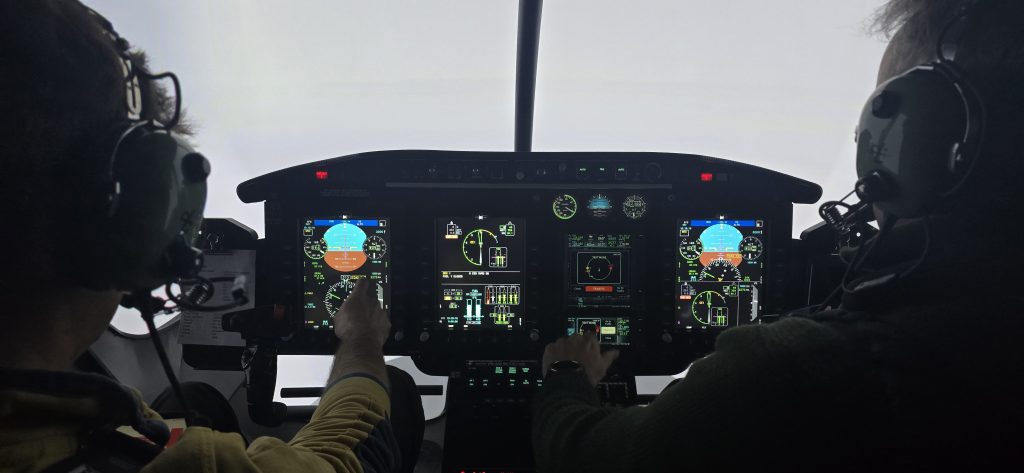
None of these twin turbine machines would ever be used for civilian initial training towards licence issue (PPL or CPL). It would not make financial sense; why not use an R22 or Cabri G2? Importantly this means that the instructors on these types of helicopter tend to be advanced level instructors like TRI and SFI and not FI.
Ah, so that is why IRI is a separate qualification! We need to give these advanced instructors an extra qualification to teach IFR flight on helicopters as they are unlikely to be current FI. You cannot add IRI privileges into a TRI (but you can for an SFI – this is not important to our discussion though).
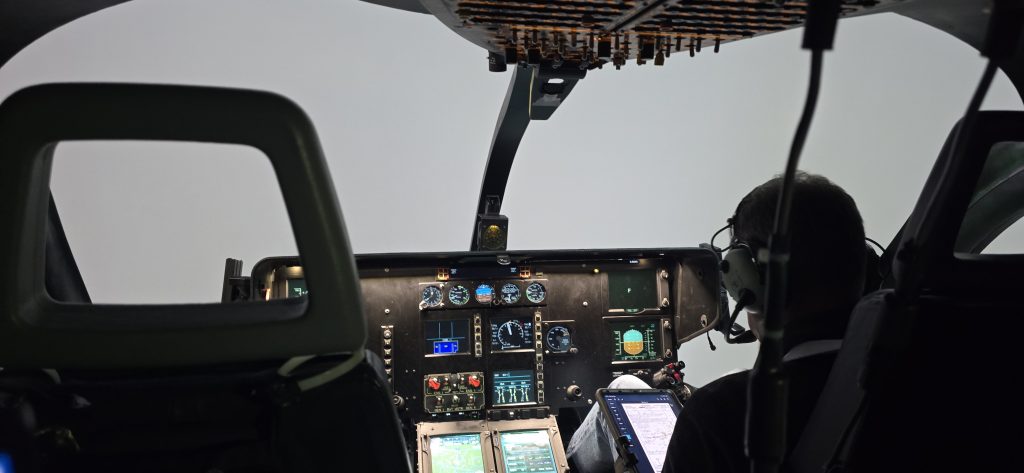
So who is going to train these IRI? Let’s look a few helicopter pilot career paths to expose the problem.
The career path of a helicopter pilot
We have already established that we need an FI who can teach IRI to create an IRI. For helicopters, this IRI student will need to be qualified on the twin engine helicopter used for the training and, critically, so will the FI teaching him and the FIE checking him. This was no problem on aeroplanes, but lets take some typical career paths are see how we might end up with the right qualifications as helicopter pilots. These are not the only paths, but serve as examples to highlight issues.
- The ex-military pilot. The ex-military pilot has lots of varied experience, predominantly on multi-engine turbine aircraft (exclusively on multi-turbine aircraft in the UK now that basic training is on H135). When they leave the military, they will looking for a role that brings in income roughly in line or better than their military income. Therefore, if they come to the civilian helicopter sector, they will almost certainly join a company with multi-engine turbine helicopters. To become an FI, they would have to train from scratch on a single engine piston and then train as an FI. The salary expectations would probably be below their military income so this route is highly unlikely but not totally improbable.
- The young integrated course student. A young person might save up hard and complete an integrated helicopter training course to get up to a CPL as efficiently as possible. However, the high earning job prospects with just a CPL are few and far between and they are likely to want to enter a career on larger helicopters. With this in mind, many go on to get their IR, training on twin turbine. They then go a large operator, potentially pulling in a good salary after several years. The attraction is low of later investing large sums of money into an instructor rating with the prospect of lower income on single engine pistons. Again an improbable route to FI instructor or FIE.
- The career instructor. Some pilots complete their initial CPL and instead of getting their IR, invest their resources into getting an FI. They build hours and gain experience and qualifications. They may add twin turbine and an IR later, but become highly capable instructors. In the right company that delivers IR training, they should achieve the privilege to instruct other instructors and deliver IR training and IRI training. They will likely become a manager in those companies which might take them away from the cockpit but they are likely available for training. These pilots are the most likely to achieve the necessary qualifications and skills to create new IRI.
- The sunset instructor. A pilot might find they have reached the maximum age for their front line role and need an aviation outlet to continue to earn or stay in the cockpit. There are a few utility flying roles for pilots over 60 or 65 (eg powerline inspection) but instructing is a good way to earn and keep flying. As FSTD instruction needs no medical and with reasonable earning potential, a common path is obtain an SFI (potentially with IRI privileges) or an MCCI. In this case they are not in a position to train new IRI. It would be unlikely but not impossible to invest a huge sum at this stage in an FI rating but in any case time would be limited to get the experience to achieve FI instructor privileges or the FIE.
So, of the typical career paths presented, only one is a viable route to FI instructor and FIE. The same experience that takes them there, also makes them highly suitable to be CAA Inspectors. Whilst they are still available to industry in this role, they become extremely expensive (£2200 per test) and difficult to schedule in around their inspector duties. They should not relied upon to sustain the industry instructor cadre.

Given this narrow set of career paths lets look at how that translates into reality.
How many FI are there who can train IRI on helicopters? This data is not available in open source. However, of the 8 ATO that currently offer the IR course, only half offer both the FI and IRI courses where there might be a chance of a staff FI also having the privilege to instruct the IRI course. In the other cases, a contractor is likely needed to deliver the course.
What about examining IRIs? How many FIE are there in the helicopter world? In the UK there are just 8. Let’s look at some data for them and see if our analysis earlier is correct:
- Three are current CAA inspectors (and one is a retired CAA inspector) – As discussed above, the helicopter industry should not be relying on Inspectors to sustain key skills
- One of the non-inspector examiners is not qualified to examine on twin aircraft. This means they are unlikely to be qualified to complete training or checking on IRI.
- Most are career instructors who have been FI for years. None are sunset instructors and very few are ex-military (the career path just isn’t viable currently).
- All of the FIE who are not CAA Inspectors are over 60 years old. Age usually brings knowledge but does mean medical fitness is more at risk

This means the helicopter industry is reliant on an aging population of examiners and a small pool of instructors to grow and sustain the IRI community. Why can’t organisations who deliver IR training fix this themselves by growing more FI who can teach FI who can then teach IRI and eventually check them as FIE?
A long and expensive road
Let us imagine we are an Approved Training Organisation (ATO) that delivers IR training but not single piston engine training (4 of the 8). We are focussed on delivering advanced training including type ratings and instrument ratings for single-pilot and multi-pilot operations on twin turbine helicopters. We recognise we need to be able to grow our own IRI so we try to grow our own FI with privileges to teach on the IRI course.

Train the trainer
Our staff consists of TRI and SFI, none of whom are FI because the school has no single engine piston helicopters. However, let’s be charitable and say the TRI have completed the IRI course already. This is the improbable path to allow them to teach a new IRI:
- Have the TRI complete the following training:
- A single engine piston type rating (5 hrs flight training, 1 week)
- An FI course on that helicopter (100 hrs of groundschool, 35 hrs of training, up to 6 weeks)
- Complete further training and an assessment of competence to demonstrate they can teach an IRI (approximately 5 hrs in a twin turbine FSTD and aircraft, 1 week)
So for multiple £10,000s of input costs and 2 months of training (with most of it on a type the TRI will probably never fly again) we have an instructor who can teach a new IRI. This is a very improbable investment for the ATO. This is a huge bottleneck in the system. Sending a TRI to a potentially competing organisation is also unlikely.
Train the checker
Let’s say we did that – we have an instructor instructor! When could that individual become an FIE so he can conduct checks on an IRI? They would have complete 100 hrs of teaching of new instructors. That’s 20 TRI courses, 3.5 FI courses or 10 IRI courses. This would take a substantial amount of time, particularly if they do not stay on the single engine piston to teach some FI courses (remember 6 weeks for each course if they do stay for a bit).

This is clearly not sustainable or robust for the industry going forward. So how could we change?
Training IRI on helicopters
As has been outlined above, all IR training is conducted on turbine helicopters, nearly all of it on twin-turbines.
Most training on twin turbine helicopters is conducted by instructors with TRI or SFI certificates. A TRI, with suitable qualifications can train a new TRI.
The checking on twin turbine helicopters is predominately conducted by TRE. A TRE, with suitable qualifications can check a TRI.
The solution to the IRI training bottleneck
The simple solution to the difficult path to create and check IRI, is to move the whole process up to the TRI/TRE level.
Allow TRI, who have the privilege to instruct new TRI and have an IRI qualification, to train new IRI. The skillset is the same and the knowledge is there.
Allow TRE, who have the privilege to check TRI and have an IRI qualification, to check IRI. The skillset is the same and the skillset is there. The assessment of competence is nearly identical (just a theoretical knowledge oral exam as an extra).
There is no doubt this would be a substantial change to implement, with many of the implementing rules requiring a change in hard law. However, without it, there will inevitably be a gradual dwindling of the ability of the industry to sustain a qualified and competent group of trainers and checkers who can sustain the IRIs needed.
Why not take a look at our articles?
- Preparing for complete loss of engine power in helicopters
- Lessons in how to manage a helicopter engine malfunction
- Light twin helicopter AFCS – Have Airbus won the race?
- Maintenance by pilots – can the training be improved by sharing?
- Flight simulation revolution – A new method for matching training need to simulator capability
- Helicopter Single Engine IFR – New horizons
- Making the grade – understanding climb gradients in the go around

- Unfair Skies: Restrictive helicopter instructor rules and how to fix them

- How to create an instrument rating instructor (IRI) – A helicopter anomaly

- The evolution of Category A Helipad procedures – A strong foundation for VTOL to learn from?
- Strips vs dials – Which is better?
- Under the weather – are UK HEMS weather rules broken?
- Mastery of the GTN 750 – Ten things you should know
- Checking anomalies – The weird requirements of helicopter proficiency checks
- It’s all about the switch – How helicopter designers need to think about the human in the cockpit
- Engine Failure Training Mode – A safety tool that will punish the unwary
- Automated take offs – Gimic or are they the new standard?
- Keeping up with the Norwegians – Six amazing innovations for UK HEMS
Leave a Reply