
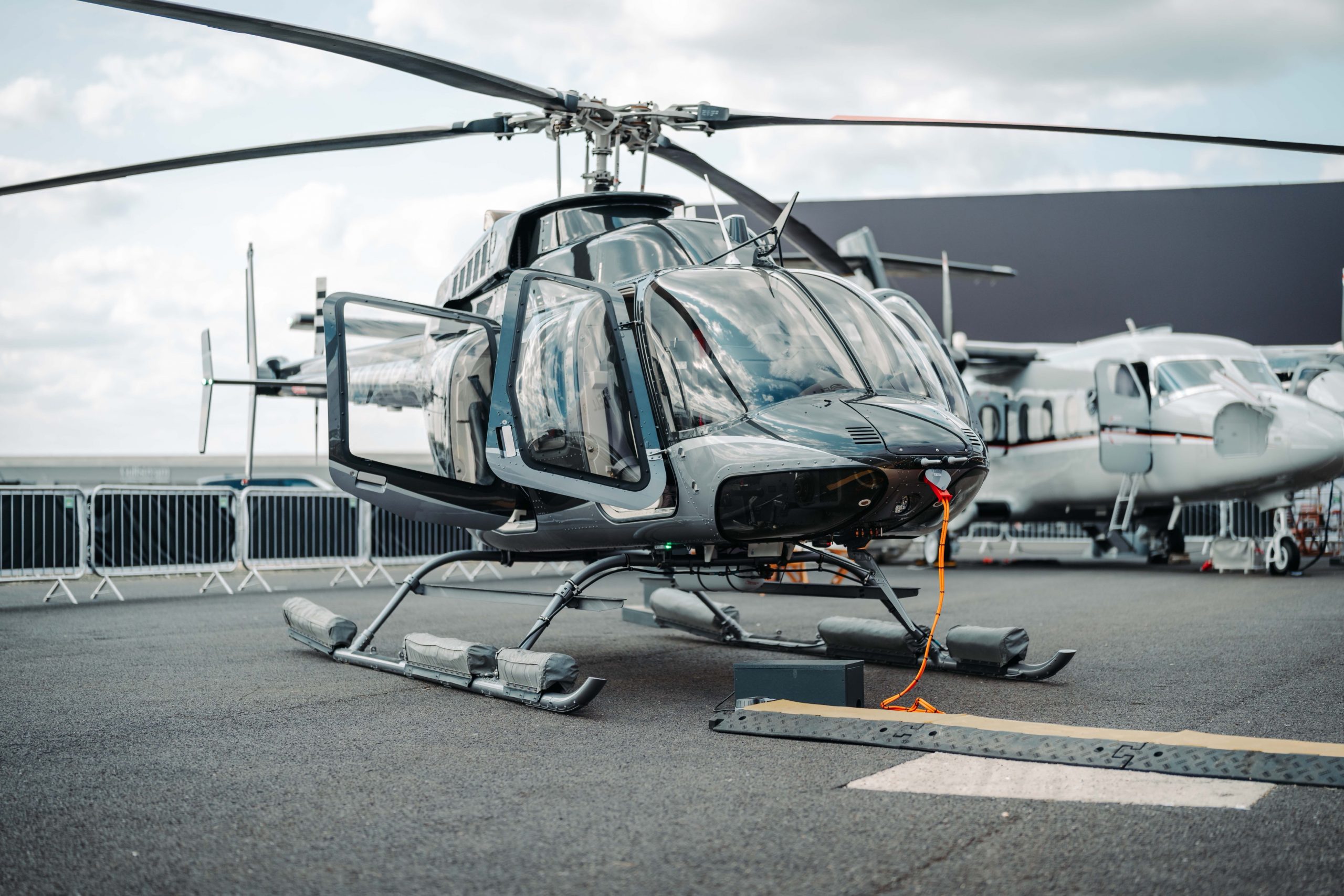
Bell Helicopters recently announced the sale of the first single engine IFR-configured Bell 407 GXi in the UK. This represents a significant step forward for UK helicopter IFR operations as there is currently only one other, much older, single-engine IFR certified helicopter in the entire UK civilian fleet.
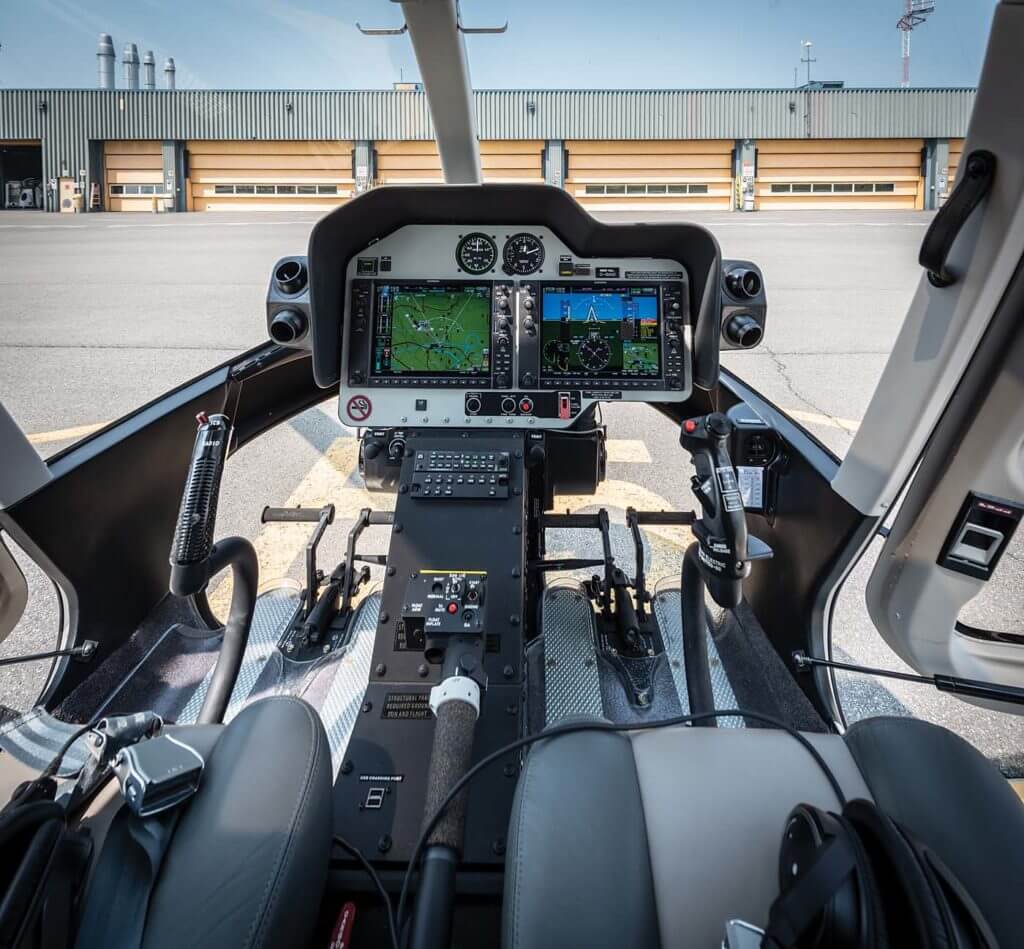
The availability of capable, single-engine IFR machines could transform current IFR training making it significantly cheaper. With it’s Garmin G1000NXi cockpit and 2- or 3-axis AFCS it may also be easier to fly than legacy IFR trainers. It could lead to more helicopter pilots being comfortable with IFR, reducing the inadvertent IMC incidents.
So, if it is so great to have an IFR-certified single engine helicopter, why do we not have more of them? Is it even legal to go in a cloud? Single engine aeroplanes fly IFR all the time, so what difference does using a helicopter make? In this article we dig into the topic and lay out the facts.
Enjoy
Contents
Why now?
The requirements for helicopter IFR are captured in the relevant Certification Specification – CS-27 for helicopters under 3175 kg and CS-29 for heavier helicopters. As we will look at below, the requirements are all achievable and yet, there have not been any single-engine helicopters certified for IFR in Europe for many years. What’s going on?
Whilst there are some single-engine aircraft with a maximum take off mass above 3175 kg, the vast majority are below that weight. Therefore we need to focus on CS-27 and its USA equivalent FAR-27. Each of these specifications are supported by Aeronautical Circular 27 (AC-27) which adds detail about how manufacturers should test their aircraft to meet the relevant CS-27 requirement. The AC-27 is identical for both CS-27 and FAR-27 as they both reference the same document.
IFR vs IMC
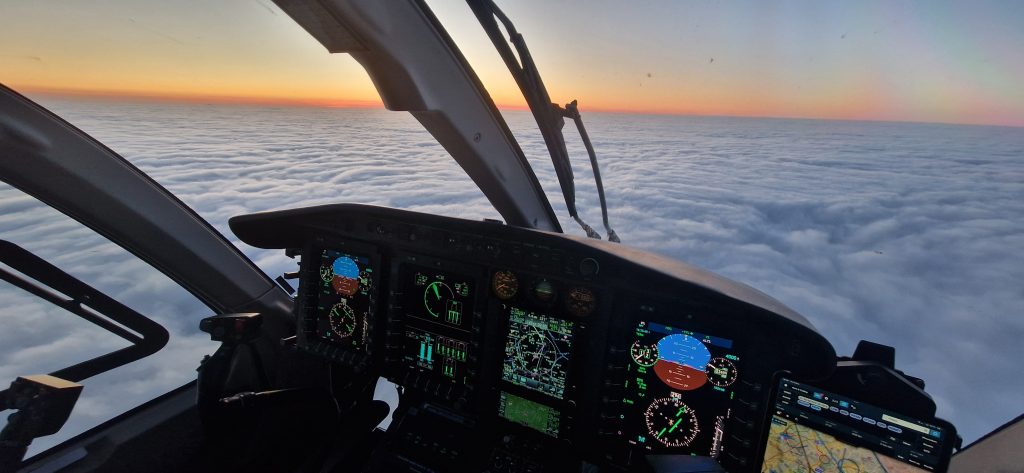
First a quick clarification. Certifying for IFR operations is relatively simple assuming the pilot can see out. However, it is IFR operations in Instrument Meteorological Conditions (IMC) – flying in a cloud – that is the focus here. It is assumed for the rest of the article that we are planning to do IFR inside a cloud!
Development of CS-27
The reason why they are 2 Certification Specification for helicopters is that the authorities are trying to make the requirements proportional to the risk posed by the aircraft. In simple terms, a bigger aircraft crashing has more potential to kill more people at once and therefore needs to be safer. CS-27 has less stringent requirements than CS-29 under this presumption of less risk.
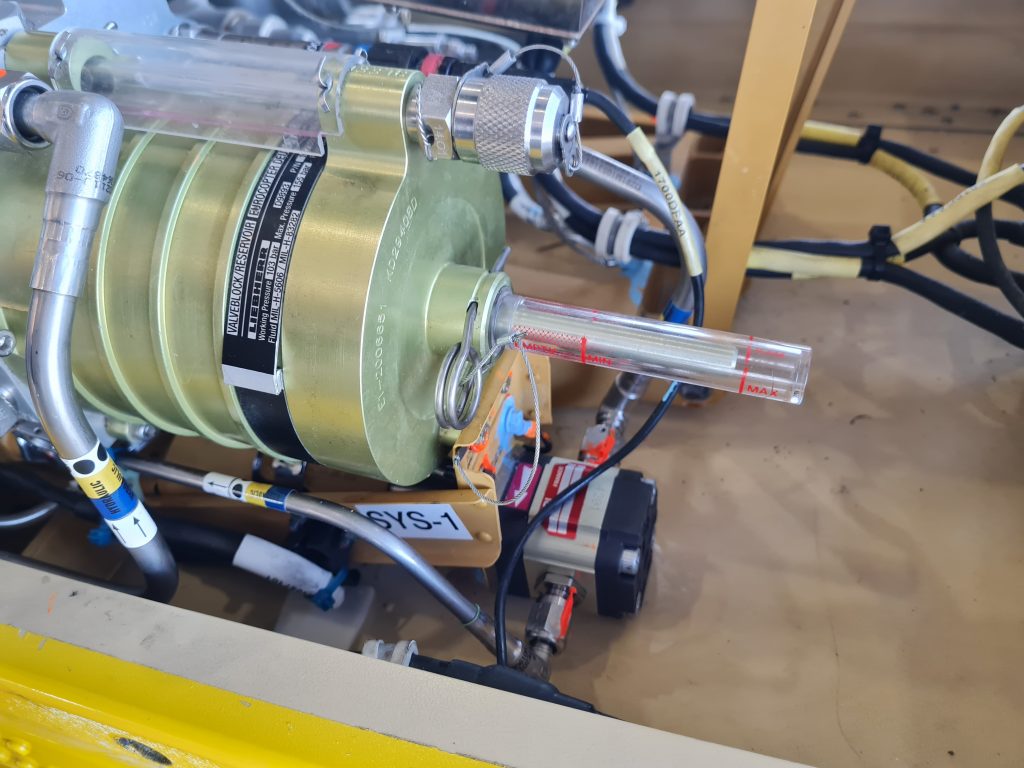
For example, on a CS-29 certified helicopter such as the H145, a full and free control check must be performed before start, whereas this is not a requirement on H135, certified under CS-27. The H145 D3 has an extra hydraulic pump to facilitate this requirement. The more rigorous CS-29 inevitably leads to more weight and cost for the operator. So what impact does this have on our single-engine helicopter?
Safety analysis
In 1999, numerical safety analysis was introduced to CS-27. This methodology introduced a concept where the probability of certain failures were given a target for occurring. The manufacturer then had to demonstrate that by design their aircraft was able to achieve or exceed that probability.
Let’s look an an example. The failure of an attitude indicator could make a small helicopter quite challenging to fly but with visual conditions it is relatively straight forward to get it down safely. For IFR, the authorities give this a target probability of 1 in 1,000,000 (1 x 10⁻⁶). The manufacturer has to prove the probability of it failing is less likely than that. Let’s say they can only prove its probability of failing is 1 in 1000 (1 x 10⁻³). They could use a second attitude indicator, made by a different manufacturer, with a second independent power supply but with the same probability of failing at 1 in 1000. Combine the 2 indicators and you have a total probability of 1 in 1,000,000. We have achieved our target.
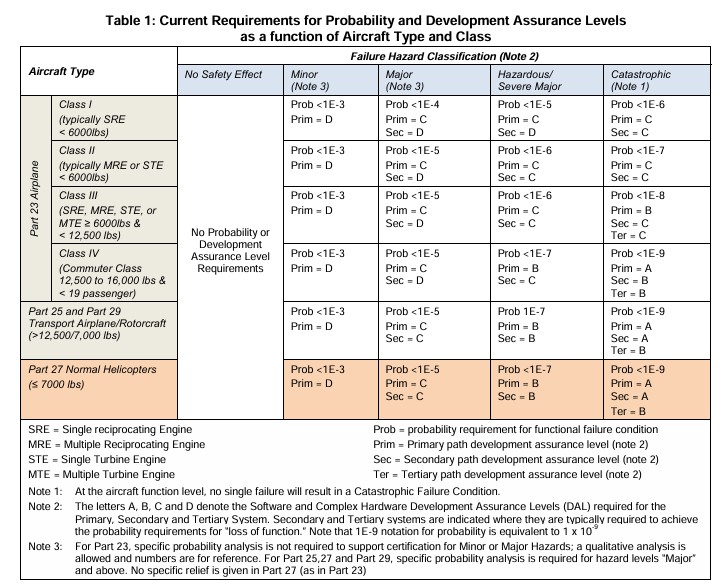
The more hazardous an event is, the higher the target probability. For this purpose, the level of hazard falls in various categories from None (no safety impact) to Catastrophic (we are all going to die). For activities where we have a low tolerance for risk, we assign higher target probabilities. So an airliner with hundreds of people on people has higher targets than a Cessna 152 with 2 on board.
These higher targets inevitably lead to multiple, redundant systems to try to achieve the targets. For example, an airliner typically has 3 independent pitot static systems to the Cessna 152’s singular system.
A glitch in the system
As this new numerical analysis was brought in 1999, all CS-27 helicopters were assigned the same target probabilities. These were the same target probabilities as CS-29 helicopters and CS-25 aeroplanes, which is for large airliners. See extract from white paper above. But is this fair? For small aeroplanes, their CS has some sub-levels.
CS-23, which is for smaller aeroplanes, is a much bigger market than the helicopter market. There have been many advances in technology for IFR flight in those markets with modern, highly reliable avionics being developed. However, under CS-23, the safety targets are broken down into several levels dependent on the size of the aircraft and a proportional approach to regulation. The new avionics are targeted at these lower safety target probabilities which meant they could not be used on helicopters with their highly target safety probabilities. Vast swathes of technology could not be used.
In addition, for CS-29 helicopters the equipment design had to prevent hazards whereas CS-27 helicopters equipment had to minimize hazards. But the methods for demonstrating this (remember AC-27 mentioned earlier?) were only written for CS-29 and so no-one could actually make use of this lower bar.
The result of all this, was that it was nearly impossible to certify a CS-27 single-engine helicopter for IFR without making the aircraft too heavy and too expensive with lots of redundant systems (eg dual hydraulics, dual electrical system, dual display systems).
Changing the system
The helicopter manufacturers recognised this as a problem and worked together to try to get the regulations changed. They produced a white paper on the topic in 2015 – “14 CFR 27 Single-Engine IFR Certification Proposal“. This was submitted to the FAA in the USA, who worked with industry to alter the requirements. This led to certification requirements for “small” helicopters being broken down into various levels in the “Safety Continuum” in 2017. This broke down the FAR-27 into 4 levels:
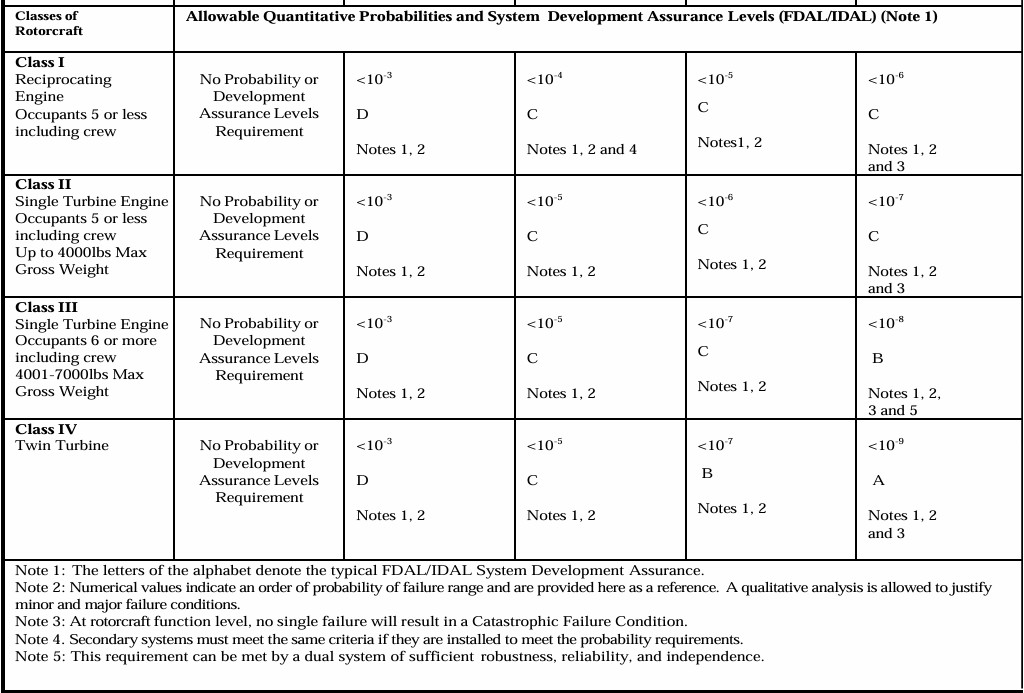
At each level the target hazard probabilities are higher. This allowed manufacturers to achieve the levels of safety needed for IFR operations.
In addition, the white paper also looked at other areas where the manufacturers were given more scope to achieve the targeted safety levels:
- Stability augmentation / hydraulic systems
- Flight instruments and pitot static systems
- Electrical power requirements
- Navigation and communication equipment
- Electromagnetic interference / Lightning protection
The first helicopter to achieve IFR certification as a single-engine helicopter was the AW119. Somewhat ironically however, this was actually done without using many of the alleviations that the industry worked so hard to achieve! It origins in the IFR certified AW109 had a influence in this route to certification.
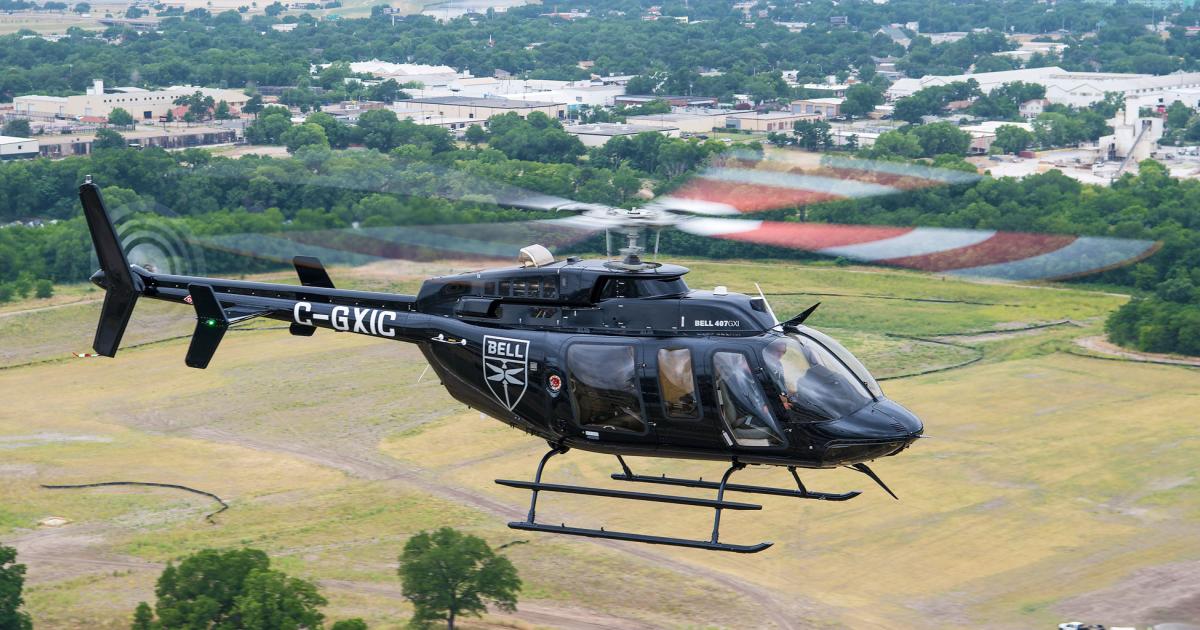
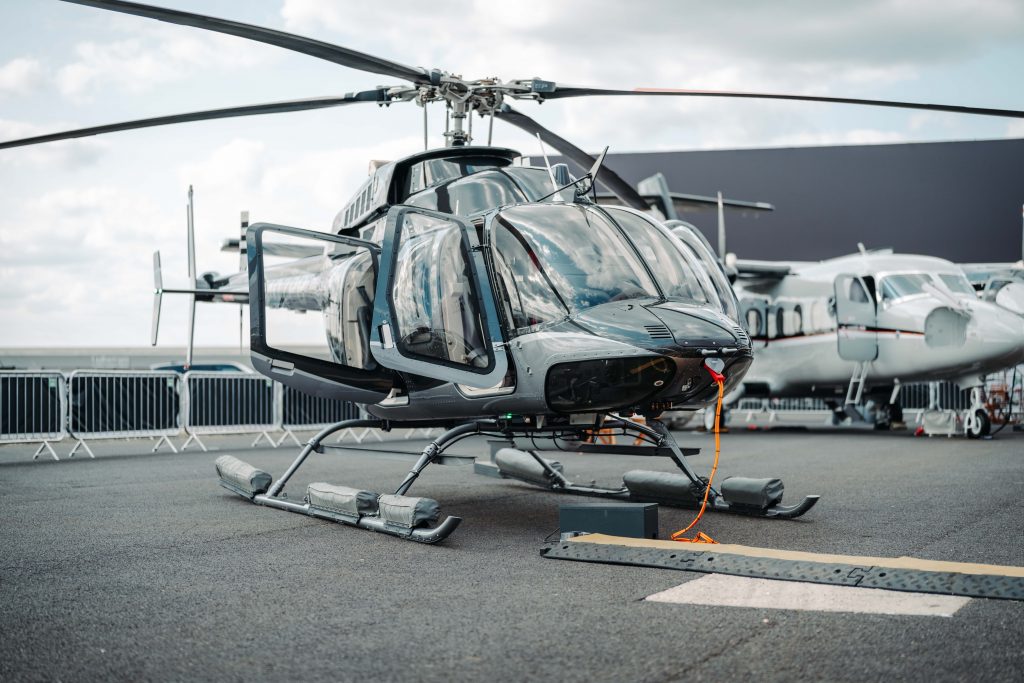
The Bell 407 GXi was however certified using some of the new alleviations to the requirements, specifically:
- The Safety Continuum
- Protection against electromagnetic interference
- Navigation and communications equipment
- Hydraulic systems (single system only)
The H125 has also since followed in the certification pathway. The drive for this IFR certification has heavily driven by the training aircraft replacement projects in the US military and the drive by Emergency Medical Helicopter operators to add IFR capability after a sustained period of Inadvertent IMC (IIMC) accidents. For example, the loss of N191SF and its crew during a CFIT incident after going IIMC.
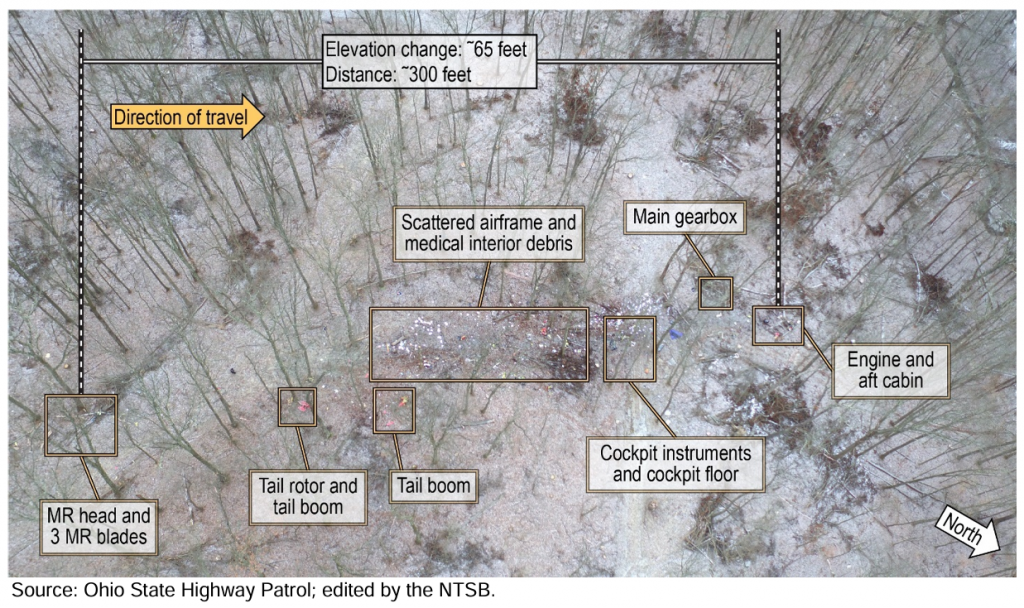
But all these helicopters had been certified previously for VFR, so what had to change for IFR certification?
What is different for IFR?
So what does a manufacturer need to do to take their VFR helicopter up to IFR levels? And how has new regulation changed the requirement. These requirements are captured in the CS by various additional points specific to the demands of IFR:
- Stability augmentation
- Automatic Flight Control System
- Redundant display of attitude, airspeed and altitude
- Magnetic Gyro stabilised compass
- Redundant electrical supply
- Hydraulic systems
- Adequate navigation aids / GNSS
- Electromagnetic Interference Protection
- Icing protection
Stability augmentation
In the Flight Characteristics section of CS-27, there is a specific IFR Appendix B that covers all the extra elements. For example, the flight controls must be trimmable to zero force in all certified flight conditions.
In addition, the aircraft must be shown to be “stable” at various flight conditions. This means the aircraft will return to its trimmed flight condition without pilot input when disturbed by gusts. It also has a maximum requirement for how many oscillations about the datum are allowed.
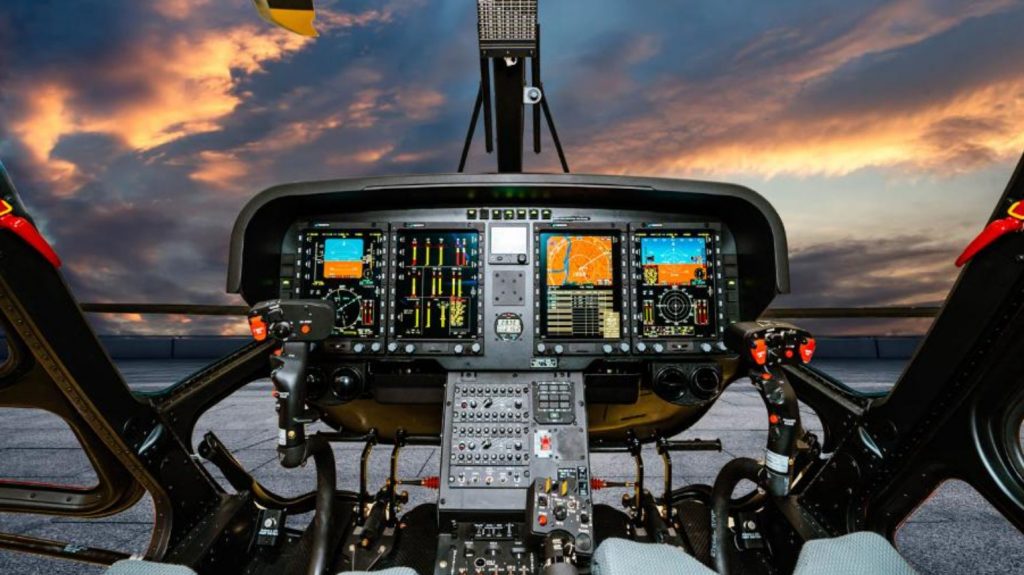
These requirements typically drive the need for some form of stability augmentation system like a SAS or attitude hold.
Automatic Flight Control Systems (AFCS)
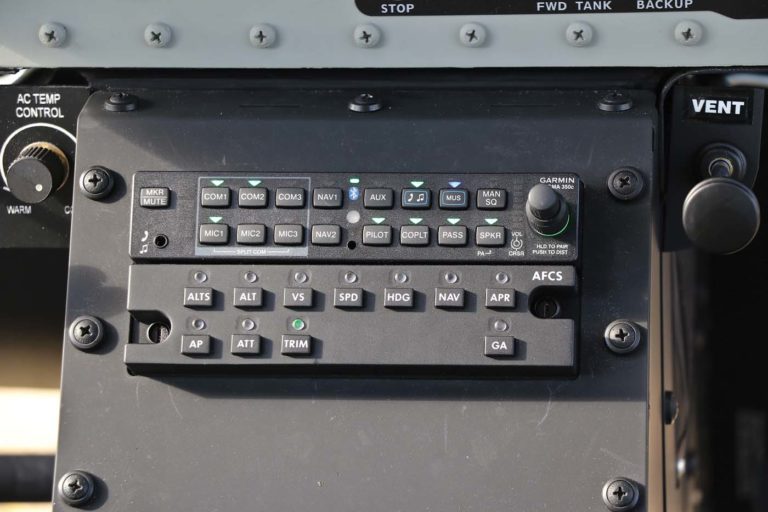
Of note, CS-27 does not specify that an autopilot (AP) is fitted for IFR. However, the operational regulations do have this requirement. For example in the UK / EASA it states (NCO.IDE.H.126, NCC.IDE.H.10, CAT.IDE.H.135 and SPO.IDE.H.126)
Helicopters operated under IFR with a single pilot shall be equipped with an autopilot with at least altitude hold and heading mode.
To make the certification worthwhile for manufacturers and operators and given we have been stressing this all about weight, single pilot operation of these single-engine machines is pretty much a given so they all have an autopilot.
Redundant displays
Being able to determine critical flight path parameters is crucial for IFR flight. In essence, the requirements are no different no matter what aircraft you fly. With that in mind, the way this is dealt with in CS-27 is by referencing up to CS-29 and signposting the relevant sections. This dictates the list of kit needed and the independence required between the systems.
But what about the pitot-static system? Modern twin IFR helicopters have dual systems. The changes in 2017 have allowed consideration of alternate paths to safety. For example, instead of dual systems, is a singular system with an cabin alternate static source and dual power systems for the single pitot tube sufficient?
Gyro-compass
Appendix B requires a magnetic gyro-stabilised compass. The gyro direction indicator found on basic aircraft which has to be manually slaved to the backup compass is not sufficient. Some form of magnetometer is needed. These are usually in the tail.
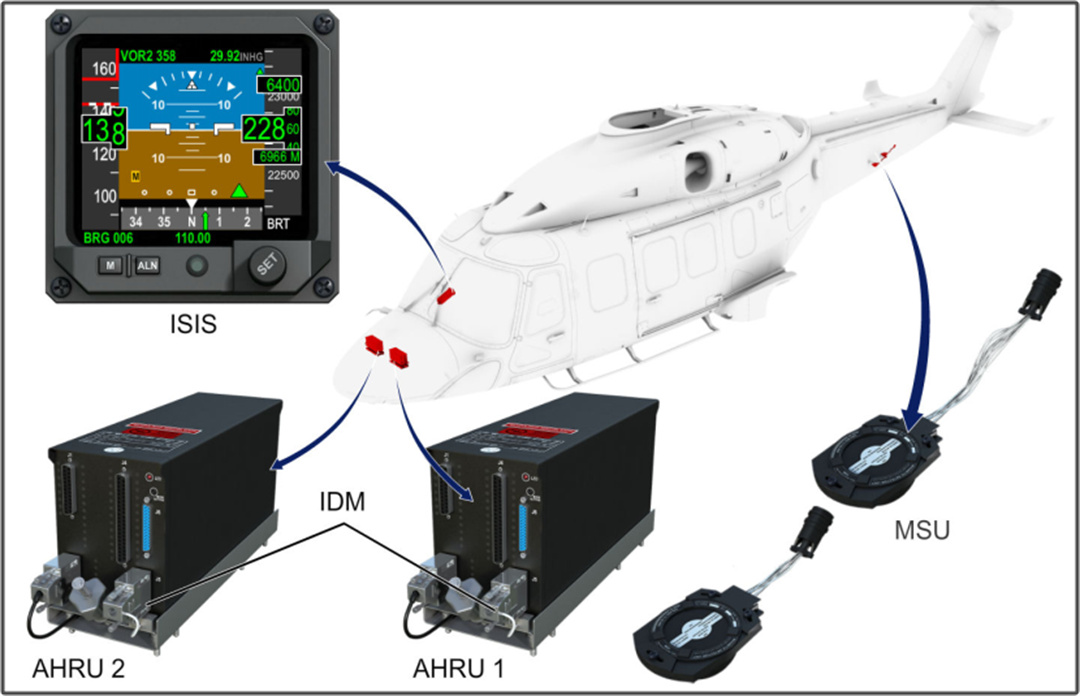
Redundant electrical supply
Following an electrical failure, the pilot still needs sufficient information to fly out of the instrument conditions. This dictates some form of backup power supply or redundant electrical system.
In the CS-27 that existed before 2017, the electrical power requirement for IFR was for half the planned endurance of the helicopter. This dictated quite large batteries or multiple generators. At the same time, the requirements for aeroplanes had relaxed to 30-60 mins of backup power. The amendments to CS-27 brought these requirements more in line.
Hydraulic systems
The aircraft needs to be controllable in instrument conditions following a single hydraulic failure. This has typically led to dual or triplex hydraulic systems on IFR helicopters. However, for smaller singles the controllability of the helicopter can actually eb sufficient to exit the IFR environment. The revised rules allow for this. Bell demonstrated adequate control was possible on the Bell 407GXi following the loss of the only hydraulic system so it only needs one for IFR flight.
Adequate navigation and communications
The aircraft needs sufficient navigation and communications systems to operate in the IFR airspace. Typically this includes at least two VHF radios, GNSS and VOR/ILS.

Electromagnetic Interference / lightning protection
You do not want your cockpit display, that you are relying upon to stay the right way up in a cloud to go crazy every time you fly over a mobile phone mast. Therefore for IFR operations, displays and equipment needs a certain degree of tolerance for incoming electromagnetic energy. As mentioned earlier, the revised focus is on minimizing the hazard in CS-27 aircraft instead of preventing it as in CS-29 aircraft. The same goes for lightning protection
Icing protection
When flying IFR and IMC, there is a risk of ice forming on the aircraft. However, while a full icing clearance is unlikely on such small machines, icing protection is needed for the pitot static system for IFR operations.
Whilst it is unlikely that a single engine helicopter would ever be certified to fly in airframe or engine icing conditions, the implications of getting it wrong are more severe. Should one engine flame out, a twin engine aircraft has scope to descend to warmer air in a controlled way. Single engine aircraft do not.
Of note, fixed wing aircraft have been certified for flight in icing meaning the playing field is not level.
Conclusion
So we have a method for certification and three types have achieved this in the USA under FAA jurisdiction. But delivering the certified aircraft is just one facet of the problem. We need to be careful if we start thinking “Well a fixed wing single can do it so why can’t I?”
EASA and UK CAA lag behind
EASA and the UK CAA have lagged behind the FAA on helicopter single-engine IFR. The relevant rule changes are not yet in place, but the certification authorities are open to the idea. See the presentation made by EASA in 2025 here. Why would the authorities be reluctant to follow the FAA’s lead. It’s a multi-faceted issue.
Not just certification
Having a certified aircraft is only one facet of boosting the broader uptake of IFR operations in helicopters. A 4-pronged approach is needed to reap the benefits:
- Certification – see above
- Infrastructure – the right ground and airspace infrastructure
- Pilot licencing and training
- Operational rules
Infrastructure
There is no point in encouraging everyone to fly IFR if the airspace and airfield infrastructure does not support it.
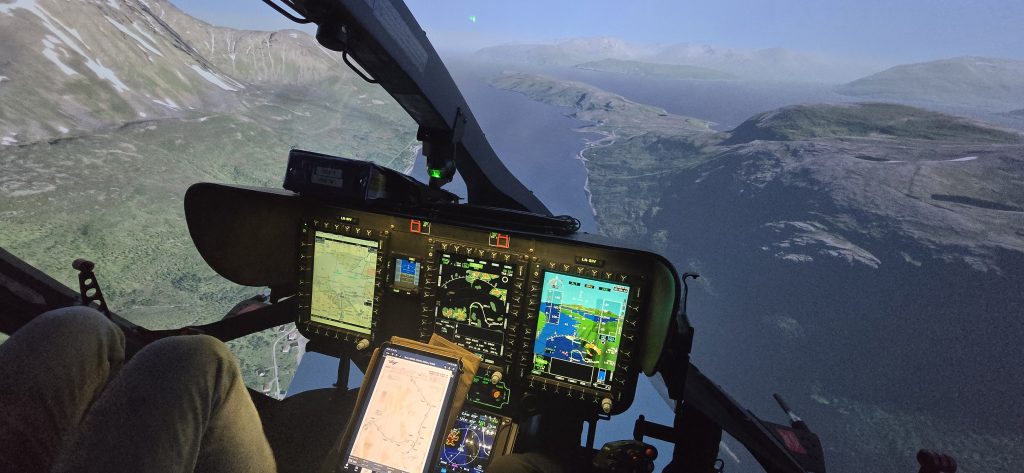
For example, being in a cloud is great but how do I get down? I need approaches! The Norwegian Air Ambulance are way ahead on this front – see our article about it – Keeping up with the Norwegians – Six amazing innovations
Icing is a big problem for helicopters and so we also want low level IFR routes we can use when the outside air temperature falls. If I cannot fly IFR for 9 months of the year due to icing above 3000 ft why would I bother?
In the USA, this has largely been addressed with wide adoption of SBAS approaches and routes (using the Wide Area Augmentation System (WAAS)). Routing IFR is practical.
EGNOS
In Europe, the European SBAS system EGNOS has brought similar results. There are SBAS approaches at every airport with practical minima down to as low as 200 ft for some LPV. With Point In Space (PINS) approaches, low minima down to 250 ft are possible at field locations, well away from airports.
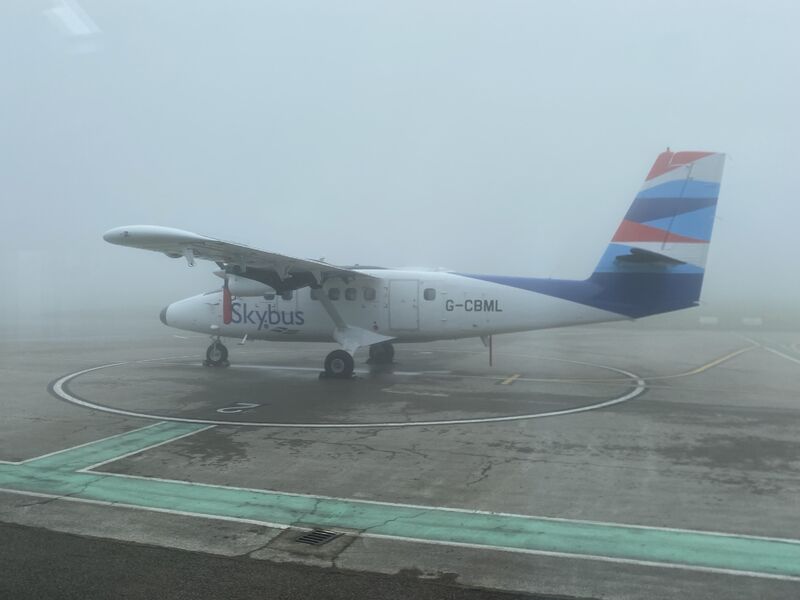
Of course, in the UK there is currently no SBAS or low level IFR corridors which severely limits the utility of IFR helicopters, particularly in winter. This means minima are higher. But could the authorities actually make this even worse?
Walk Crawl Run or Baby Steps?
Having high minima makes the utility of instrument approaches significantly lower. Let’s imagine we are introducing single engine helicopters to IFR operations. We, as the authority, see this as risky so we decide to adopt a “Crawl, walk, run” incremental approach.
Instead of allowing the technically possible low approach minima, we raise the minima artificially to a “safer” level. Let’s say 1000 ft above ground. Now our operator has to ask “What’s the point?” He can operate his helicopter under this 1000 ft limit below cloud – scud-running rules? Why invest in IFR equipment when they can just fly visually?
Therefore regulators need to very careful about imposing overly-cautious incremental approaches to IFR approaches lest they kill the very safety benefit they are trying to encourage. An IFR capable machine is just as likely to crash while scud-running as a VFR machine if the pilot does not have a practical way to use the IFR capabilities.
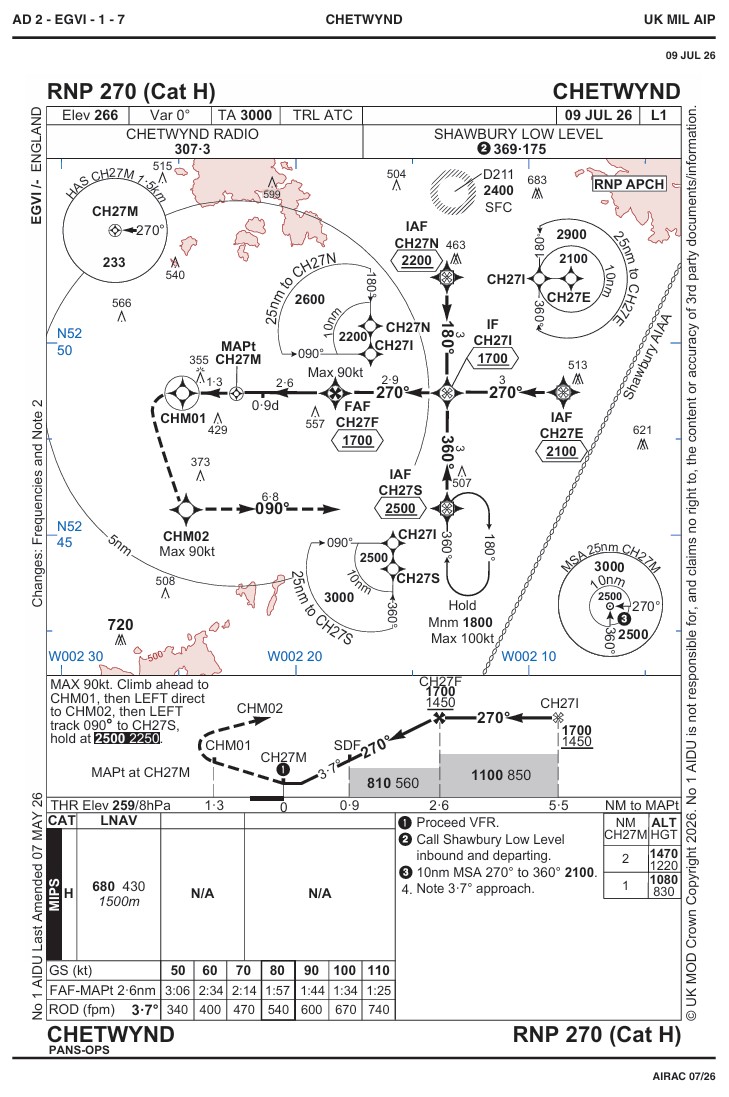
As an example of how an authority might approach the issue with a little more of a pragmatic mindset, the UK military after a very slow start in the RNP approach game but has recently rolled out RNP approaches to pretty much every operating location.
Chetwynd is a field site using for basic helicopter training and is uncontrolled having no control tower on site. But it does have an RNP approach with a practical minima. Imagine if every hospital and operating base for UK HEMS had similar approaches? It would change the VFR/IFR decision making process completely!
Licence issues
We want to introduce our single pilot IFR machine. We have the certified aircraft. We have our helicopter IFR infrastructure. But how do we get qualified pilots to fly these machines?
Instrument rating
EASA and the UK CAA are actually already ahead on this topic. As part of the All Weather Operations (AWO) update to the regulations back in 2021 (EASA) and 2024 (UK), the distinction between a single- and multi-engine instrument rating was removed. It’s just an instrument rating. The number of engines is not mentioned in the privileges.

There are several Aviation Training Organisation (ATO) delivering Instrument Rating training already on legacy Bell 206 which achieved certification prior to 1999. There is no requirement to “convert” a single engine Instrument Rating to a multi-engine one (over and above actually converting to the new airframe itself).
How much training?
The requirements for training for an Instrument Rating have no distinction between whether it is done on a multi-engine or single-engine helicopter. But this change in regulation has not gone smoothly in the UK. In EASA, the text of the regulation was carefully scrubbed for mention of single- or multi-engine instrument ratings.
UK Regulatory Error
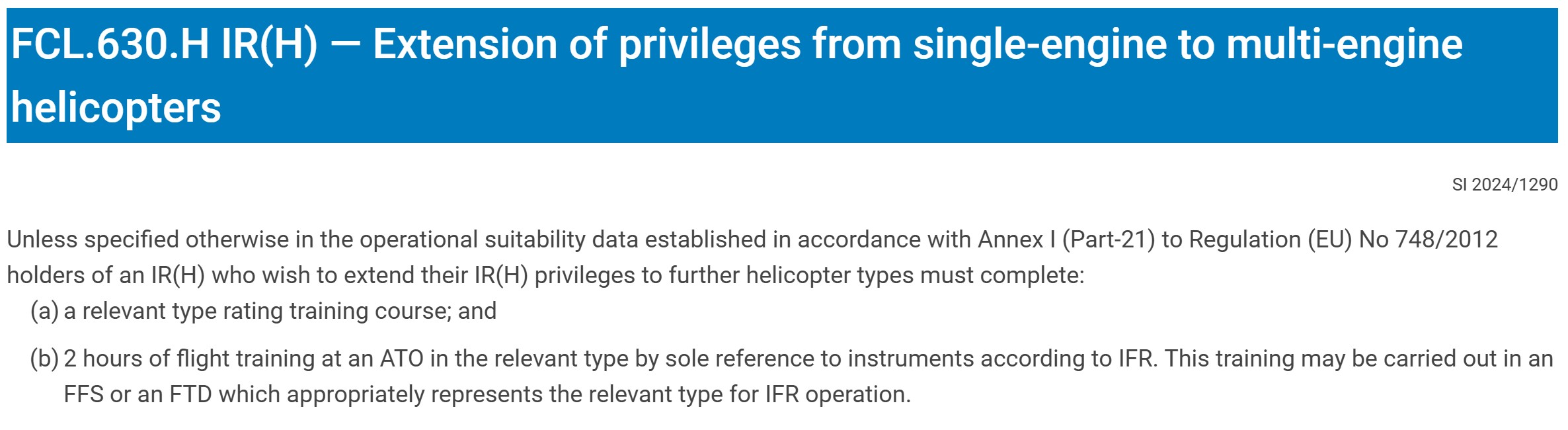
One particular aspect was the rule at FCL.630.H IR(H). It used to have the title “Extension of privileges from single-engine to multi-engine helicopters” and described how this was done. Now there is no difference, this rule is no longer required. In EASA the rule was repurposed to cover converting from one type to another as follows:
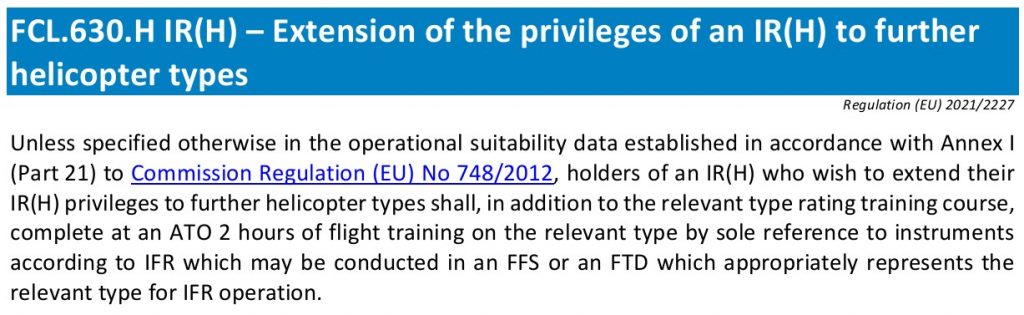
However, when the UK copied the EASA regulation, they made a mistake. They forgot to change the title but changed the contents!
Who trains and who checks?
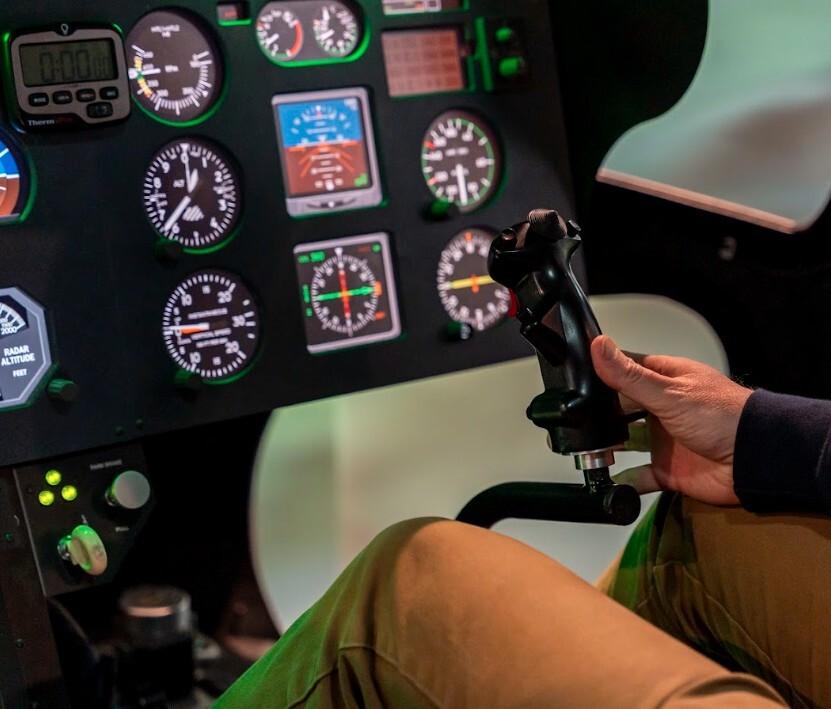
So we have our new single-helicopter with IFR approval. How do we start to train pilots in IFR techniques. And then how do we check their skills? We need have some instructors and examiners qualified on type and qualified to fly IFR. But we need to train them on IFR themselves first! Oh dear.
Fortunately, the regulatory allows for this under FCL.900(b) and FCL.1000(b) to allow instructors and examiners special permission for 12 months during the entry into service of a new capability.
But what about initial Instrument Rating training? Normally Instrument Rating training is done on multi-engine FSTD and helicopters by TRI who have also done the Instrument Rating Instructor (IRI) qualification. We discussed this recently in an earlier article – How to create an IRI – a helicopter anomaly.
Having a single engine helicopter actually eases many of the issues outlined in this article. An FI can relatively easily add the IRI privileges. To check the candidate an IRE is required. Initially multi-engine IRE will likely have to get qualified on a single engine machine before organically grown single engine IRE are available.
Standards for checking
Having only one engine makes no difference to the bulk of IFR flying. Many of the skills and techniques are identical. However, an engine failure has special significant for a single-engine helicopter.
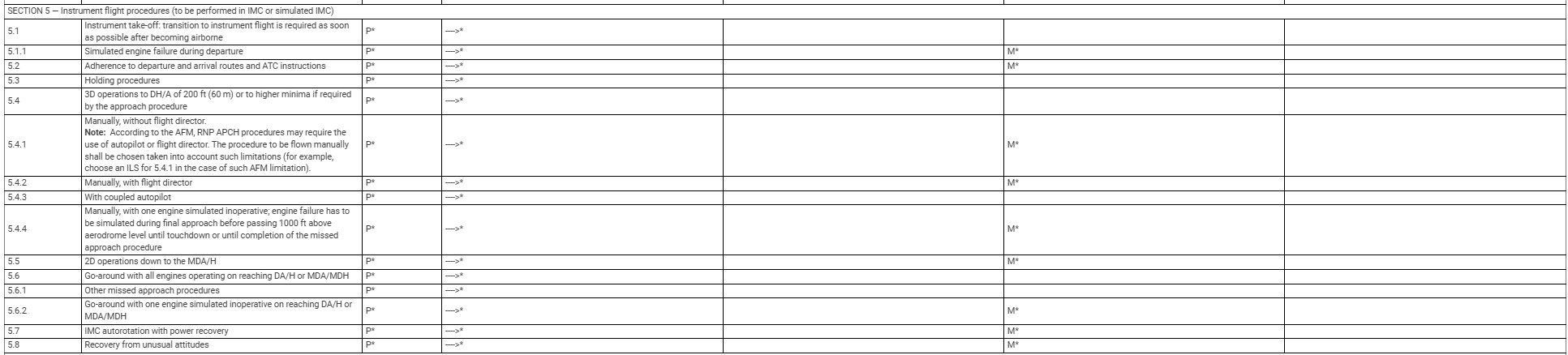
The required training and checking for the Instrument Rating has recognised this. The profile for a Instrument Rating Skills Test caveats all the single engine failure procedures with the statement that they are multi-engine only test items – see Appendix 7 of Part FCL.
However, both in the UK and EASA, all the single-engine failure items in Appendix 9 for revalidation or renewal of the Instrument Rating have no such caveat and would, theoretically, be equally applicable to single engine helicopters. Imagine a single engine failure during your proficiency check on a Bell 407 GXi whilst IMC on an ILS. Great fun – read more about what needs to change in Appendix 9 in our article – Checking anomalies – The weird requirements of helicopter proficiency checks!
Operational rules
So we have an IFR certified helicopter, suitable IFR infrastructure and a certified IFR pilot, but what do the operational rules say? Can we actually fly at all?
Rules of the Air
The major difference between single- and multi-engine operations is that there no capability for a single-engine aircraft to “stay up” following the loss of a single engine. The aircraft can autorotate but only down and only without the autorotative glide range of the helicopter.
Land clear
In the UK and EASA, one requirement in the SERA, is that following an emergency (such as a single engine failure), the aircraft can make a landing without causing danger to persons or property on the surface. This used to be the “Land clear” rule in the old RoA regulations

This is where there is a huge difference between single-engine aeroplanes and single-engine helicopters. The ability to “glide” down a landing spot is very different. Let’s compare the two with some sample aircraft that might fly IFR.
Aeroplane vs Helicopter
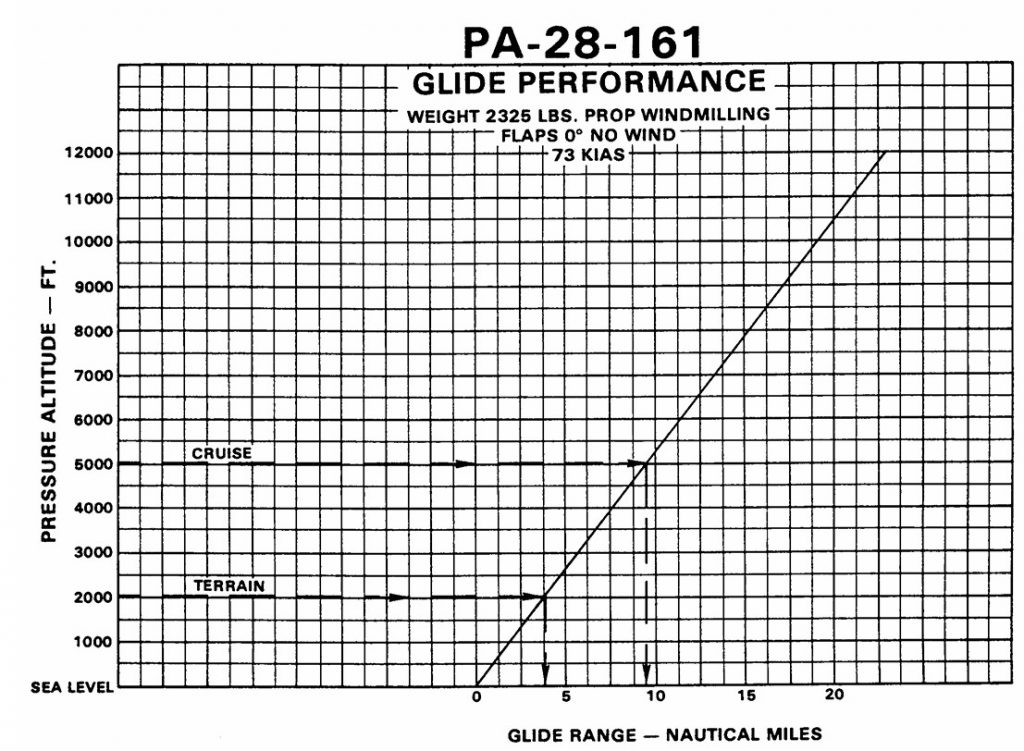
The aeroplane we are going to use is the PA28. When the performance information is inspected it shows we can expect a glide ratio of about 10 to 1. So from 3000 ft we could expect to glide just over 5 nm.
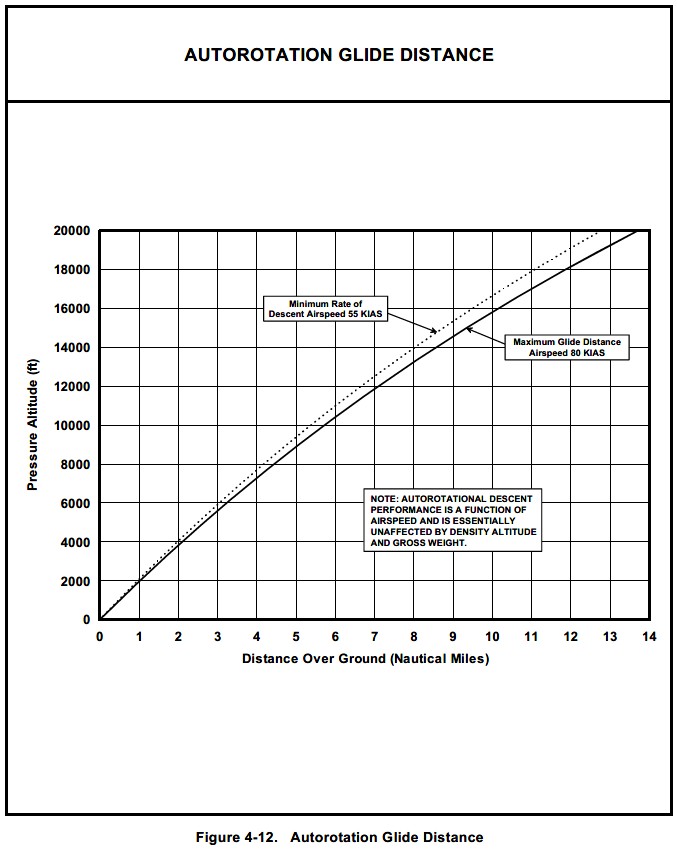
However, when we inspect the manual for a Bell 407 the results are different. From the same altitude we can only reach 1.5 nm; a glide ratio of 3 to 1.
Let’s relate that to some geography. Imagine we are in an IFR transit at 3000 ft above ground over Cheltenham. If I lose my engine in the PA28 I have a reasonable chance of gliding clear (if not actually surviving the crash). In a Bell 407, my glide range is insufficient to clear the congested area. I would not be able to manoeuvre to any grass areas as I would not be able to see them in the cloud. I can only autorotate clear.
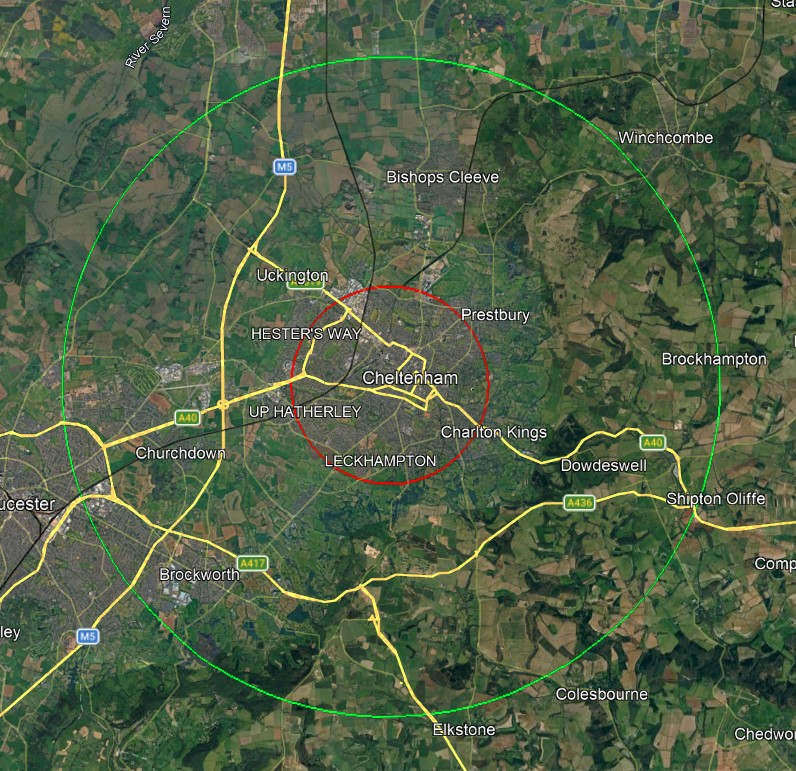
So I cannot fly there IFR unless I am taking off or landing. IFR routing in single engine helicopters will have to steer clear of large urban areas. Large bodies of water and the sea will also present issues. IFR operations into Cardiff might not be possible for example.
Commercial operations
In commercial operations, the are clear rules that will prohibit single engine IFR in the UK and EASA. With this part of the market locked out of the game and not driving change, this may be why EASA are dragging their heels!
Performance Class 3
The major barrier to commercial single-engine IFR operations in helicopters is that the rules specifically prohibit it. This is due to all single-engine helicopters having to operate in Performance Class 3 which has the following restriction:
CAT.POL.400.H – Performance Class 3
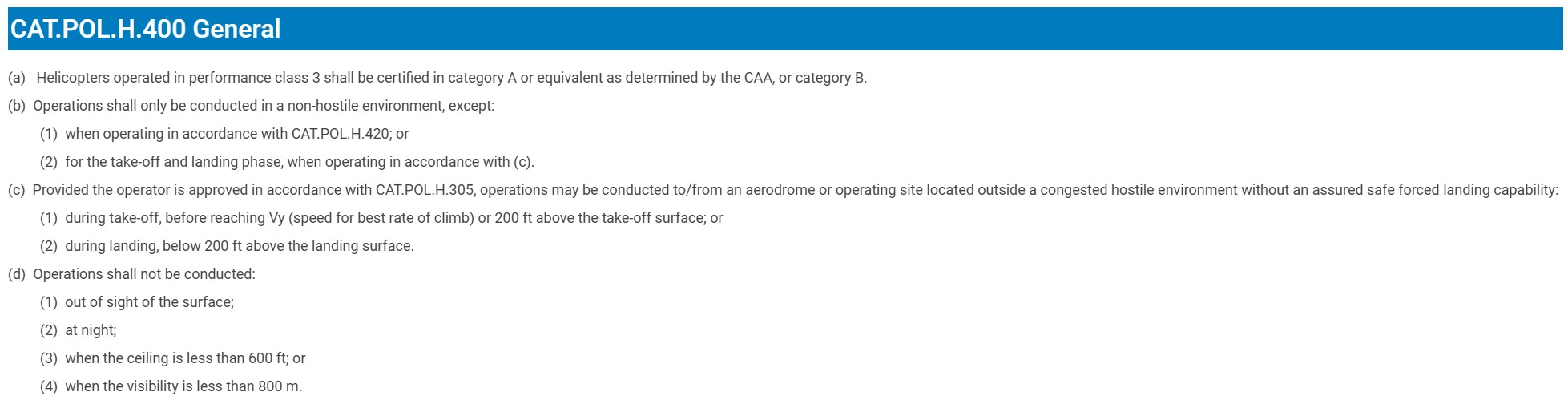
That’s pretty clear; commercial IMC operations for single engine helicopters are off the table.
Or are they?
SET-IMC
In a similar vein for aeroplanes, Class B aeroplanes, which includes single engine aeroplanes, has the following rule:
CAT.POL.A.300 – Performance Class B
The operator shall not operate a single-engined aeroplane:
- At night
- In IMC
However, there is a specific exemption for single engine turbine aircraft like the PC12 – the rules are called SET-IMC. However, remember the glide ratio of a single engine helicopter? A similar set of regulations is highly unlikely to be created for single engine helicopters, at least in the near term.
This leaves helicopter single engine IFR as a non-commercial operation for the near future. What challenges does that bring?
Non-Commercial Operations
Non-commercial operations of single engine IFR aircraft are likely to fall into 3 categories:
- IFR training
- Corporate aviation
- Private flights
Supervision
Within the ATO environment there is a level of scrutiny from the authority into flight operations is relatively high. IFR operations with a single engine helicopter will have to be completed in accordance with the ATO’s manuals and procedures.
However, there is currently no requirement for a private or corporate operator of a CS-27 machine to have any operating manual or have any scrutiny directly by the authority. The authority has no structure through which to scrutinise or supervise the operations.
This will make the introduction of single engine IFR helicopter operations quite challenging for the authority. It is not an activity without risk as it is “new”. It could be quite easy for private operators to normalise behaviours when operating in cloud that are not quite what the authority intended. Let’s look at an example.
What is icing?
Due to a quirk of certification, many helicopters that are not cleared for operations in icing conditions have a very simple statement in their Flight Manuals that says something like:
“Cleared for operation in non-icing conditions”
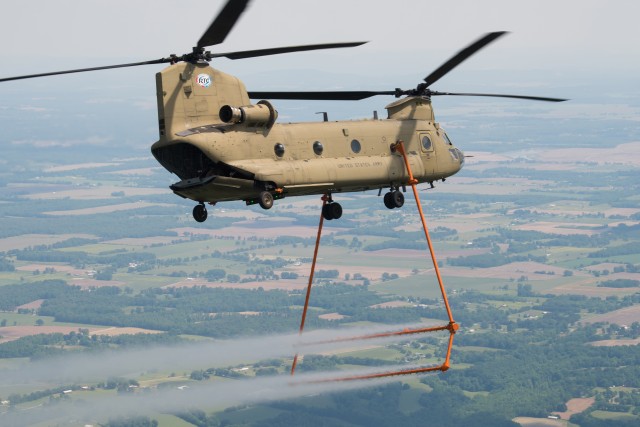
However, there is no associated definition of what icing conditions are (this is a topic for a future article)! In commercial operations, many operations manuals fill this void by making a local definition of what icing is. For example:
“Icing conditions are defined as flight below 0 degrees C in visible moisture which has reduced visibility below 1000 m”
But private operators do not have such a manual. They have to make their own judgement and follow the rules in Part NCO.
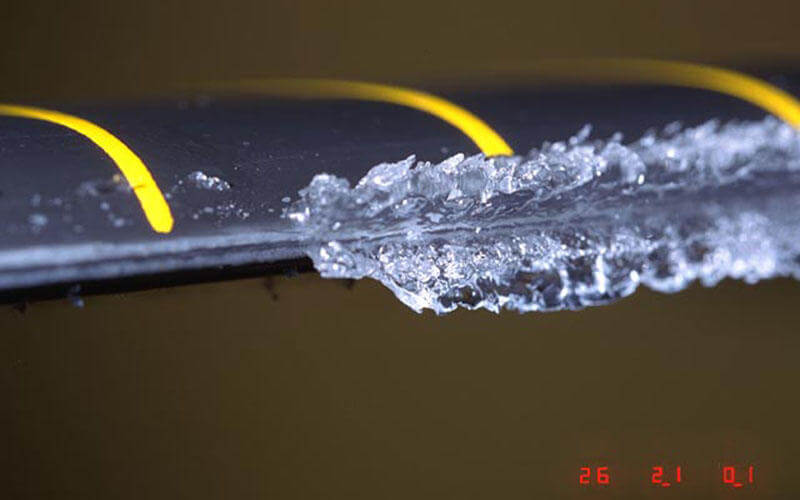
Are icing conditions now something else? Perhaps they are when I can see ice on the wiper blades? But has the engine intake already been compromised at this stage? Are private operators going to put themselves in riskier conditions without the guidance of an operations manual.
And what about fuel? The requirements for fuel load are much less detailed in Part NCO? Are adequate amounts being carried to include diversions?
Conclusions
Single-engine helicopter IFR operations are coming to the UK and EASA. We have explored the certification landscape and looked at the regulation, licencing and infrastructure needed to support entry of this interesting new capability onto the market.
The lack of EGNOS in the UK and the associated IFR infrastrucutre is perhaps the biggest barrier to wider IFR helicopter operations, but perhaps we will soon see many more single-engine IFR helicopters in Europe.
Now look at our other articles!
- Lessons in how to manage a helicopter engine malfunction
- Light twin helicopter AFCS – Have Airbus won the race?
- Maintenance by pilots – can the training be improved by sharing?
- Flight simulation revolution – A new method for matching training need to simulator capability
- Helicopter Single Engine IFR – New horizons
- Making the grade – understanding climb gradients in the go around
- Unfair Skies: Restrictive helicopter instructor rules and how to fix them

- How to create an instrument rating instructor (IRI) – A helicopter anomaly
- The evolution of Category A Helipad procedures – A strong foundation for VTOL to learn from?
- Strips vs dials – Which is better?
- Under the weather – are UK HEMS weather rules broken?
- Mastery of the GTN 750 – Ten things you should know
- Checking anomalies – The weird requirements of helicopter proficiency checks
- It’s all about the switch – How helicopter designers need to think about the human in the cockpit
- Engine Failure Training Mode – A safety tool that will punish the unwary
Leave a Reply