
Downwash from helicopters is dangerous. Pilots need to understand the effects and properties so they can keep it away from vulnerable people, objects and structures.
In this article, we look at downwash and outwash and how it propagates from the helicopter. This allows the pilot to operate the helicopter such that risk of injury and damage from the downwash and outwash is kept as low as practicable.
There is some maths but its at a basic level. The discussion of downwash and outwash effects is kept to a practical level that can be applied to any flight. For a look at the mind boggling complexity of the physics, take a look at Dr Richard Brown excellent work with Sophrodyne (YouTube / Sophrodyne). We will however, reference some of his work from CAP 2576.
We will also apply the theory to real helicopter operations with a particular focus on off-airfield operations including a review of some relevant incidents.
We also take a look at the rotor wake effects in forward flight, which can be just as deadly.
For another perspective, also check out this article by Pilots Who Ask Why – Understanding Rotor Downwash: The Ultimate Pilot Guide. Let’s get stuck in.
Contents
- Definitions
- Downwash Maths
- Variations
- Practical usage
- Rotor wake
- Summary
Definitions
First, some definitions so we can communicate:
- Downwash – the vertical stream of air that is accelerated downwards by the passage of rotor blades while producing lift
- Outwash – the horizontal flow of air when the downwash hits the ground and changes direction to flow along the ground
- Disc loading – the mass per unit area supported by the main rotor
Downwash Maths
To understand downwash and outwash we need to do some basic maths to understand the speeds of airflow involved. The first way of looking at this is through Momentum Theory (see We need to first look at disc loading.
Disc Loading
Instead of looking at individual rotor blades when considering the masses supported by the main rotor, we look the rotor (or rotors) as a disc.
The area of a circle is:
So let’s look at that for some typical machines:
- Cabri G2 – 40.72 m2
- H135T3H – 84.95 m2
- Bell 429 – 94.52 m2
- H145 – 95.03 m2
- S92 – 231.54 m2
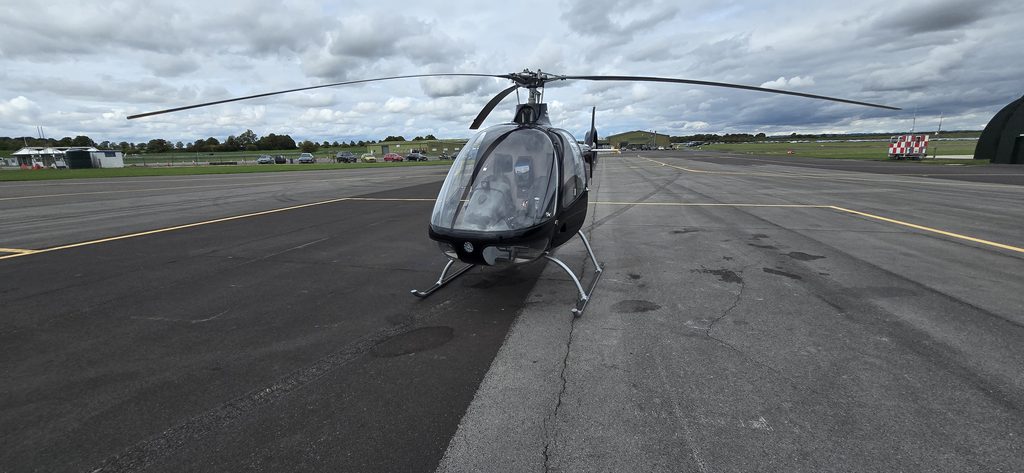
Now lets look at disc loading:
So for the same aircraft at maximum standard all up mass (no optional increase kits):
- Cabri G2 – 17.19 kg/m2
- H135 T3H – 35.08 kg/m2
- Bell 429 – 33.58 kg/m2
- H145 D3 – 41.48 kg/m2
- S92 – 51.91 kg/m2
Larger helicopters tend to have a higher disc loading. What about aircraft with multiple discs then?
- CH-47F Chinook – 46.61 kg/m2
- MV22 Osprey – 113.22 kg/m2
Wow? The tilt rotor has an exceptional high disc loading. What is going on there? We will come back to that.
Induced velocity
From disc loading, we can move on to get an idea for how much vertical velocity must be imparted to the air to generate sufficient force to oppose the weight and hover. Everyone loves a little Newton’s Third Law in the morning.
So to keep the aircraft up, we need to force air down. The resulting induced velocity (Vi) of the air at the disc is:
Which means disc loading is proportional to the speed of the downwash at the disc.
Let’s look at what the translates to for our aircraft:
- Cabri G2 – 16.1 kts
- H135 T3H – 23.03 kts
- Bell 429 – 22.5 kts
- H145 D3 – 25.1 kts
- S92 – 28 kts
- MV22 – 39 .29 kts
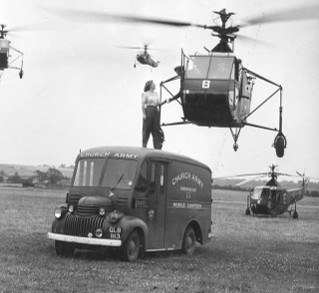
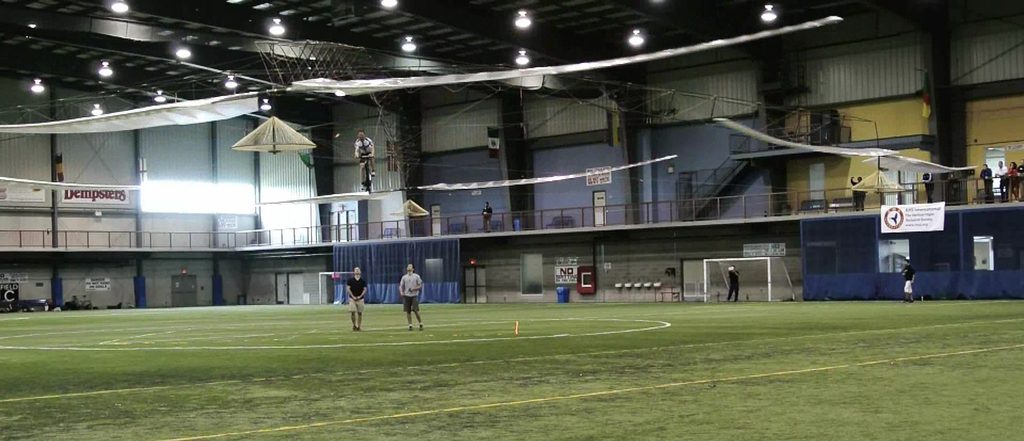
Looking at the opposite end of the rotorcraft spectrum, let’s look at a human powered rotorcraft. The AeroVelo Atlas HPH had a takeoff off mass of just 128 kg and a rotor disc area of 320.5 m2. The induced velocity was just over 1 kt!
So back to our helicopters, what is the whole problem? A downwash 30 to 40 kts is strong but its just a blustery day.
Shrinking wake
Of course the induced velocity is not the end of the story. As the stream tube of air gets accelerated by the rotor it constricts. It reaches a maximum velocity of roughly twice the induced velocity.
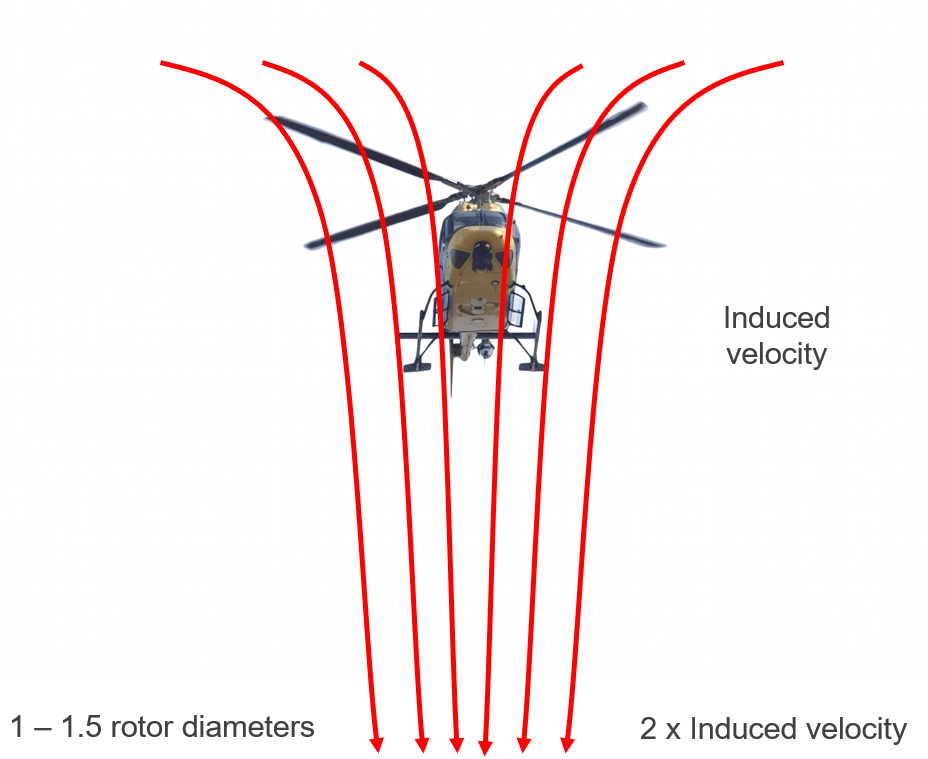
This maximum is reached roughly 1 – 1.5 rotor diameters below the rotor. In theory it then stays as a coherent streamtube up to 3 rotor spans below the disc.
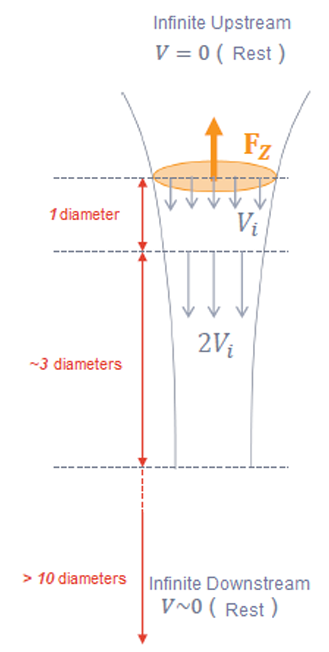
Airbus published a Safety Promotion Notice (SPM 3684-P-00) which included this diagram of the theoretical stream tube below a rotor.
So for an H145 D3 that’s a peak of 50.2 kts at 35-55 ft below the aircraft and continuing down to around 105 to 155 ft. Of course this is in theory.
Downwash is strongest at roughly between 1 and 3 rotor spans below the helicopter
Key point 1
A clash with reality – Vorticity Transport Model (VTM)
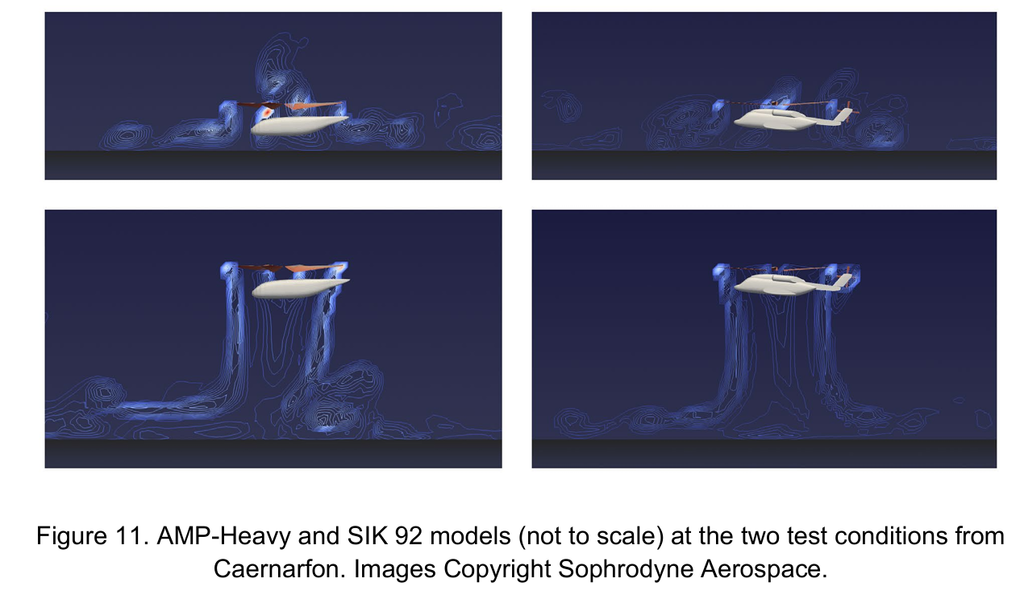
The basic theory needs a dose of reality and more sophisticated modelling. Dr Brown’s Vorticity Transport Model (VTM) shows that the rotor wake is a lot more chaotic than the simple momentum theory. This is echoed in the Airbus research presented in SPM 3684-P-00. There is still a stream-tube but it gets much more chaotic as it descends.
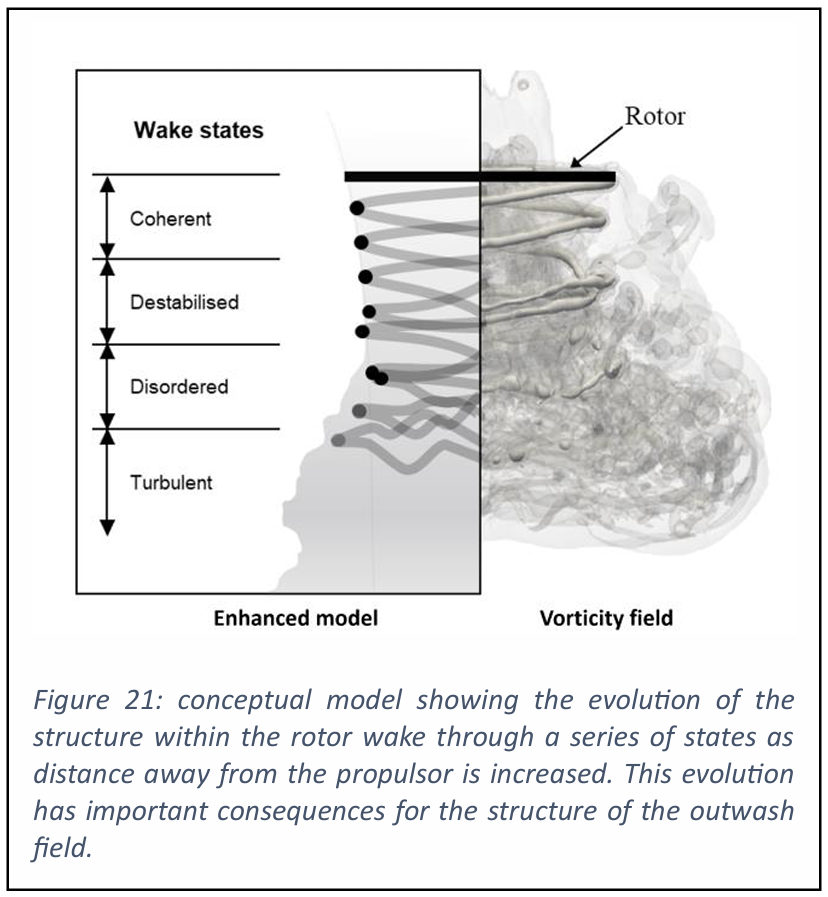

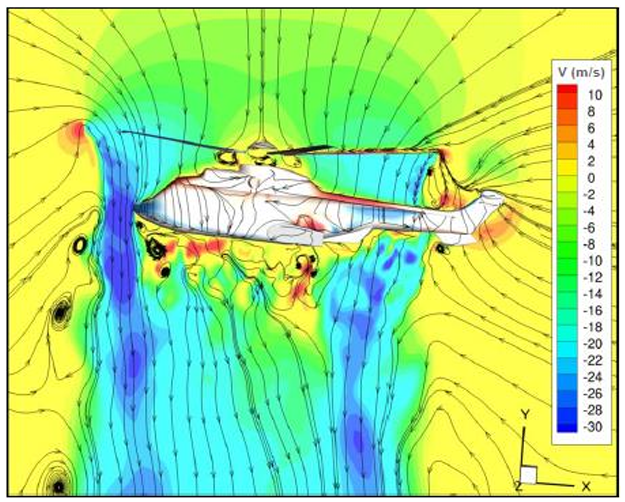
SPM 3684-P-00
Variations – disc area and mass
So we have a fast moving stream that gets choatic. Could we modify that through some of the parameters we saw above?
Yes, a bit. We cannot dynamically alter the rotor disc size, but we can influence aircraft mass. If we want to reduce our downwash, we can reduce the weight. Unfortunately, on a typical helicopter task, we don’t have any means to do that. But perhaps we could take less discretionary fuel.
Downwash is lower if the helicopter is lighter
Key point 2
Variations
Height
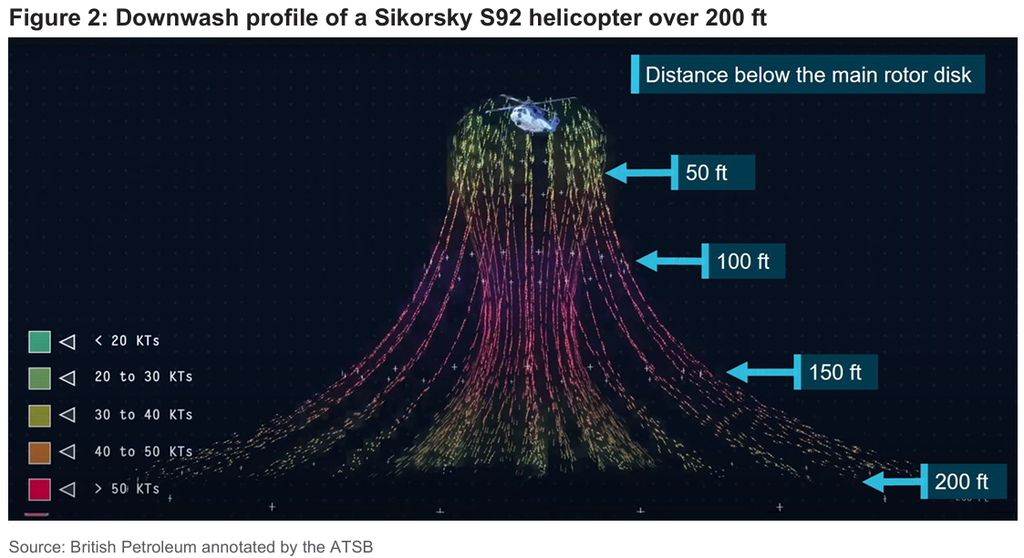
In a free air hover, the rotor wake descends and becomes chaotic then dissipates as we have seen. But what if we are closer to the surface? The rotor wake spreads out as shown in the flow model from an S92 below.
hospital helicopter landing sites
The flow still accelerates but its now racing away over the surface. Now its in a divergent duct-like structure so the pressure builds up a little providing the ground effect which reduces the power demand in the hover. However, it’s going horizontally and still speeding up from the disc downwards then outwards. Now the peak velocities are going to occur horizontally outwards from the helicopter between 1-3 rotor spans. As covered in CAA Safety Leaflet 17, this means you should keep your hover about 3 rotor spans clear of other aircraft.
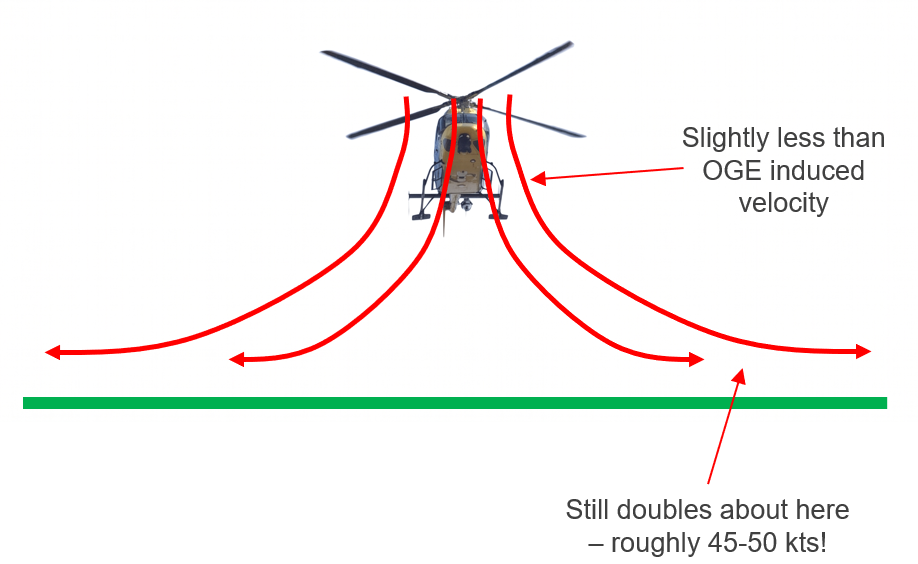
Downwash has a high velocity out to up to 2-3 rotor spans
Key point 3
Outwash
The outwash that forms as the helicopter gets close to the surface runs away from the helicopter, staying close to the surface. The depth of this outflow up to about 2-3 rotor spans is roughly 10% of the rotor diameter. For a Bell 429 that’s roughly 1.3 metres deep. Just the right height to catch vulnerable people and take their legs out from under them.
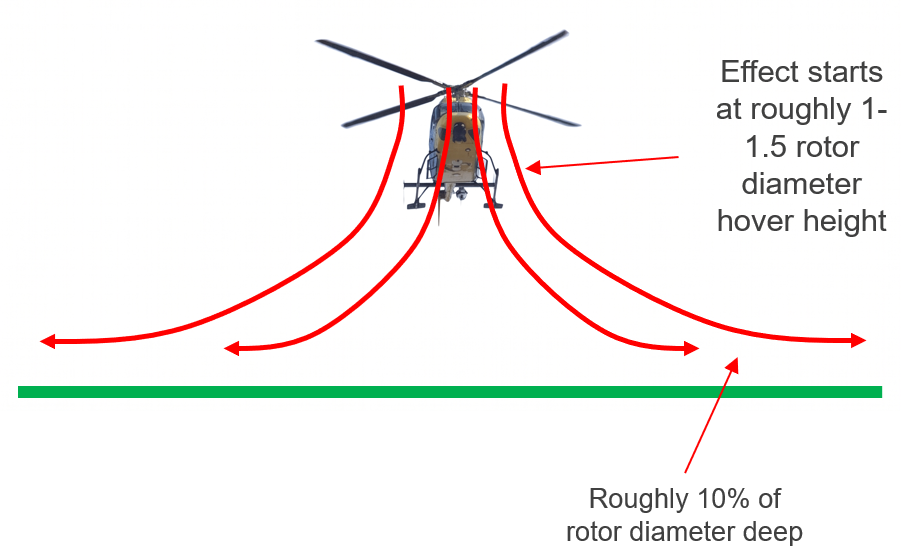
Jet wall
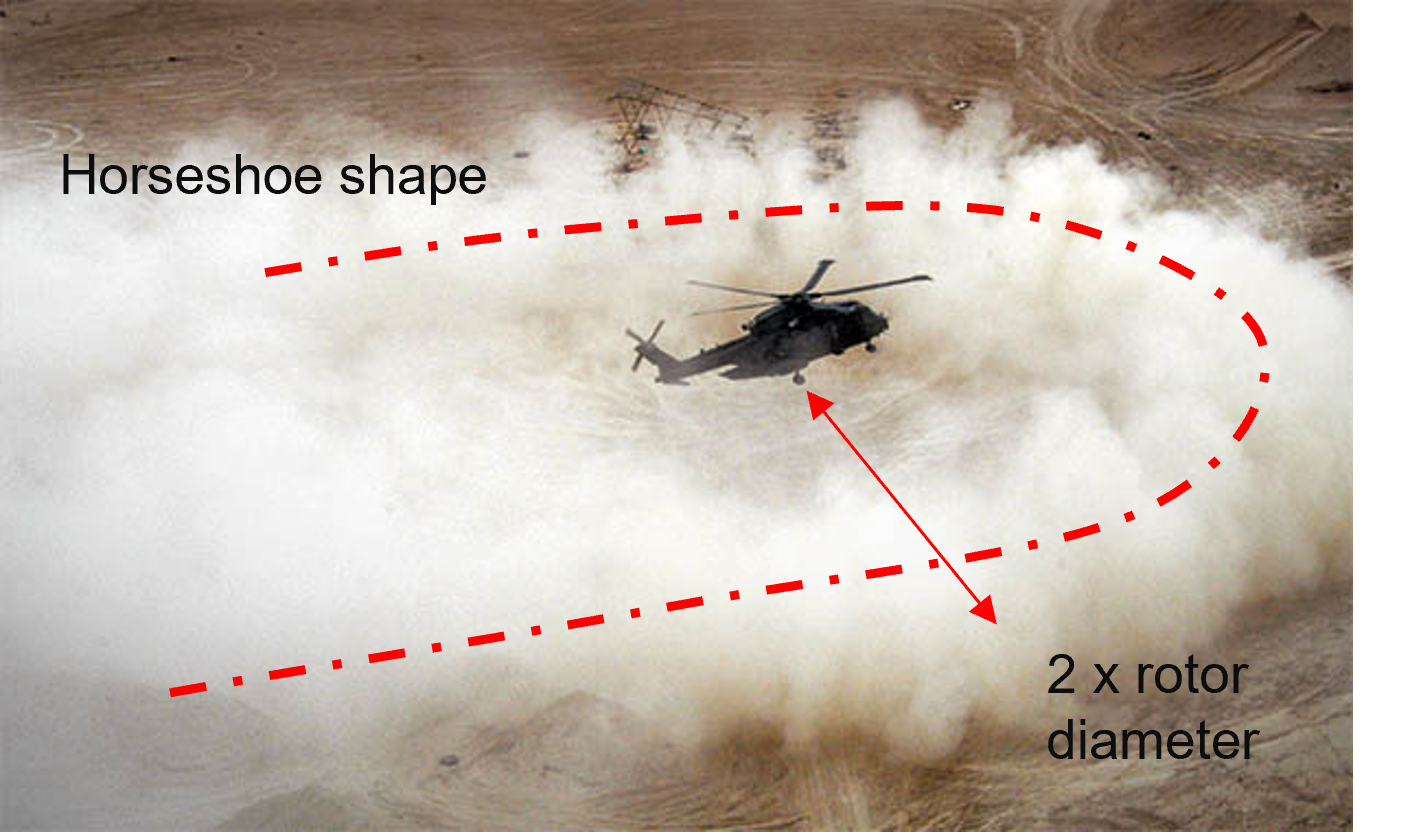
Normally the outwash does not go on forever. The chaotic nature of the flow and the circulation of the air due to vortices in the flow, lead to a build of turbulent air into a vortex jet. This is predicted by the VTM as shown below.
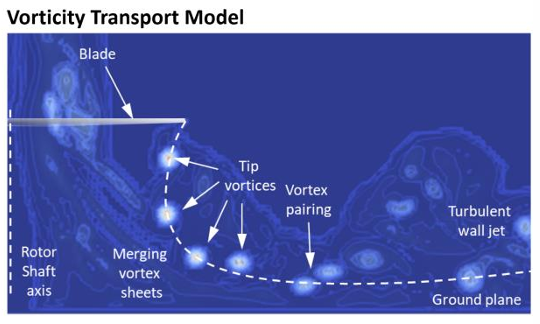
Does it translate to the real world? Absolutely – just take a helicopter to the desert!
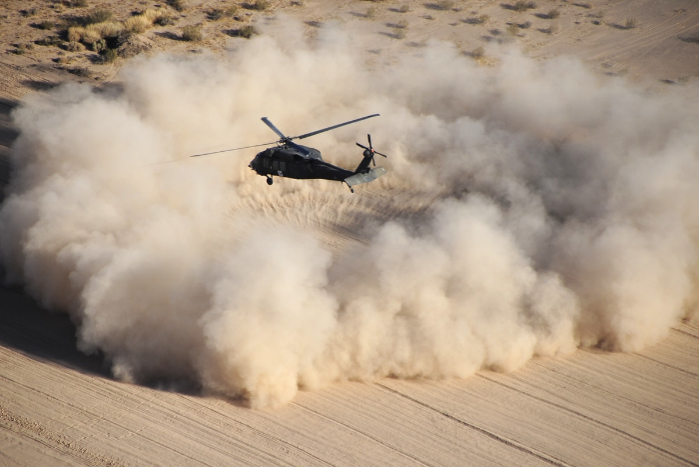
This has a very real implication for bystanders. Downwash does not build up smoothly as the helicopter approaches. It is sudden, turbulence and brings every scrap of dust, dirt and debris with it. Researchers for the CAA found this out loud and clear as described in CAP 3075. Of note, unlike the jet wall being circular as shown above, CAA researchers near an S92 found there were gaps in the wall.
Downwash onset for bystanders is sudden and chaotic
Key point 4
Escaping vortices
One thing to watch out for in very light wind conditions is what happens to the jet wall after landing. The jet wall is held in place by following vortices from the main rotor. However, as the helicopter lands, the vortices, in light wind conditions, can breakaway, rolling off across a field. In the wrong circumstances, these vortices can roll away for significantly further than 3 rotor spans, particularly if funnelled by obstructions. This can cause damaging effects a long way from the landing point.
As a case in point during one HEMS landing, a helicopter landed in light wind conditions at the end of a long thin area of grass surrounded by tall continuous bushes. The downwash flowed all the way along the field and popped every single parasol off the tables at a café at the end some 300 metres away.
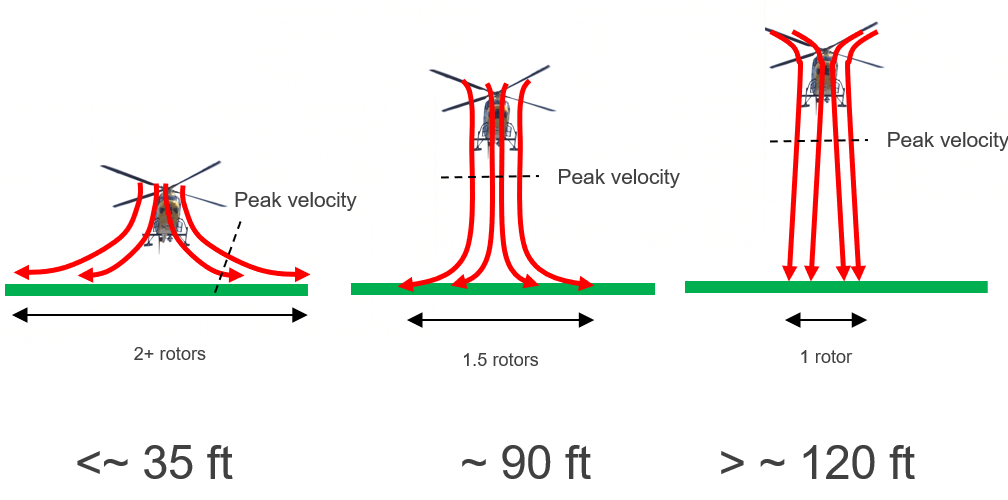
Changes in height – a summary
Lets look at a summary of how downwash and outwash vary with height. Note when we hover around 3 spans and above, the downwash is purely vertical. We will return to this later.
Wind and airspeed
Helicopters operate in a dynamic environment, with helicopter motion and winds modifying the downwash. The induced velocity we met earlier comes back into play here.
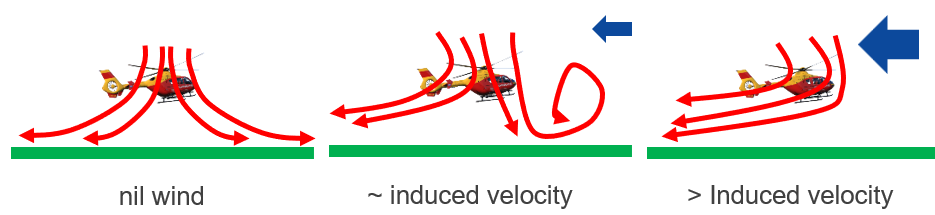
As can be seen from the dust around the Merlin helicopter, helicopter horizontal motion or wind modifies the outwash flow.
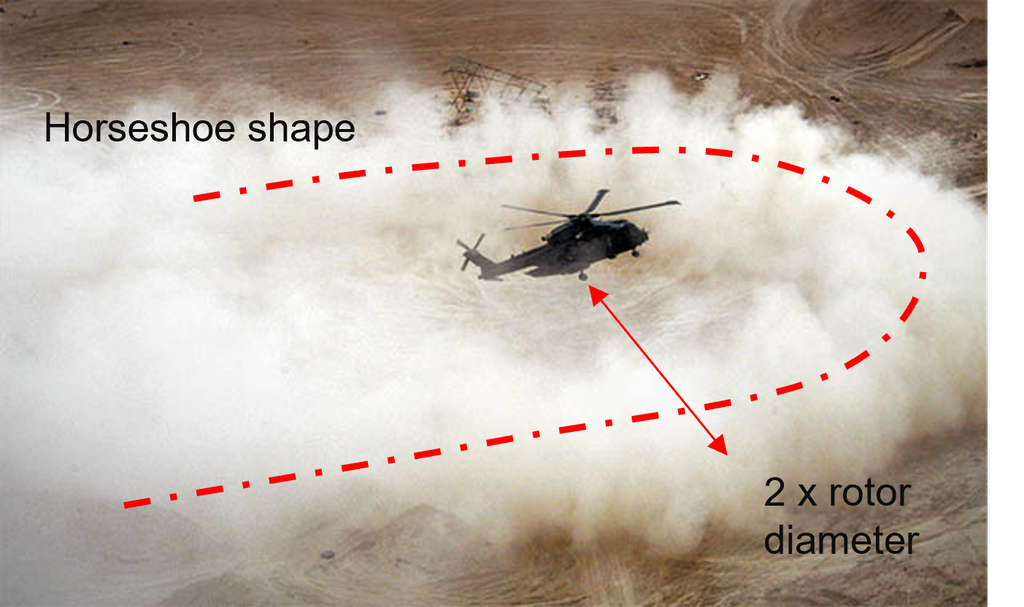
Should the helicopter go past a certain speed or the wind reaches the same speed, the helicopter will pass through the jet wall. This is felt by the crew as a “burble”. And here’s where induced velocity comes back in. Beyond a certain windspeed or airspeed, the helicopter starts running over its forward jet wall. This can be seen from the cockpit if you are hovering over long grass as you spot turn through the wind. Importantly we will exploit this for off-airfield landings later.
Downwind downwash
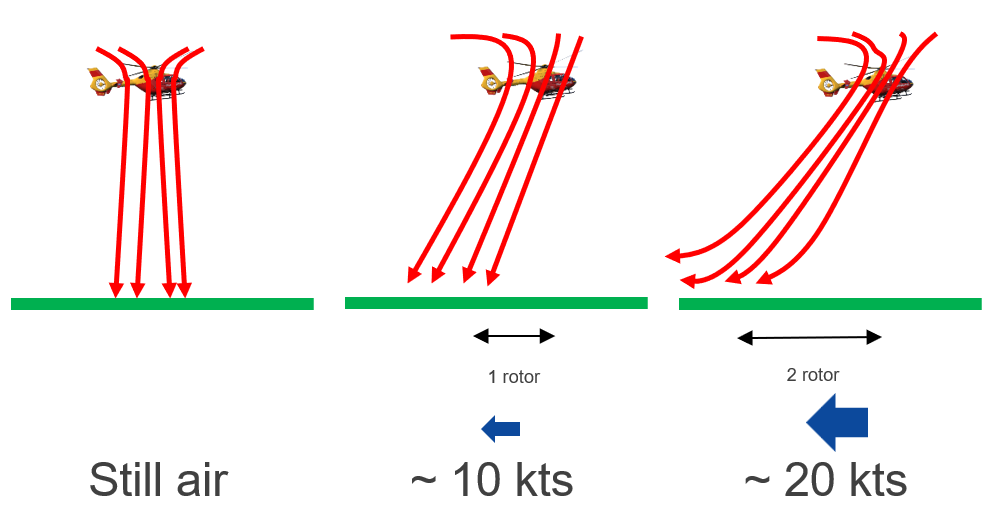
Of course wind and aircraft velocity also affect the downwash when in a higher hover. We already mentioned that the rotor downwash is pretty much vertical at around 3 rotor spans. As wind (or airspeed) builds it reaches the ground progressively further behind the aircraft. For a helicopter like the EC135, once the wind gets above around 30 kts, it becomes a rotor wake behind the aircraft, rather than a vertical column. Unfortunately this is just as dangerous as we will see later.
Practical usage
So theory is great, but how are we going to exploit this knowledge to make our helicopter operations safer? We have looked at landing site selection before (2D or not 2D – How much room do I need to land a helicopter? and HEMS Landing Sites – Reliable places to drop your medics), but not with a particular focus on the downwash. Let’s examine a few points:
- Fly the downwash not the helicopter
- Contain the downwash using vertical flight
- Exploit the wind
- Exploit an in-ground effect hover
- Landing point and arrival/departure point are not the same
- Funnelling is not your friend
Fly the downwash not the helicopter
The risk awareness of pilots flying into sites where downwash might be a factor, must include downwash. Where the downwash is going to go must be part of the arrival and departure plan. This might mean the approach path is selected to follow a path over the ground that is not straight and it will probably mean the arrival and departure track are not aligned.
Let’s take an example, using a fictional HEMS scene in Ruislip, London. A child has fallen and badly broken their leg at a playpark. The HEMS helicopter has identified the field to the west of the park is suitable in size. The wind is 15 kt from 240 degrees.
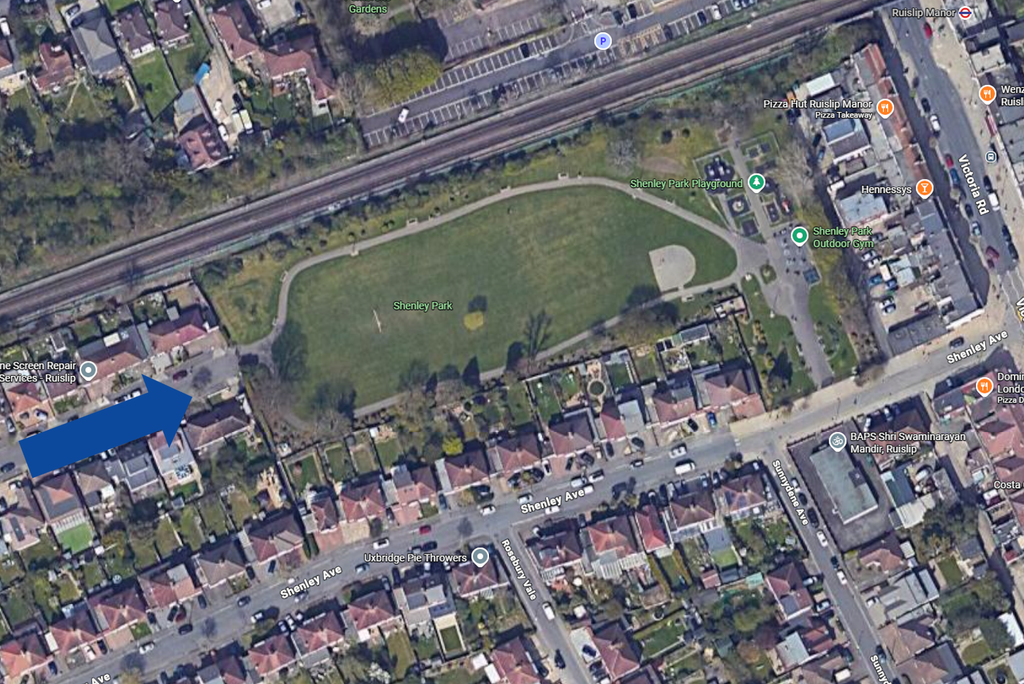
The patient is quite ill, so the crew decide to land as close as possible at the red X. They fly directly into wind along the red flight path from landing decision point downwards. This puts the downwash during the final approach directly over the houses (potentially causing damage to skylights or roof lights) and playpark (just at the height where downwash velocity peaks. Not a good idea.
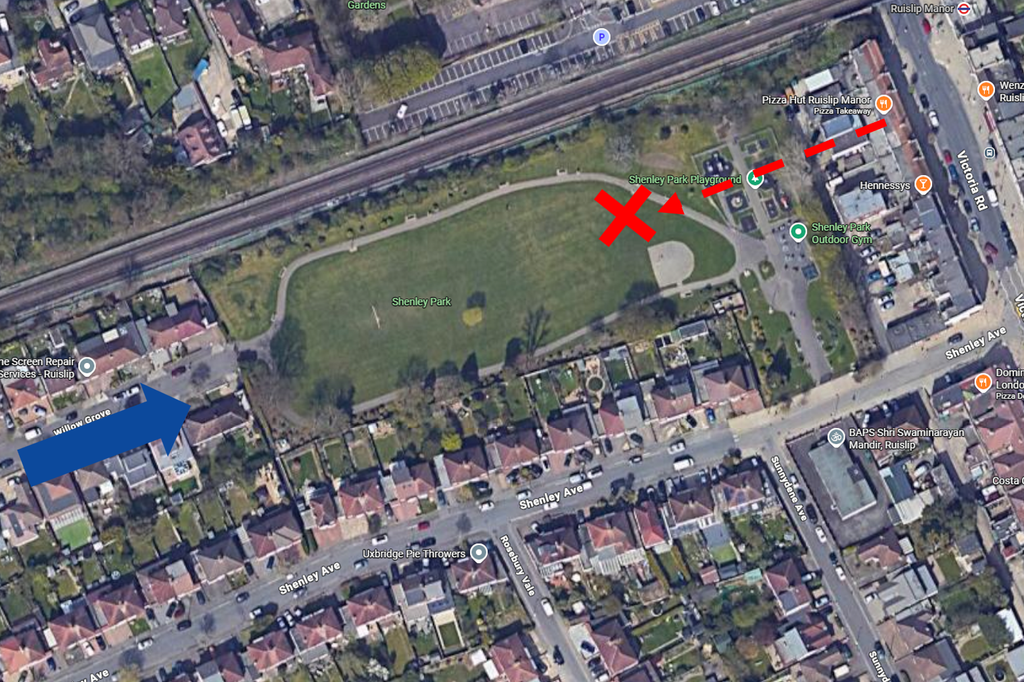
The aircraft commander has a rethink and notices there is space at the western end of the field and the empty car park to the north. He choses an aiming point as far west as possible and an approach path from decision point downwards (green). He has the option to reposition the helicopter if necessary back to the east of the field. On departure he choses a flight path (orange) that puts the downwash over an unoccupied area. Much better.
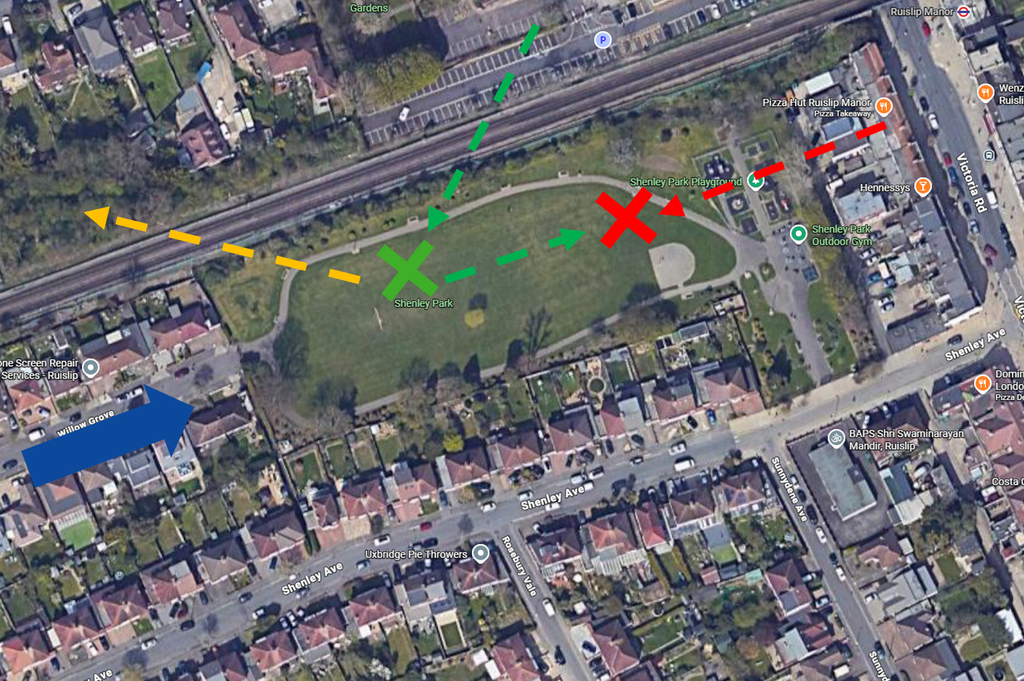
Always look downwind of the helicopters path and plan where the downwash will go. Remember at around 3 rotor spans in height (a typical landing or take off decision point), the downwash will hit the ground vertically and might drop straight into gardens or behind hedges or fences.
S92 Landing at Derriford Hospital
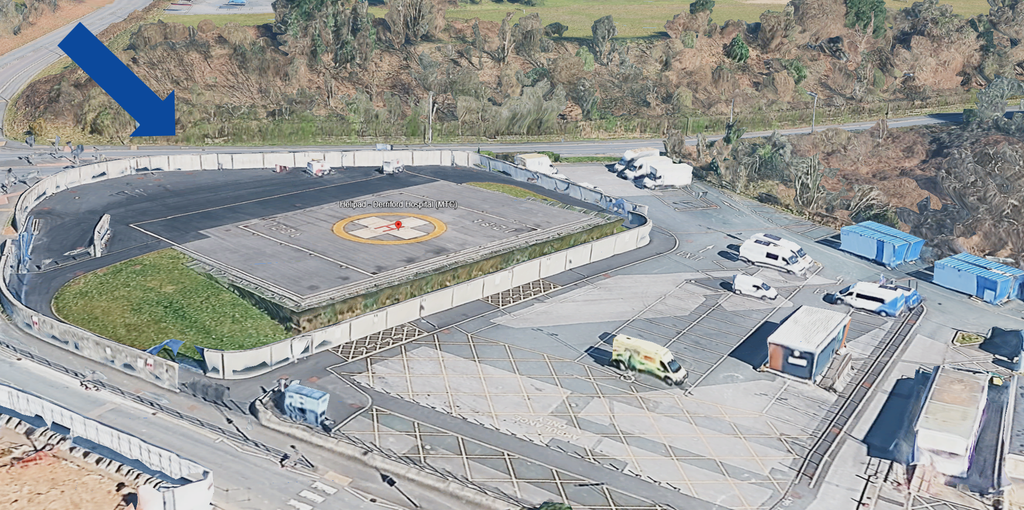
In March 2022, a Sikorsky S92 landing at Derriford Hospital, Plymouth. There was a northerly wind and during the landing the helicopter’s downwash and outwash was blown downwind into the adjacent car park fatally injuring a bystander.
The landing site had blast walls on all sides, but due to terrain the blast wall between the pad and the car park was below the level of the pad and so did not contain the downwash and outwash of helicopters with a northerly wind making the situation worse. This risk was not captured and mitigated by the site operator or the aircraft operators. However, with hindsight and the mantra of “fly the downwash” the crew would not have landed there with the northerly wind.
Of note, the alternate site is the field at the top of the image, which would probably now be used in similar circumstances due to the dramatically increased focus that has now been placed on risk mitigation at hospital landing sites – see CAP 1264.
Pilots who ask why have covered this incident in more detail – When Helicopter Downwash Turns Deadly: What can we Learn From This S92 Hospital Landing Accident? ‣ Pilots Who Ask Why
Contain the downwash using vertical flight
When operating to off-airfield sites, particularly unprepared ones, we may not be constrained by Performance Class 1 requirements and we can therefore deviate from Category A profiles to improve holistic safety. We should not be focussed on the highly unlikely single engine failure at the expense of 3rd party safety.
A more vertical landing or departure profile than a standard category A profile, allows us to contain the downwash in a chosen area. As we have seen the downwash only reaches the surface from an approximate height of 3 rotor spans. If we make our flight vertical or almost vertical from that 3-rotor span height point downwards we limit the impact of our downwash in the undershoot area.
Use the autopilot
Vertical flight does present other challenges of course. Maintaining position can be challenging but appropriate autopilot modes can help. Read up about the amazing Airbus automated take offs in our articles – Light twin helicopter AFCS – Have Airbus won the race? and Automated take off – Pointless or are they the new standard?.
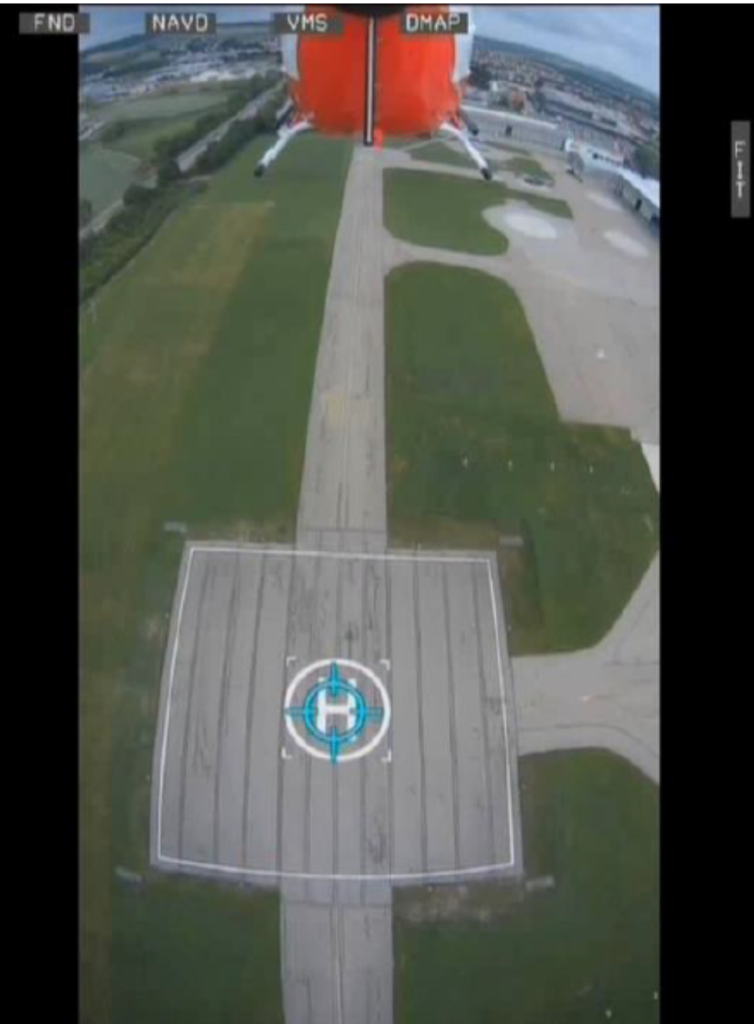
Use a camera
Visibility of hazards in the landing area directly below the aircraft are also obscured. Underbelly cameras can help there if available (see our article about cameras here – HEMS external cameras – a new normal?).
Use the side window
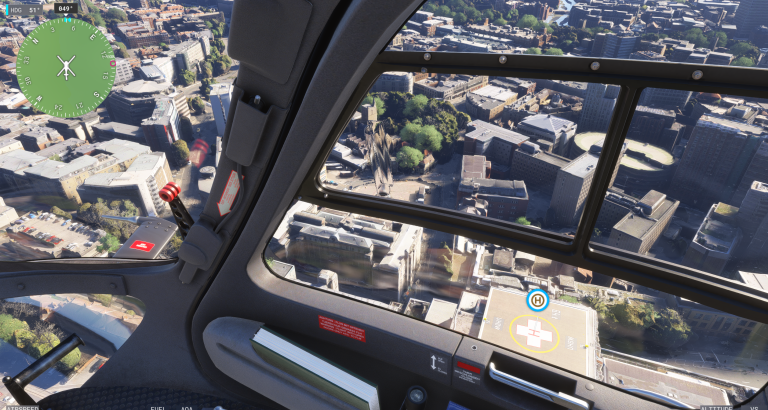
With the flexibility that Performance Class 2 HEMS operations allows, there is another option. As we discussed in our article about Category A profiles for future eVTOL (Category A – A strong foundation for VTOL to learn from?), helicopters can go sideways too. The view looking down sideways through the cockpit door window can be much better than looking directly over the nose.
Example
Let’s see what that does in our example in Ruislip. From the landing decision point (which is approximately 3 rotor span, the downwash is only influenced by windspeed not the aircraft horizontal movement. We can “fly” that downwash where we want it to go. The diagram is drawn with simplicity in mind. There will obviously also be lateral outflow of the downwash!
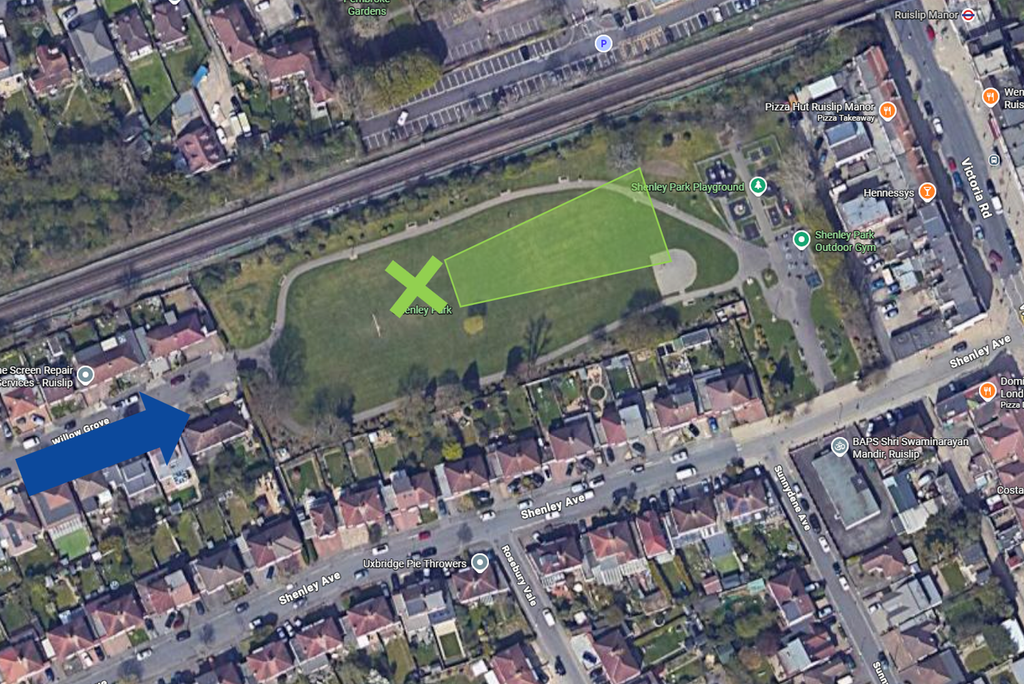
Incidentally, we would love to know more about the Ruislip “Pie Throwers” who are marked on the map near the bottom!
AW169 Incident – Maidstone, Kent
During a response to a HEMS incident, an AW169 identified the Bearsted cricket ground as a suitable location. The wind was south westerly and they elected to land on a westerly heading, avoiding the buildings to the north east of the cricket square. They identified cricket covers near the cricket square near the centre of the square and manoeuvred to avoid them. Two people came onto the pitch out of the crew’s line of sight.
Crew decision
The helicopter crew made their approach upwind of the covers then air taxyed around to a landing point in the north of the field. The helicopter’s downwash moved the covers which rolled into one of the unseen bystanders.
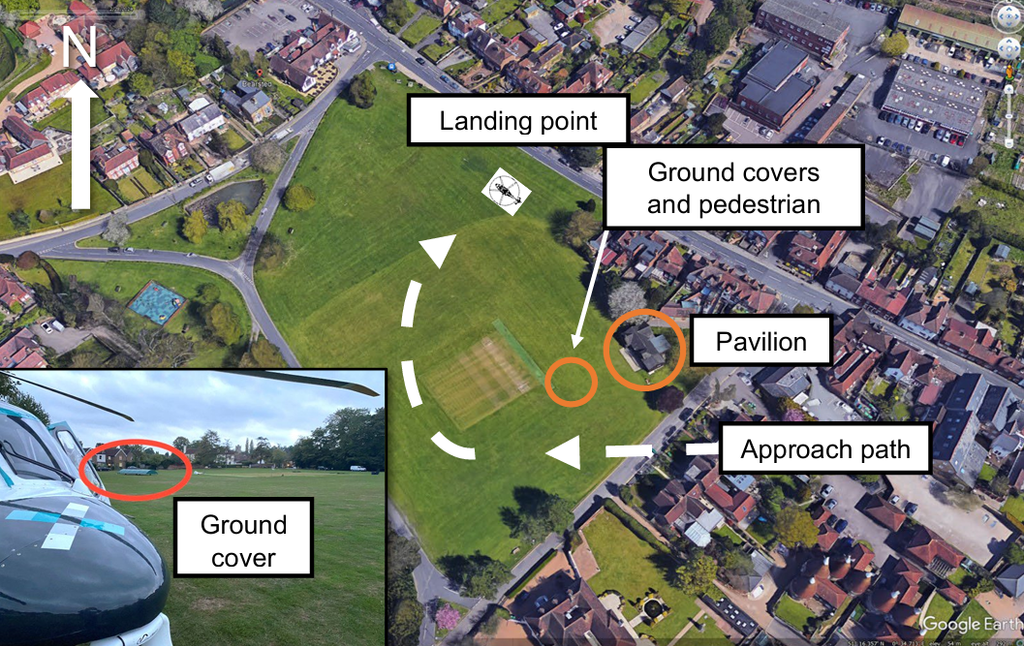
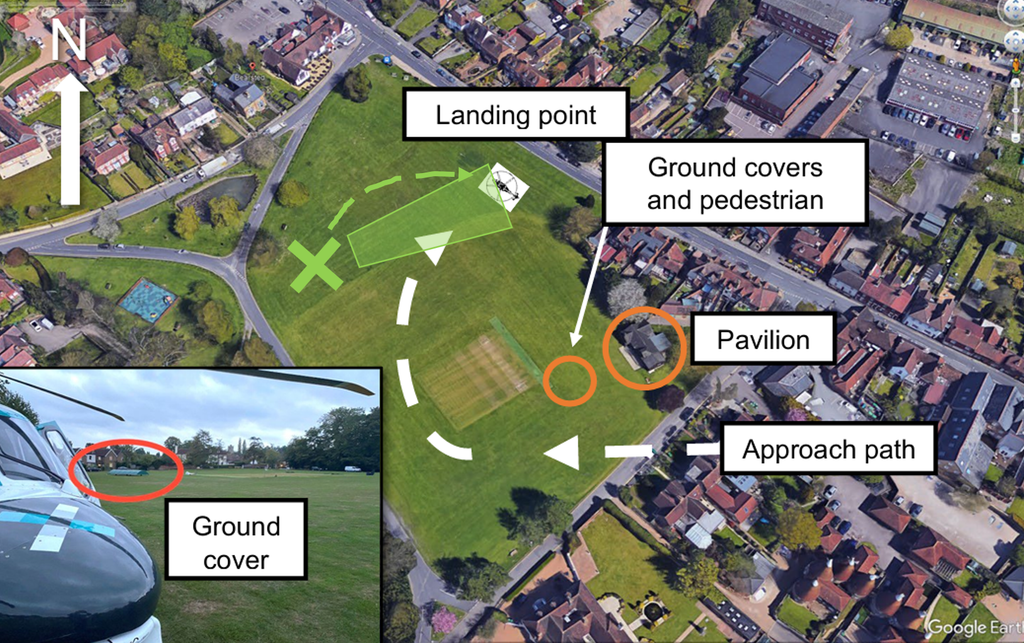
A better option?
With knowledge of how downwash behaves there was a much safer option with hindsight. The south westerly wind was going to blow downwash north east from the helicopter. With this in mind, the helicopter could have approach to the furthest west point of the field, making the approach as vertical as possible, with the downwash running back up north east into the clearest part of the field avoiding the cricket covers getting caught up (which act like sails even with brakes on).
Exploit the wind
We have already looked at using the wind. Now lets look at a different location to see how we can lean on the wind to make the downwash do what we want.
Now we are off to Swindon. Again a child has broken their leg at the playpark, this time next to Meadowcroft Community Centre.
Vertical may not be the answer
The aircraft commander using their knowledge of their aircraft to execute a vertical arrival directly into the area next to the scene. But the south-westerly wind blows their downwash straight into the front doors of the properties across the street.
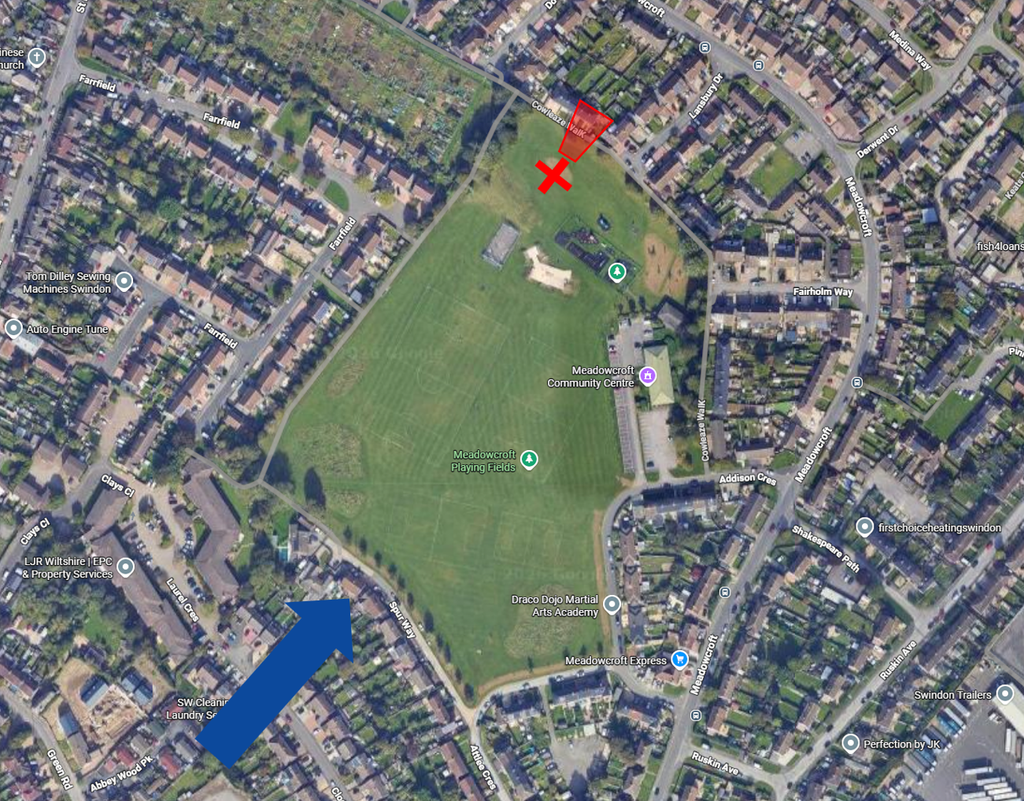
The middle is not necessarily the best option
What the aircraft commander could have done instead is exploit the wind. We have already highlighted that there are challenges with the vertical arrival. Instead the aircraft commander could exploit the large field to the south west of the incident. Landing in the middle of the field away from everything might seem the obvious choice, but there is an even better option.
The aircraft commander could execute a faster shallow landing, keeping the aircraft speed up to keep the rotor flow as a wake rather than as a column of descending air. The approach could be made well upwind of the incident, nearly to the far edge of the field. The wind prevents the rotor wash reaching the houses on the south west and any vulnerable people in the field will be seen in plenty of time to avoid or go around.
Exploit the in-ground effect hover
The approach point is several hundred metres from the patient in this example. The medical crew are unlikely to appreciate a long walk to the other side of the fields.
Now we can exploit our in-ground effect hover. Once established in the hover, we can see the effect of the downwash on the field and its surroundings. We can manoeuvre the aircraft whilst watching the edge of the downwash field, holding the option at any time to land if we think its going to affect something.
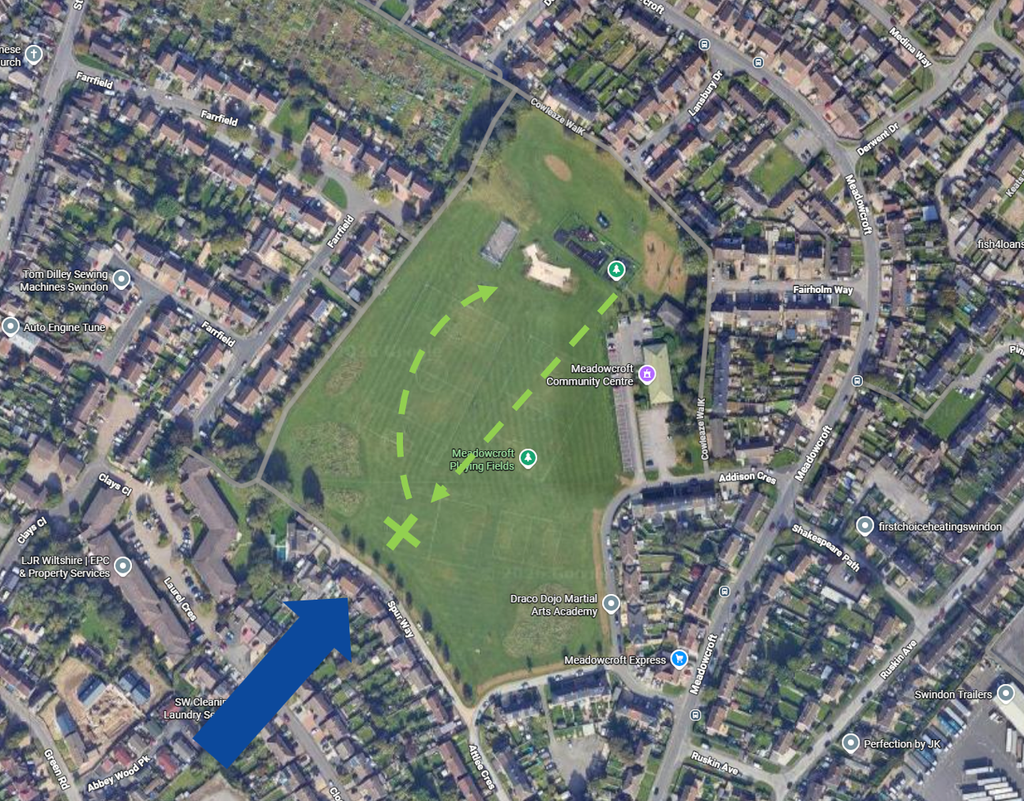
And even more importantly, once the medical crew are away, the flight crew can clear out any hazards then air taxy closer to scene if necessary.
AW169 Incident – near Southend Airport
On 28 February 2026, an AW169 was departing from a field next to the railway station at Southend Airport. The aircraft shut down at the northern tip of the field without incident.
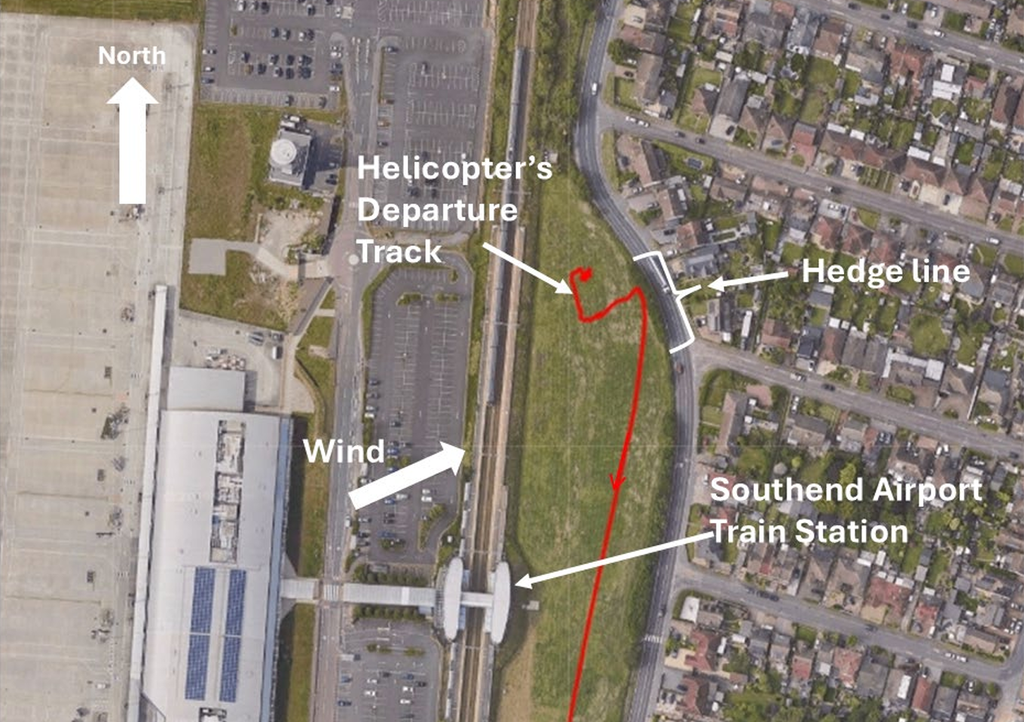
Prior to departure, the aircraft commander considered the hazards and identified a portable train boarding ramp on the platform to be a hazard upwind of the aircraft. He also commented that “…they didn’t move south towards the middle of the field for the departure as they were at the widest part of the field”. He also waited for a train and passengers to clear the platform before starting the take off phase.
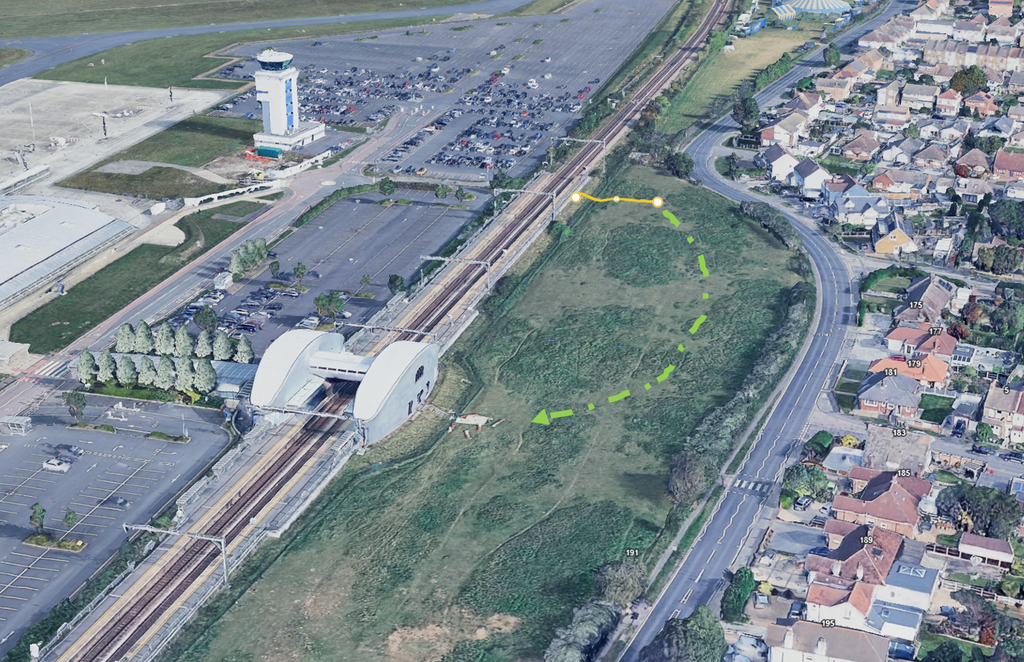
However, with the benefit of hindsight, there field was significantly wider to the south. There was scope to exploit an in-ground effect hover to taxy south east initially, using the hedge (bottom right of the image) to screen the nearby houses and creating extra distance from the platform upwind of the aircraft.
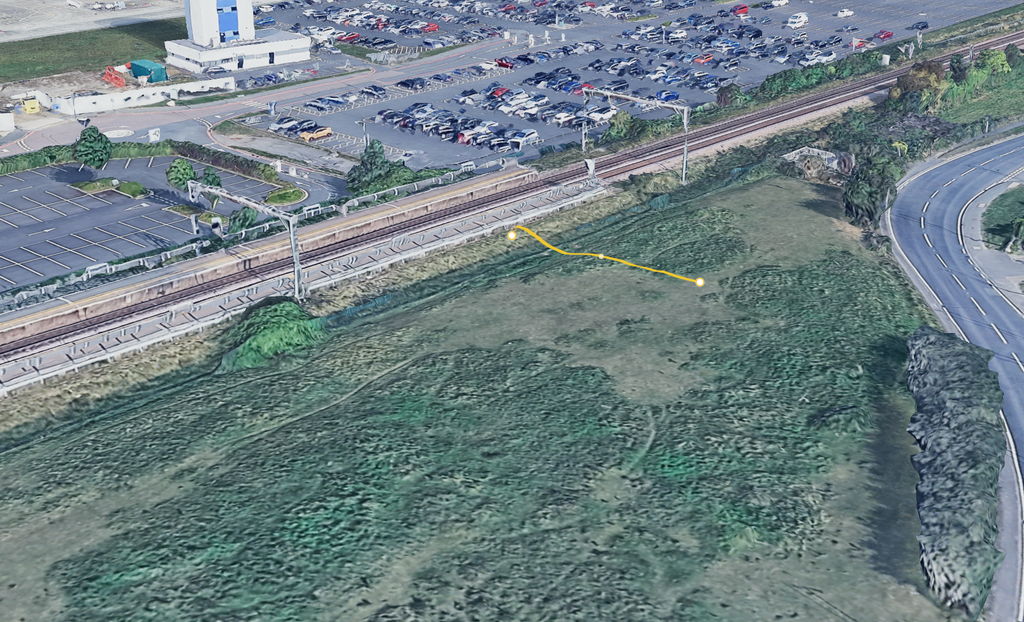
Then the hover could continue to a point roughly 150m further south where the downwash during departure, even with the drift that occurred, could have been contained inside the field. The bridge structure to the west would protect pedestrians at the station and the hedge line to the east (now much further behind the helicopter, would protect pedestrians to the east.
Landing point and arrival/departure point are not the same
Let’s take that last point a step further. The approach point, landing point and departure are each separate things and need to be considered separately.
Consider a motorway incident. The wind is north-westerly. There has been a serious incident on north-east bound carriageway. There is just about sufficient space to landing on the same side of the motorway but our downwash will be blown by the wind into the other carriageway during the approach.
We could wait for the road to to be closed in both directions. Or we could use a little lateral thinking.
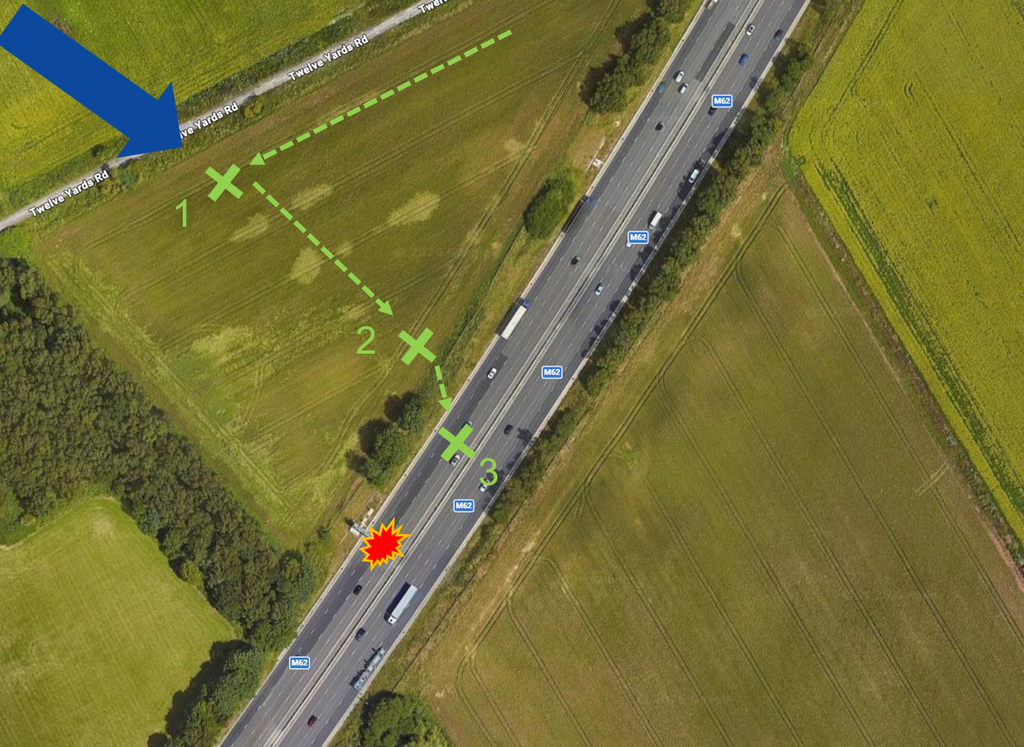
It appears there is access down an embankment just to the east of the incident. We do not want our rotor wash to roll down that slope into the incident, literally fanning the flames, so we exploit the wind and land on the far side of the field (1).
We then hover taxy to the fence line, but keeping the likely path of our downwash to the east of scene (2).
The medics scamper down the slope and walk the short distance to the patient.
Later, when the opposite carriageway is closed and the pilot has confirmed obstacles and secured loose items, the aircraft is moved down onto the carriageway to ease the loading of the patient (3).
Downwash is considered throughout.
Funnelling is not your friend
Let’s now imagine your favourite politician is having a bad day and you have been called to the Houses of Parliament. You identify Victoria Tower Gardens as a good landing spot.
You exploit the capabilities of your aircraft, using the hover modes and under belly camera to execute a vertical landing at the northern edge of the field.
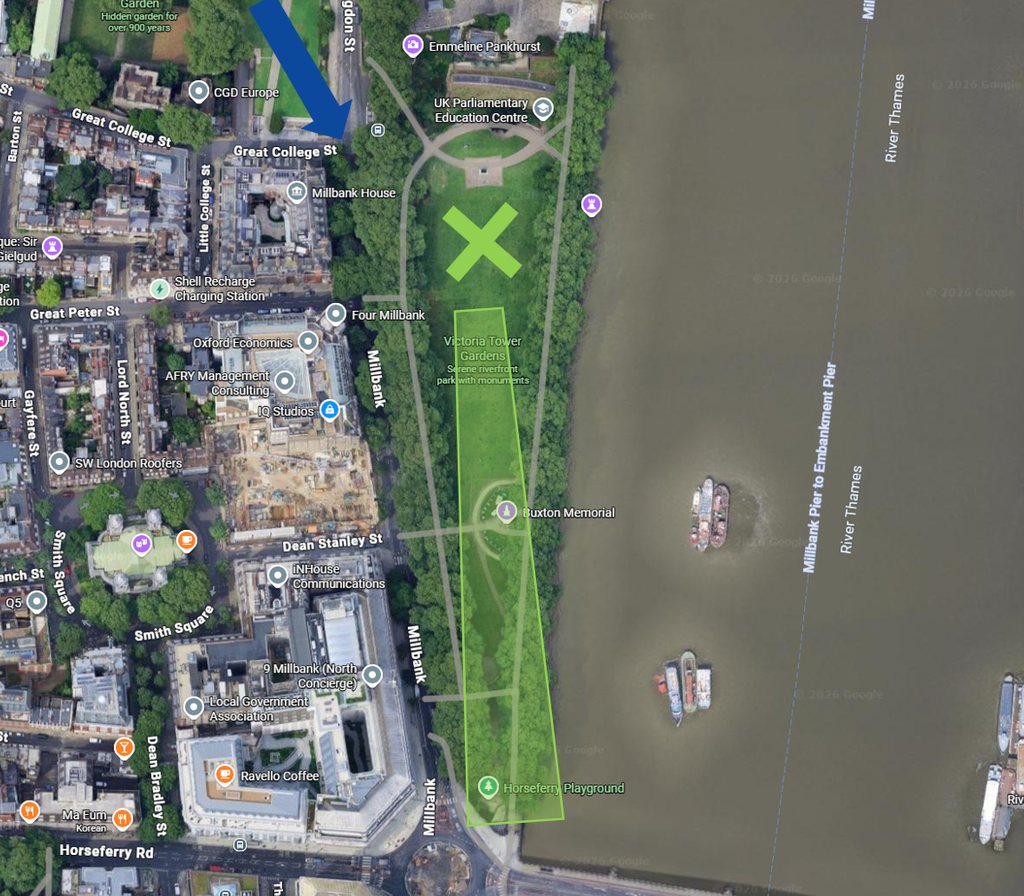
However, the dense trees down either side of the park funnel your downwash and outwash southwards, as the trees close in the downwash gets faster and travels substantially further than expected to the Horseferry Playground right at the southern tip.
A knowledge of the effects of terrain on downwash might have allowed the aircraft commander to anticipate the funnelling leading to a different landing site or perhaps police liaison to clear the likely path of the downwash.
Rotor wake
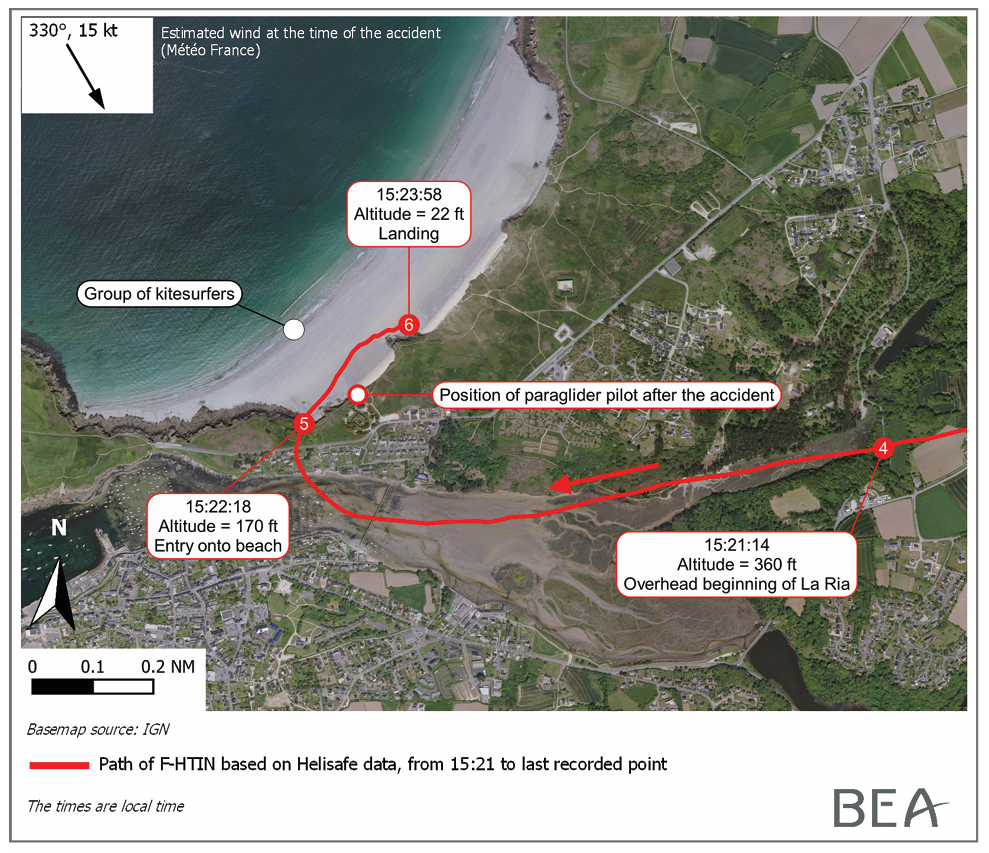
So we have had a look at managing our downwash and outwash but we also need to manage our rotor wake. An incident in France illustrates the point.
Paraglider wake turbulence incident
On 11 May 2019, an EC135 was responding to an incident on the beach in Le Conquet, France. With a north westerly wind, the aircraft commander elected to make an approach via a curving path, passing upwind with a big margin from some paragliders making use of the uplift from an onshore breeze.
Unknown to the helicopter crew, their rotor wake drifted downwind and collapsed one of the paraglider canopies who was fatally injured in the fall. The downwash played no part in this accident but the rotor wake did. Beware of passing upwind of paragliders in a helicopter. Vary your flight path or height to avoid this problem.
Summary
There is always a lot to learn about helicopter aviation but flying your downwash is vital during all near surface operations, whether on an airfield, at a published landing site or out in the middle of nowhere.
Now take a look at our other articles.
- Downwash theory for pilots – what you need to know
- HEMS external cameras – a new normal?
- H145 Aerodynamic Tweaks Explained: Gurney Flaps and Tail Design
- FSTD Capability Signatures (FCS) – A hidden threat for training?

- Preparing for complete loss of engine power in helicopters
- Lessons in how to manage a helicopter engine malfunction
- Light twin helicopter AFCS – Have Airbus won the race?
- Maintenance by pilots – can the training be improved by sharing?
- Flight simulation revolution – A new method for matching training need to simulator capability
- Helicopter Single Engine IFR – New horizons
- Making the grade – understanding climb gradients in the go around
- Unfair Skies: Restrictive helicopter instructor rules and how to fix them
- How to create an instrument rating instructor (IRI) – A helicopter anomaly
- The evolution of Category A Helipad procedures – A strong foundation for VTOL to learn from?
- Strips vs dials – Which is better?
Leave a Reply