
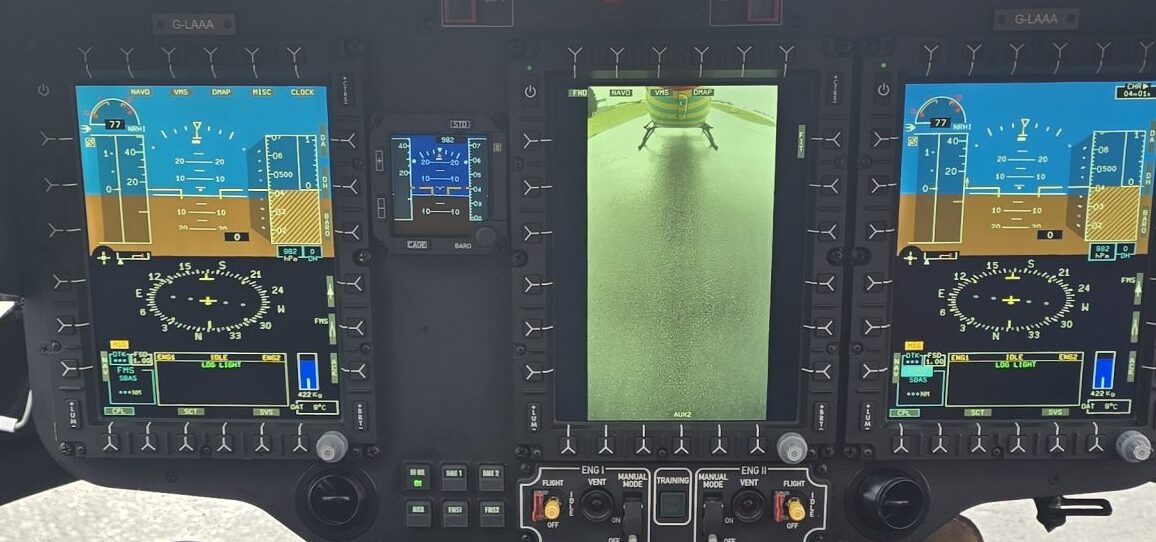
HEMS aircraft have to conduct off-airfield landings to un-surveyed sites as part of their role. After a thorough airborne survey before landing, many hazards can be mitigated. Occasionally however, hidden threats can lurk out the sight of the crew leading to damage to the aircraft, damage to property or injuries to bystanders. Similar hazards can also emerge during departure.
Some helicopters are now being fitted with external cameras. These cameras offer a view under the helicopter during flight, allowing the crew a unique perspective on their operating area. Being able to see into blind spots can be a crucial advantage in trying to minimise hazards so should these cameras become a standard part of the HEMS crew’s toolbox?
Let’s take a look.
Contents
Helicopter Emergency Medical Service (HEMS)
A quick introduction to HEMS for the uninitiated. Whilst the general public would generally call a helicopter that is doing some sort of medical work an “Air Ambulance” this is a specific role. More often the helicopters that the public see landing in their parks or open spaces is actually a HEMS helicopter. Let’s explore the difference.
Air Ambulance
An Air Ambulance is an aircraft that transports ill patients between established operating locations such as hospital helipads and airports. Typically the patient needs constant medical supervision and needs to travel quickly but does not need to go right now. This could include an intra-hospital transport or bringing a patient back from overseas.
HEMS
In contrast HEMS is about patients who need help quickly and right now. Increasingly it also means bringing critical care to patients who are the sickest or most injured in the operating area and so need more comprehensive care than a regular land ambulance can provide. HEMS generally involves operating into un-surveyed sites across the landscape, in urban and rural locations. Dependent on operator capabilities this might be day and/or night in pretty poor weather.
HEMS Operating Sites
HEMS operating sites can be incredibly varied with a diverse range of hazards. HEMS crews need to able to conduct accurate and comprehensive aerial surveys of these sites in as short a time as safely possible. We have looked previously at the procedures for choosing a good landing site in our article about choosing the right site and selecting a site with the correct size.
As we outlined in those articles, some of the threats that need to be identified at sites are:
- Obstacles – wires, masts, trees, posts
- Terrain – slopes, dips, boggy ground, water
- Loose objects – rubbish, sheet material, boats!
- People – Bystanders, emergency workers and patients
HEMS crews primarily identify these threats with their eyes. However, EFB (iPad) chart applications increasingly have data that can assist with picking up critical features through obstacle data and digital imagery (such as Street View).
External cameras
So we know what threats are out there, but how can cameras help us? Let’s look at some of the systems that have started to become available on the market.
Airbus helicopters camera system – H135/H145
Newer H135 and H145 can have several cameras installed.
Forward looking camera
The first is a forward looking camera under the tail, mounted on the fenestron fairing.
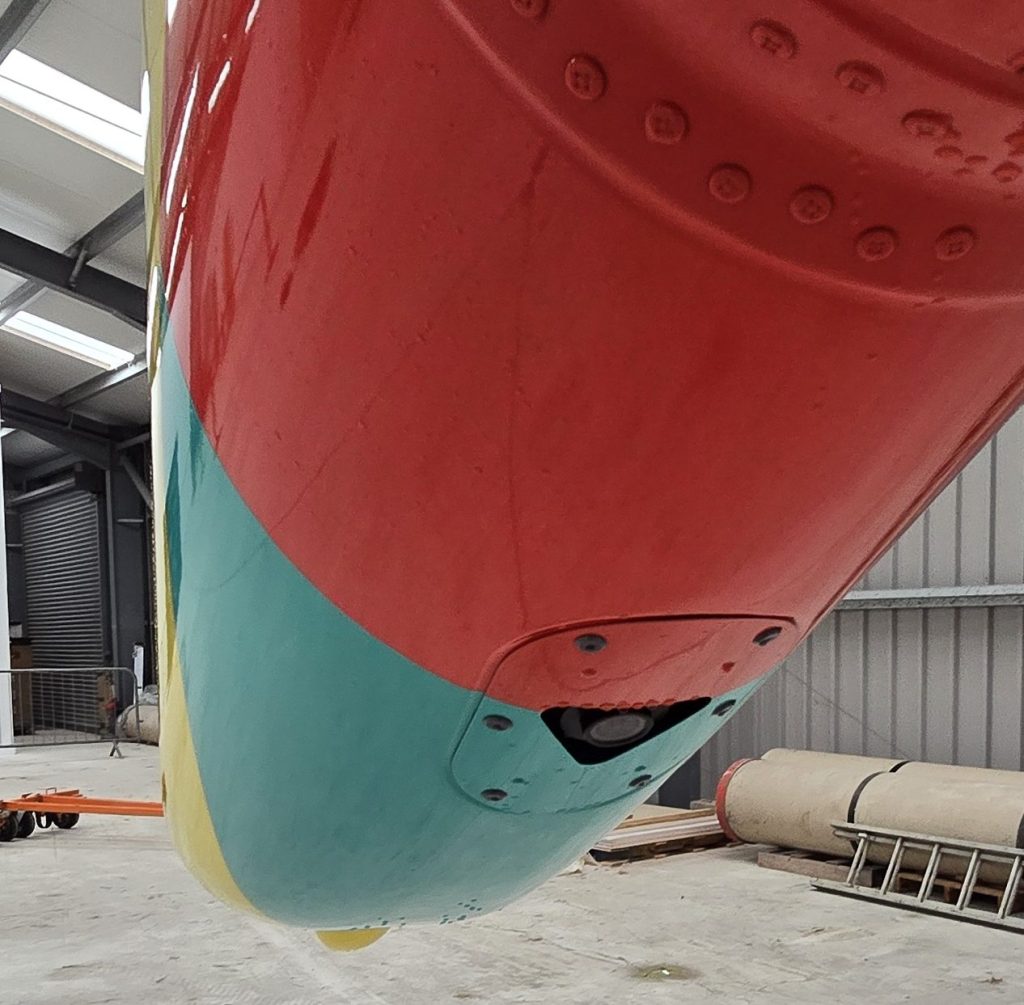
Forward looking image display
The camera is aimed to look at the area directly under the helicopter. On some installations it has limited vertical adjustment but normally its boresighted to a point roughly equating to the landing site when at 120 feet. The camera output can be displayed on the cockpit MFD.
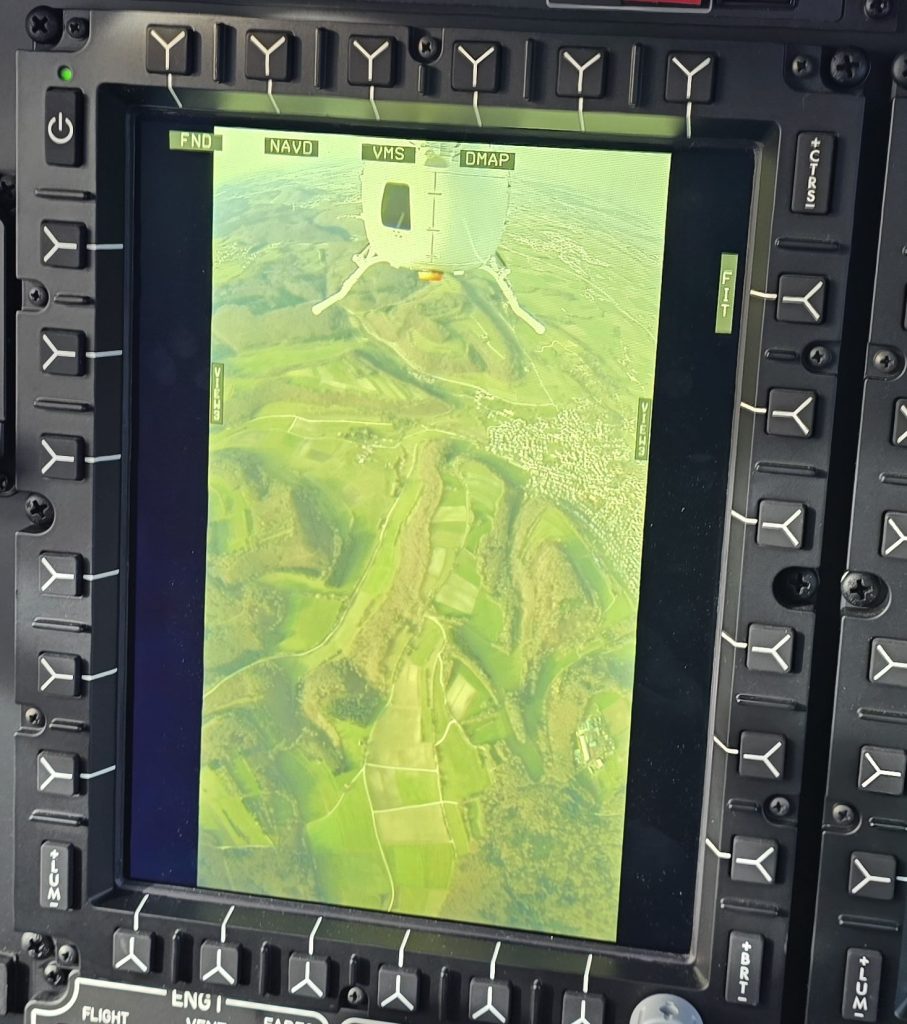
Vertical landings
As a further refinement, optionally a computer-calculated aiming point can be overlaid on the screen. The aiming reticle is calculated as the point exactly below the aircraft. This allows the pilot to bring the aircraft in directly above the landing point, before engaging a hover mode to descend purely vertically onto the chosen point. We discussed the Airbus Autopilot in an earlier article. The more recent evolutions of the Airbus GTC mode make manoeuvring the helicopter to this point a very simple manoeuvre!
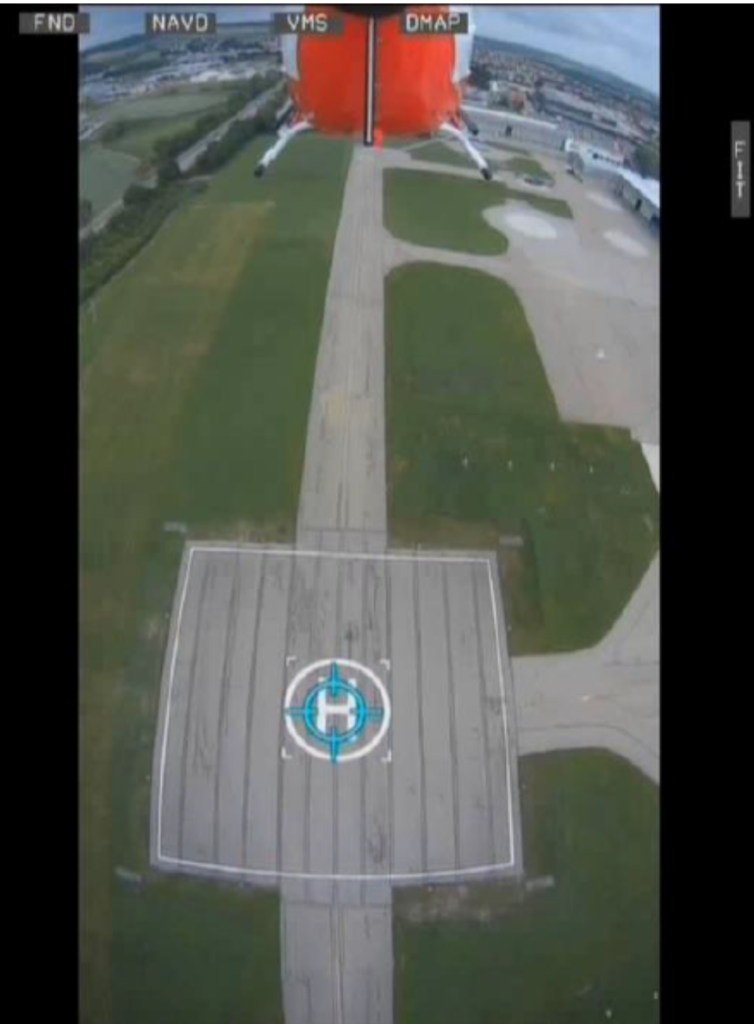
Rearwards looking camera
In addition to the forward looking camera, a rearwards looking camera can be added. On H145, this is mounted directly under the rear clamshell doors in a fairing. On H135, it is attached in a somewhat ugly mount on the rear skid tube. This is likely to make it robust, given its right where the pilots stands to clamber up the aircraft (see the footprints below).
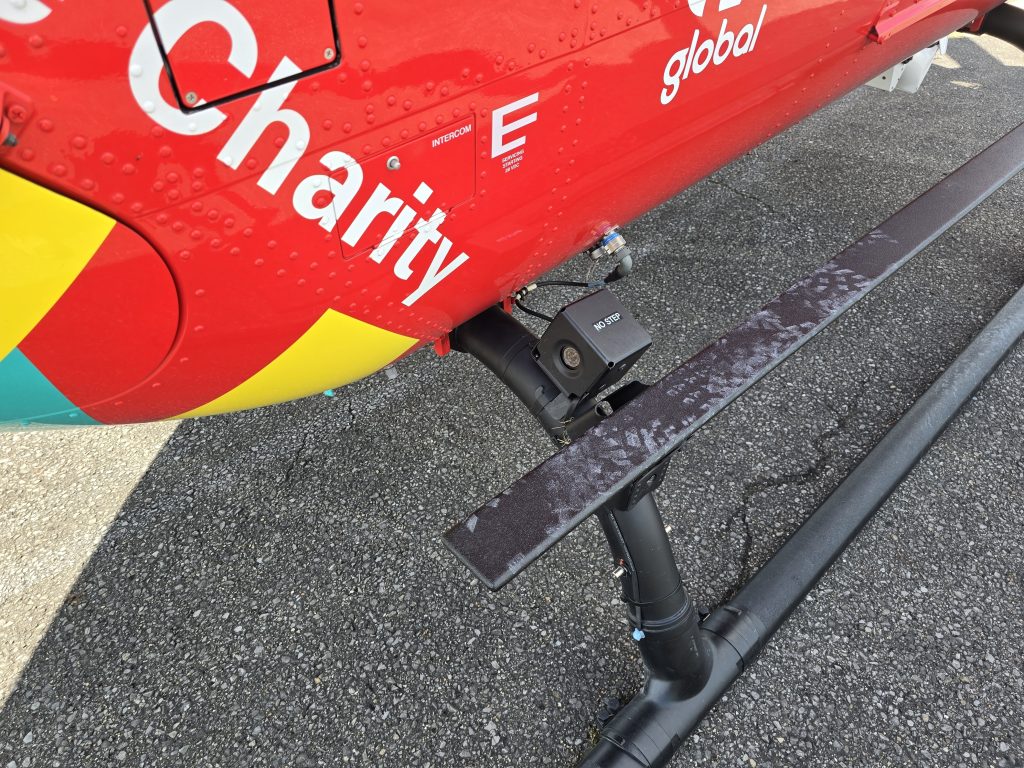
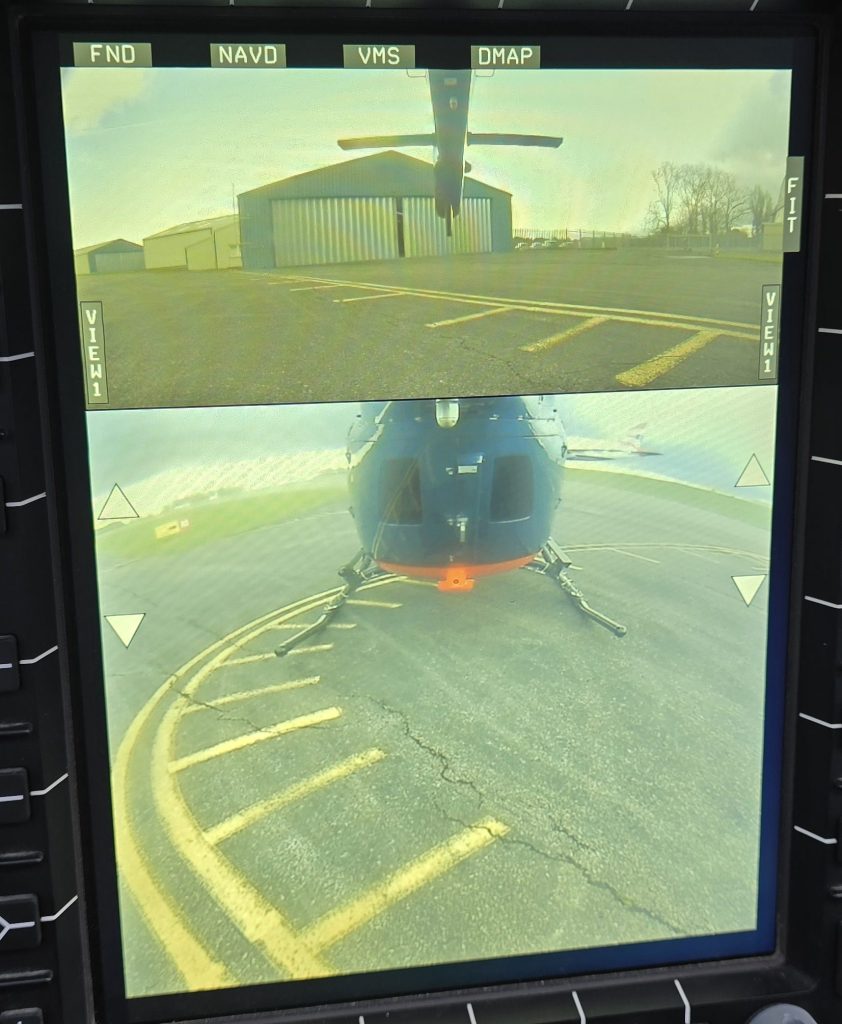
Rearward looking image display
The rearward looking camera is displayed in the same way as the forward looking camera. The feeds can be displayed simultaneously for improved all-round situational awareness. Note the forward looking camera in this example has the arrows on screen to allow adjustment of the vertical angle.
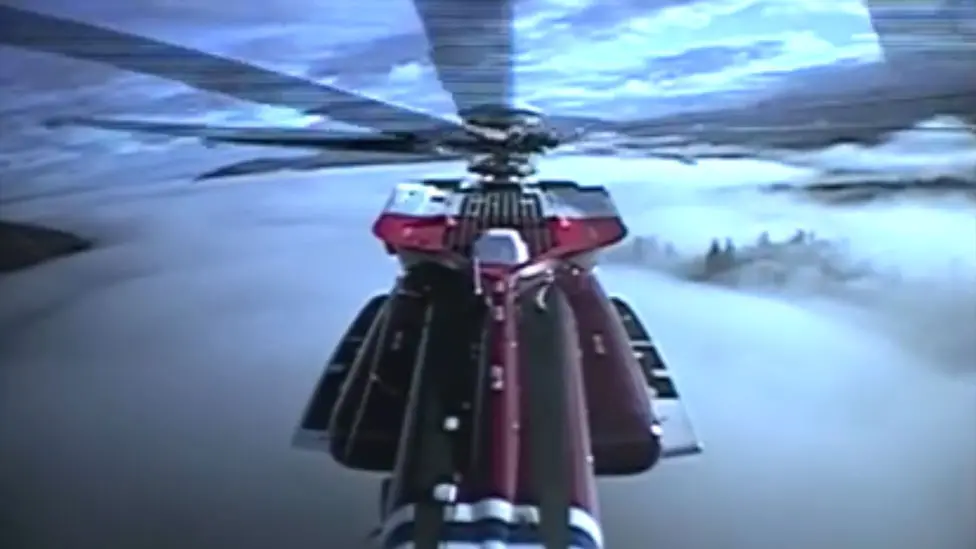
Sikorsky S92 cameras
As an aftermarket option (for example the system produced by Heli-one), S92 can be fitted with an array of external cameras. Of particular note is the tail camera mounted at the top of the tail fin, giving the crew a view of the upper deck and rotor.
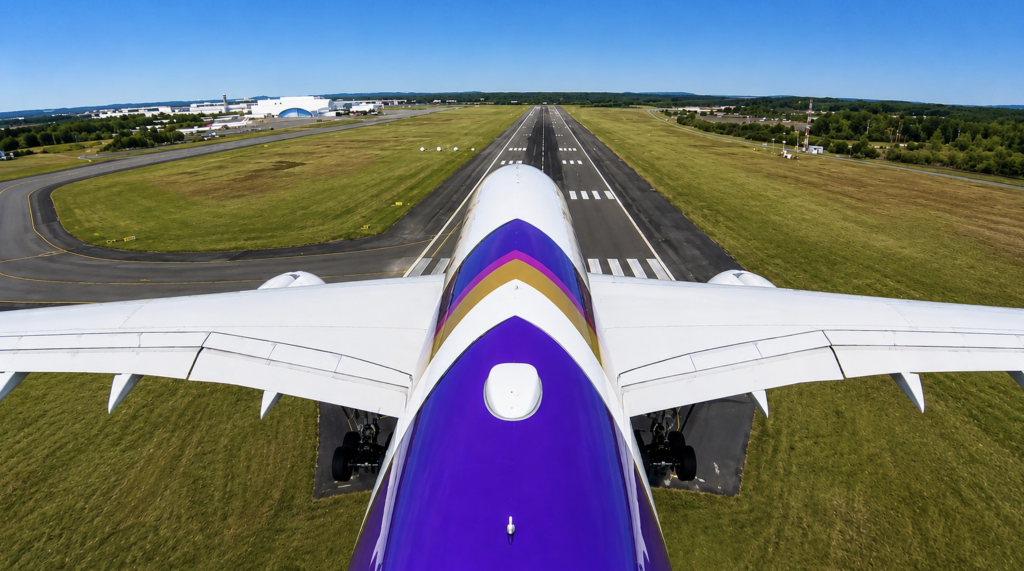
Airliner camera
This tail view is the same type of view available to crews and passengers on some airliners such as the Airbus A350 and some Boeing 777-300.
Are cameras useful?
So we can see outside our aircraft. With a crew, we already have pretty good view forwards from the cockpit and sideways from the cabin. With good crew co-operation we can build up situational awareness of most hazards.
However, there remain several key blind-spots:
- Directly underneath the helicopter
- In an arc directly behind the machine
These blind spots only get worse when operating temporarily without a medical crew when they have travelled by land with a patient.
Scenarios
Let’s look at a couple of scenarios to show the utility of the cameras.
Tight parking
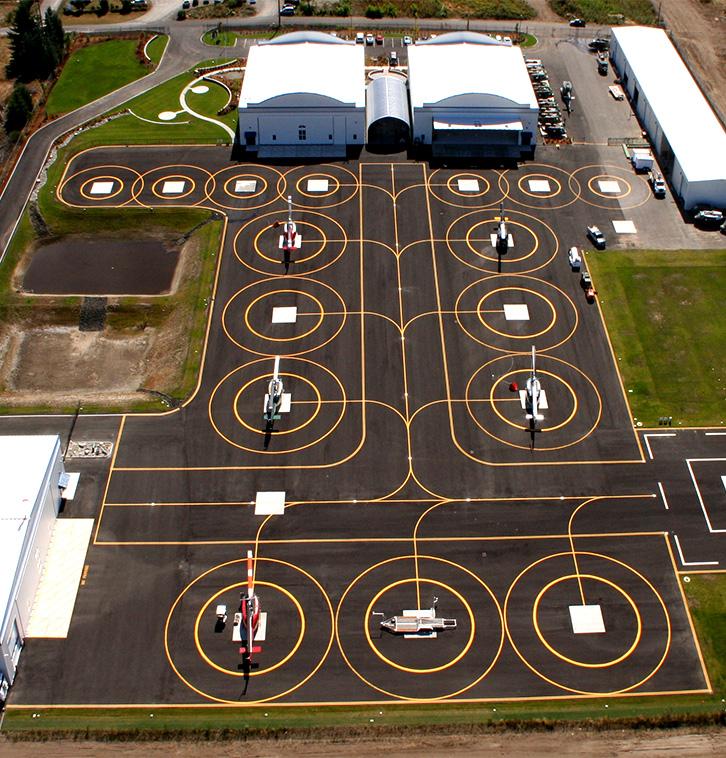
At many helicopter landing sites, space is at a premium and landing spots start to get crammed together. Whilst at some sites, there are excellent markings and taxying lines (see the North West Helicopters facility below), often helicopter landing areas can be less well defined or a different helicopter uses the facility from that intended when the original spots were designed.
In these cases the cameras provide a huge boost in situational awareness. Whilst the view is not calibrated like the reversing camera lines on your car, the presence of an aircraft in the image might give pause before reversing into them.
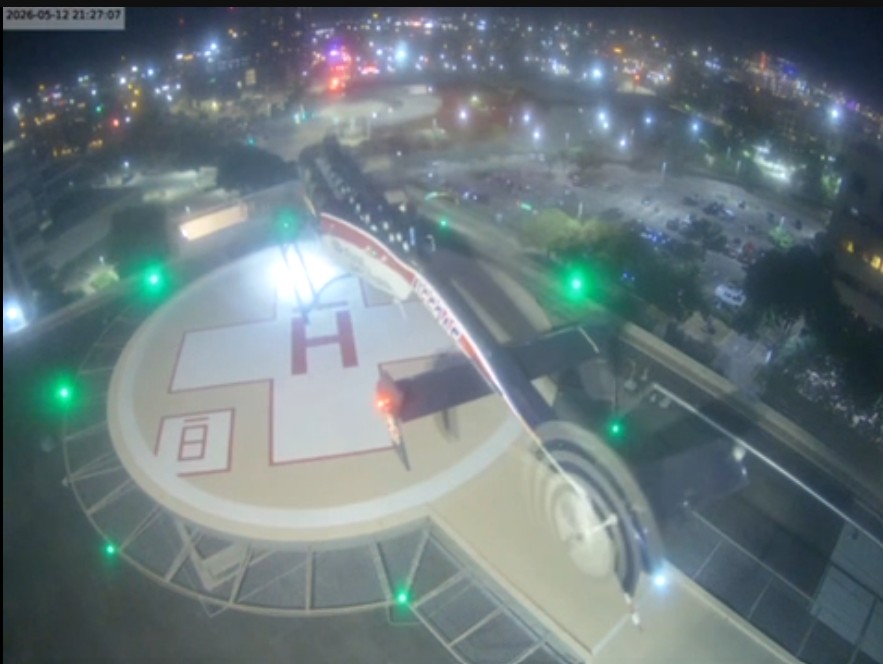
As an example, a helicopter recently reversed off a helicopter pad on 12 May 2026 in Dallas, USA and hit a camera mast near the site. Perhaps if a camera had been fitted, it would have been spotted before the aircraft struck the post. Sure the pilot should have noted the post prior to take off but we all have lapses. Read more at Aerossurance.
HEMS scene situational awareness
As discussed earlier, HEMS landing sites are highly variable things. One minute, they can appear to be a quiet football pitch. In the next moment, a teenager on a bike is zipping across, trying to get across before the helicopter lands.
Having a view from under the tail and one looking back is a huge boost for all-round vision. Emerging threats can be spotted as they develop and threats that have already been identified can be monitored as they slip out of view.
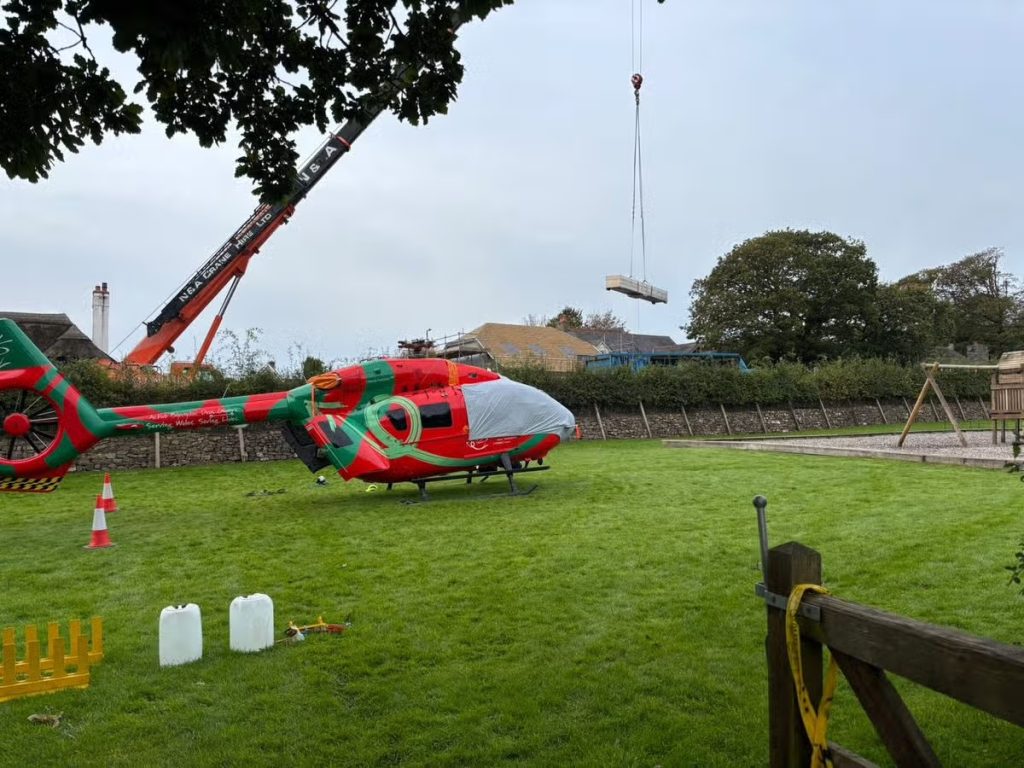
On 7 October 2026, an H145 of Wales Air Ambulance, struck a football goalpost during landing at a HEMS site. The goal would likely have been identified by the crew during the recce orbit, but would have gone out of their line of sight during the approach. The goal would have been visible on the camera and had they been fitted (note the camera is not fitted under the tail), the incident may not have occurred.
Vertical landings and departures
The threat to third parties and property is a top risk for off-airfield helicopter operations. The powerful downwash and outwash from a helicopter can cause severe damage to objects, pick up objects and throw them back at the helicopter or at people, or it can injure or even kill bystanders. Seeing such hazards before these events can occur is crucial to minimising the risk.
Many helicopters have rearwards or sidewards procedures where the pilot manoeuvres the aircraft towards a blind spot to keep the departure point in sight during departure. Similarly an angled approach over a blind spot is often used to land into a tight site. However, in each case, this involves putting powerful downwash directly down or into an area that cannot be directly viewed from within the aircraft.
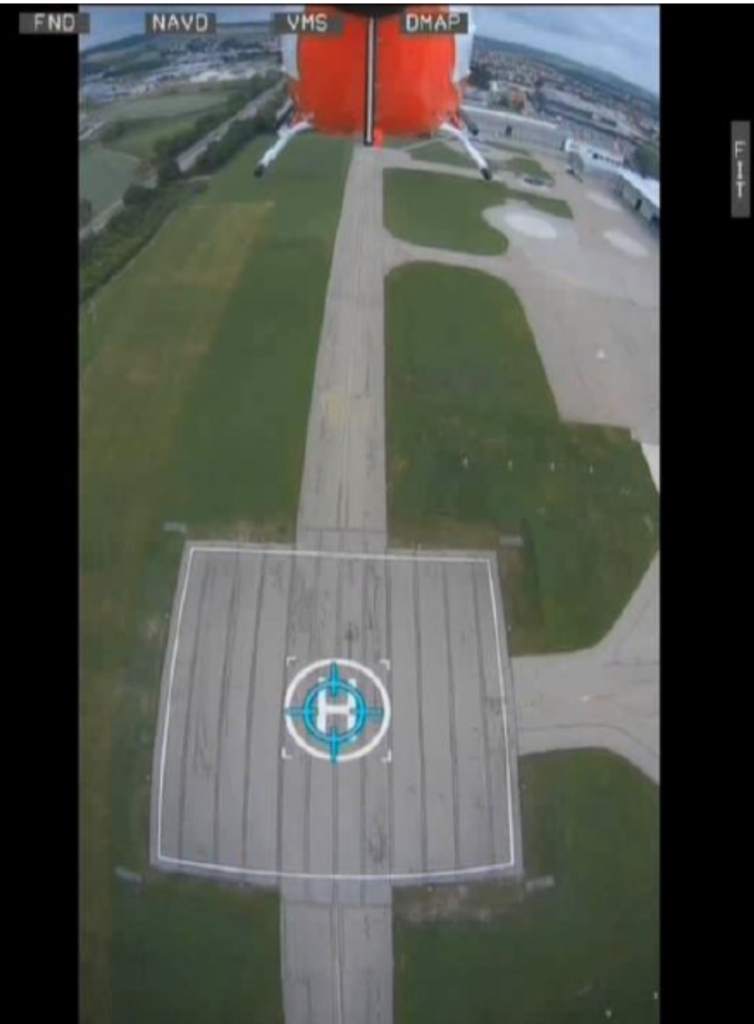
A pure vertical arrival or departure allows the downwash to be contained (wind dependent) to a fixed point. The downwash column can be placed in the safest place and kept there during the manoeuvre. The cameras support these vertical manoeuvres, particularly when coupled with a good lateral and longitudinal hover hold.
Emergency diagnosis
Many emergencies that have led to loss of life involve confusing indications and contradictory cues. Unravelling a confusing engine health management display can sometimes overload a crew leading to mis-diagnosis and a wrong engine shutdown or delayed response.
What if the crew could step outside the aircraft a look at the problem from a new perspective? What if they could see what was going on?
Imagine an engine malfunction, that lights up a Christmas tree of cautions on the display. The aircraft is now smoking but the pilot cannot work out what is going on. A quick scan of the tail mounted camera could tell a story and cue the pilot as to what was going on. That’s not to say it should be the only source of info as that could in itself be confusing. However, as a second opinion on the engine indications it could be vital.
As we covered previously, on 28 August 2023, an EC135 experienced an engine malfunction that started a fire just aft of the engine bay. Due to incomplete emergency actions from the pilot due to confusing indications, the engine was never shutdown. This lead to more heat being pumped into the fire and a longer than necessary flight to a landing point.
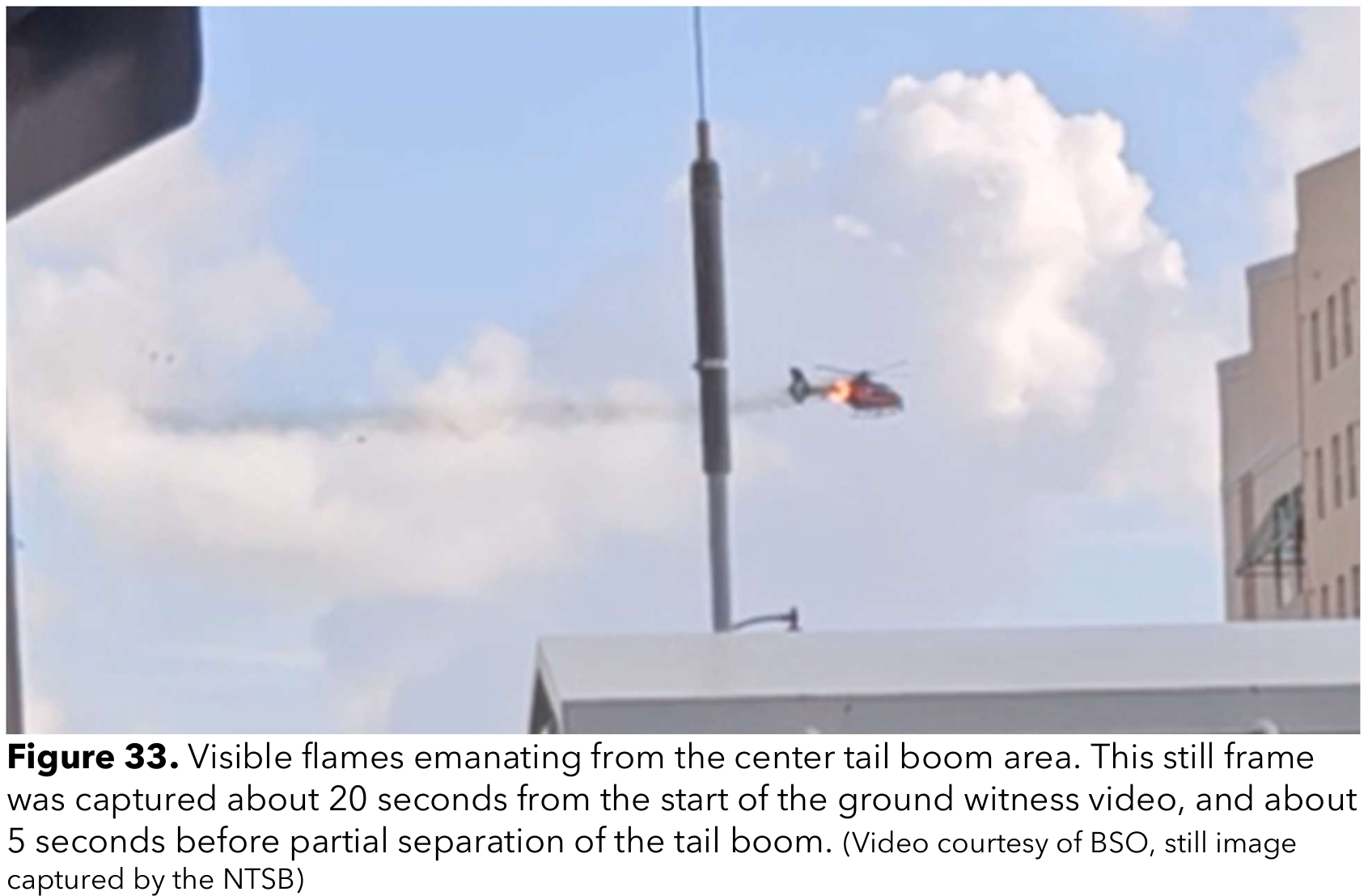
Had the pilot been able to take a quick peek from a tail camera of the airframe (assuming a top down view like the S92) he would have seen a fire had started and actioned the appropriate drill and immediate landing way before the system told him about the fire. The fire indication actually only occurred seconds before the tail attachment failed due to heat damage. However, the engine malfunction and smoke had started several minutes before and might have shown up on a camera.
What are the problems with cameras?
So there are lot of good things to say about external cameras. But are there issues with having them?
Degraded visual conditions
The huge problem with normal cameras is the transition to night operations. Most current cameras are conventional cameras with optics optimised for daylight conditions with good visibility.
At night, the image would be a confusing display dependent on ambient light such as searchlights. To a small degree this could be alleviated by a suitably paired aircraft light source or low light optical system but this adds complexity.
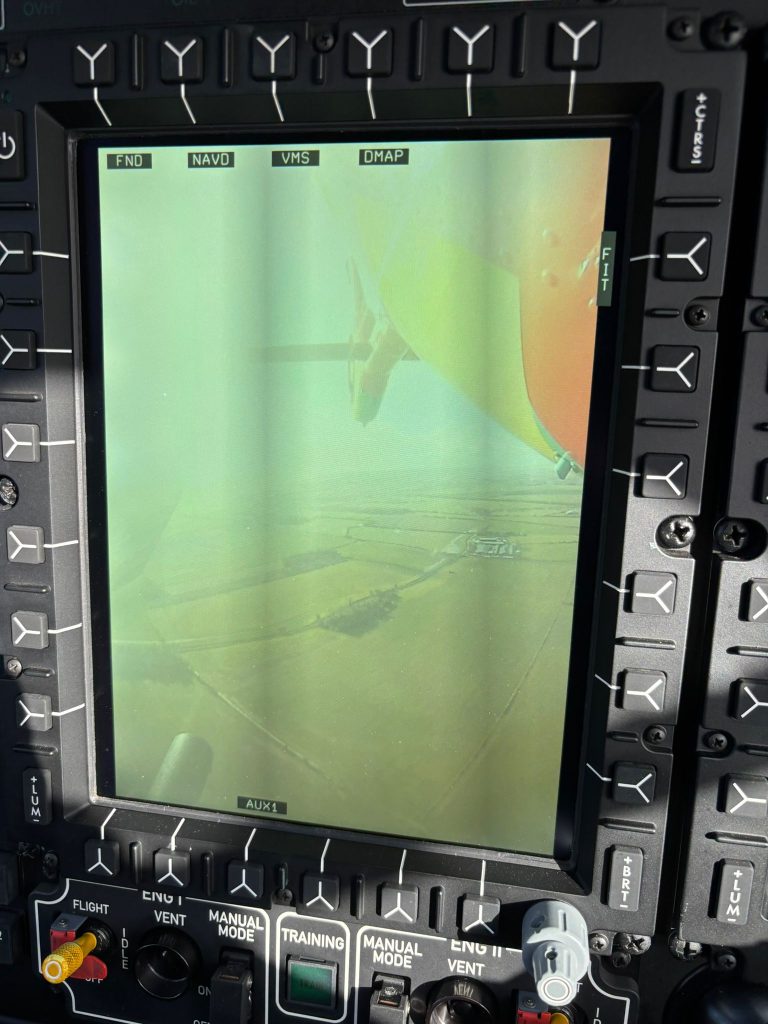
Similarly in some conditions, the image might be degraded by direct sunlight or other light source. As shown in the image below, direct sunlight has obscured the rear-facing camera on an H135.
But in any case, these are challenges for night operations, not a reason to not use the system to enhance day operations!
More blind spots / visual illusions
Unless a fly-like multi-sensor camera is fitted, the cameras will have blind spots. This could provide a crew with a false sense of clearance from an object when actually the object is in a camera blindspot. However, with appropriate guidance a crew would understand the limitations of the camera view and act accordingly.
Distraction
It is vital that helicopter pilots keep their eyes out as much as possible when operating. Many aviators will suggest that putting more information inside the cockpit will inevitably distract the crew from looking outside. This argument has been used many times in the past for why traffic awareness displays are a bad idea. Incidentally this line of thinking led to the highly sub-optimal placement of a text-based traffic display in the Merlin HM Mk2 that had a near miss at night in Cornwall UK on 7 August 2018. Read more in Aerossurance’s article.
However, optionally displayed cameras which offer sharp detailed views at a glance of areas that are obscured through direct sight can never be a bad thing. As part of a holistic lookout and cockpit monitoring, an extra pair of eyes in the back of your head is always welcome.
Shaky view
Helicopters shake – a lot – see our article about it here. Mounting a camera on to this shaking platform presents a problem of image quality. Even certified installations which are usually perfectly stable can have a bad day!
Alternative methods
Could the issues of degraded vision through normal cameras be solved with a little synthetic vision? Could a sensor provide the extra set of eyes we need, even if only for the obstacle threat?
Some helicopter manufacturers think. As an example, Leonardo helicopters have developed the AW1129 Obstacle Proximity LIDAR System. This laser-based sensor sits about the rotor head and scans directly in the plane of the rotor disc. It provides what is essentially a car parking sensor for the main rotor disc, showing a visual representation of the closest obstacles in the rotor disc plane.
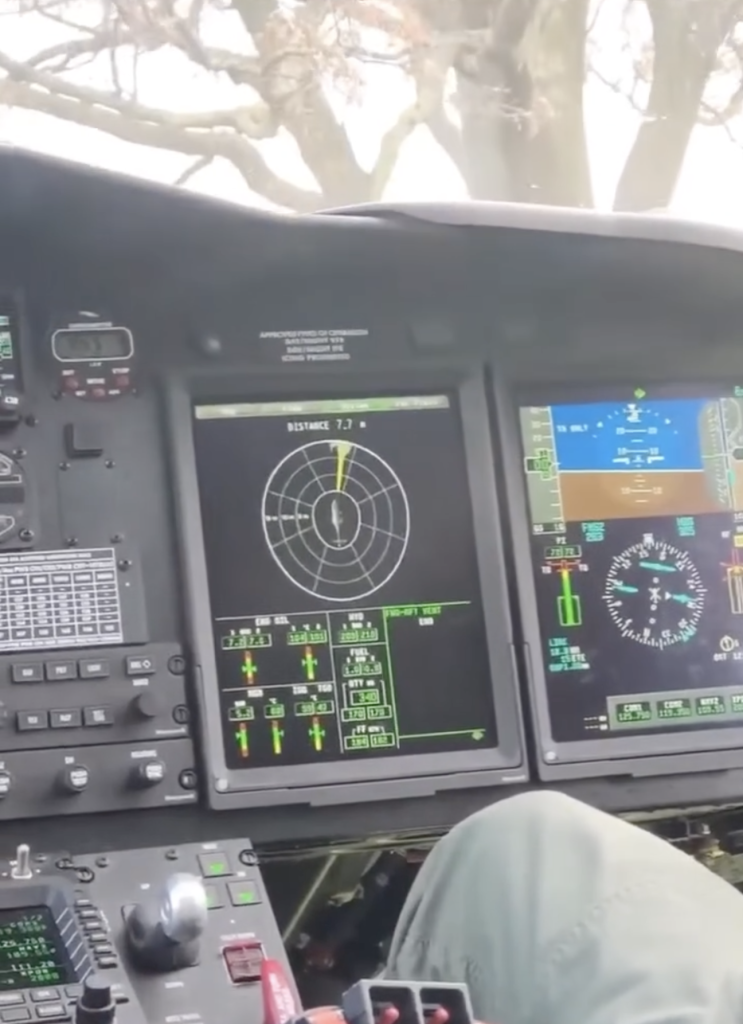
However, the complexity of the system due to the location of the sensor is unlikely to make it widely available on HEMS-sized aircraft. In addition, many obstacle for HEMS are not in the rotor plane so it’s utility might be less than on a large SAR helicopter operating near to cliffs while winching.
What could be future developments?
A camera is not a particular cutting-edge device, with high quality rugged sensors and displays being available for many years. But where could the technology go for helicopters? Perhaps looking to our cars might be a hint of the future.
360 cameras
On recent high end cars, cameras with 360 views around the car have become standard or optional equipment. They offer a stitched together top-down view of the car using 4 or 8 cameras arranged around the car. The ease with which this can be used to park in tight spots means that once you’ve had such a system it can be difficult to go back to the Stone Age of using just wing mirrors and a look over your shoulder.
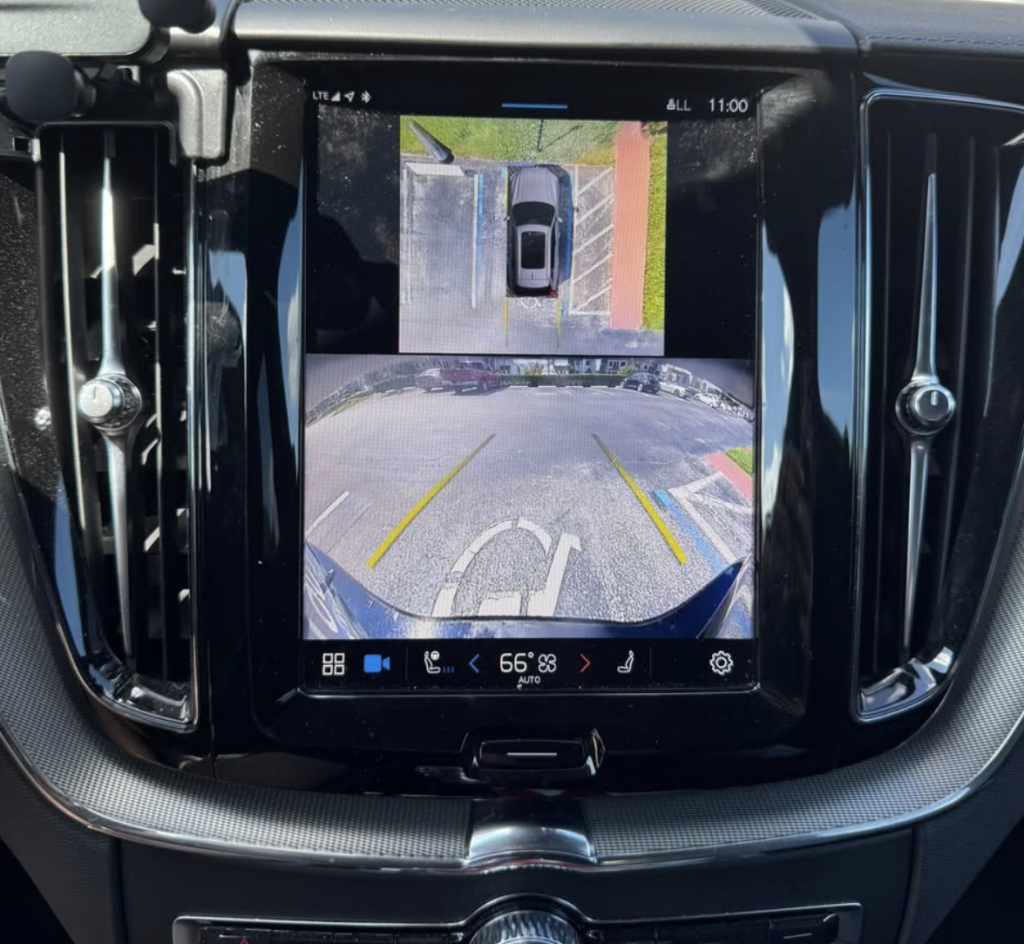
Could such a system be implemented on a helicopter? Well maybe. There are number of challenges:
- Height – whilst a car 360 camera is always at a fixed height, changes in height by a helicopter would lead to a distortion of the image. A car 360 image is a composite of slightly downward tilting cameras, each showing a picture of the ground. This would be heavily distorted on a helicopter
- Bank/pitch angle – whilst a car 360 camera is broadly in the same plane as the ground under a car, a helicopter camera system would be strongly effected by the helicopter’s pitch and roll attitude. Any camera system would have to be stabilised in attitude which might not produce the desired results.
Hopefully someone can solve these issues!
So are they the future norm?
So are these systems the future standard equipment for HEMS? For aircraft that have readily available factory fit options, it would be very surprising for a HEMS operator to not tick that box on an options sheet. The boost in situational awareness and capability (vertical landings) is just too compelling to skip past.
With that in mind, are manufacturers who cannot offer such systems on their machines going to lose future orders if they don’t keep up? We think they just might do so.
Now take a look at some of our article back catalogue. Enjoy!
- EC135, Checklists and the “Red Button of Doom”
- It’s behind you! Helipads and obstacles in the backup area

- Slow Down IFR! Are you speeding on the ILS?

- Practical ILS explanation for pilots – the surprising way they really work

- My tail rotor pitches when it flaps! Why?
- What is your left hand doing? How to use a 3-axis autopilot on helicopters

- 2D or not 2D – How much room do I need to land a helicopter?
- Planning to fail – The perils of ignoring your own advice
- HEMS Landing Sites – Reliable places to drop your medics
- Deconfliction in HEMS operations – Practical methods for keeping apart
- The Ultimate Medical Helicopter – Selecting the right machine for HEMS
- Helicopter on Fire – Could accident investigators have learned more?
- Lights, helipad, action! The problem with new helicopter pad lights
- Expert site surveys – Improving the assessment of onshore landing areas
- Autopilots, cross-checks and low G in helicopter unusual attitude recovery
- Bad Vibes – How to report vibrations on helicopters
- First Limit Indicators in Helicopters – Deadly mistakes to avoid
- Post Maintenance Flight Tests – How to avoid fatal traps
- Understanding Helicopter Flight Manuals – Everything you need to operate safely

- Helicopter 2D IFR approaches – Is CDFA the best choice?
- LNAV/VNAV (SBAS) – Are they approved for use in the UK?
- Keeping up with the Norwegians – Six amazing innovations for UK HEMS
- Automated take offs – Gimic or are they the new standard?
- Engine Failure Training Mode – A safety tool that will punish the unwary
Leave a Reply